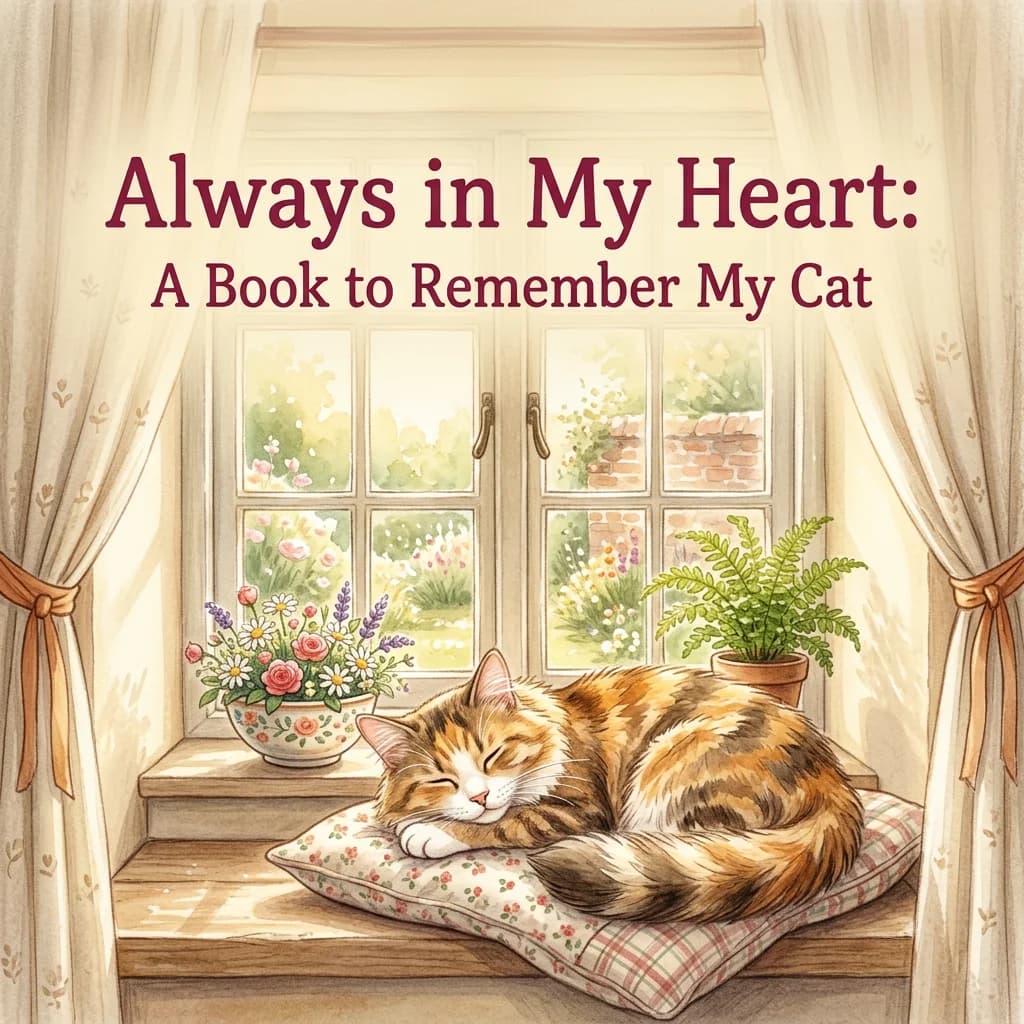
Always in My Heart: A Book to Remember My Cat
A story about dealing with loss, rewritten for your child
Every page is redrawn around the child you make it for. Keep the story’s own hero and give them your child’s name, or choose someone new — it takes a minute, and nothing is locked in.
From$34.99 USD
Free to start. No payment to see your child in the story.
- 34 pages, hardcover
- 5.9 × 5.9 in
- Ages 5-7
- Premium, thick pages
- Free standard shipping included
- Printed & delivered in 2-3 weeks (US)
Start with the story’s own hero or pick from our cast — then give them your child’s name.
A tender keepsake book to help children grieve, remember, and honour their cat with love.
That’s the story. The rest is how it becomes your child’s.
How personalization works
Who is this story about?

Keep the story’s own hero
The hero is already written and drawn for this book. Give them your child’s name if you like — that’s the whole edit.
Or swap in one of our cast
Eight characters to start from, and you rename whoever you pick.
- Luna

- Theo

- Mateo

- Sofia

- Amara

- Layla

- Mei

- Ravi

Or make your own
Describe them in a sentence, or add a photo to guide the likeness. Either way, entirely optional.
The characters are just the start.
Every part of this book is yours to change. Not a name dropped into a template — the whole thing is redrawn around the child you’re making it for.
- Every illustrationAll 34 pages are drawn fresh, not stamped with a face.
- The rooms and placesYour child's actual bedroom, your street, the places the story visits.
- The objects that recurThe specific blanket, the toy they won’t sleep without — carried page to page.
- Everyone else in itSiblings, grandparents, the dog. Named and drawn as themselves.
- The story itselfChange what happens, and the words on the page change with it.
- Or change nothingPick a hero and read it tonight. The rest is there when you want it.
What's Inside This Book
1 of 18 spreads
Every character, scene, and object in this book can be replaced with your own — your child's name, your family photos, your home, your school.
What you get
Free to start. No payment to see your child in the story.
Start free
- Free to start — no card needed
- See your child in the story in minutes
- Rename the hero and edit the story text
- Choose a ready-made character, or add a photo later
- Export a PDF of what you make
Your perfect keepsake
Hardcover book
- Full-color hardcover, 15×15cm
- Free standard shipping included
- Printed & delivered in about 2-3 weeks (US)
- Personalize names, story text & style
- Add your own photos once you are in the editor
Quick summary of Always in My Heart: A Book to Remember My Cat
This is a personalized memorial book for children ages 5–7 who have lost a beloved cat. It validates grief, celebrates the cat's unique personality, and gives children language for sadness, anger, and love — with fill-in memory pages to keep forever.
This personalized children's book helps children ages 5–7 process the death of their cat through a gentle, honest narrative. Featuring the child, their cat, and a parent, it validates big emotions, celebrates cherished memories, and includes fill-in keepsake pages.
Key Takeaways
- Validates grief emotions — sadness, anger, emptiness — as normal and healthy responses to loss
- Celebrates the cat's unique personality through vivid sensory memories a child recognises
- Gives children language for love that outlasts death, grounded in continuing bonds theory
- Includes interactive fill-in pages so children record their own memories and drawings
- Models parent co-regulation by making grief a shared, spoken experience rather than a silent one
Why This Book Works
Children's grief counsellors, including Dr. Alan Wolfelt of the Center for Loss, emphasise that children need 'grief companions' — not fixes — and that naming emotions openly prevents prolonged complicated grief. This book does exactly that: it names sadness, anger, and emptiness on the same page without rushing the child to 'feel better.' That normalisation is clinically meaningful, not just comforting.
Research published in the journal Omega (2018) found that children who memorialised a pet through ritual or keepsake activity showed significantly lower grief-related anxiety six weeks after the loss. The fill-in memory pages and drawing space in this book function as that ritual — giving children a concrete, child-led way to process what happened and preserve what they loved.
Continuing bonds theory, developed by psychologist Klass et al. and now widely adopted in bereavement care, holds that maintaining an ongoing inner relationship with the deceased supports healthy mourning rather than hindering it. Passages like 'I tell my cat about my day — I think my cat hears me' reflect this framework directly, giving children permission to keep talking to their cat without shame or confusion.
Common Misconceptions
Children bounce back quickly from pet loss and don't need support.
Research from the University of Hawaii (2019) shows children often grieve pets as intensely as human losses. Without acknowledgement, pet loss grief can persist and resurface at later life stages.
Reading about death will frighten or overwhelm young children.
Child psychologist Dr. Joanna Fanos notes that age-appropriate, honest books about death reduce anxiety by replacing fear of the unknown with language children can hold and use.
Saying goodbye at the vet or during burial is too distressing for children.
Inclusion in farewell rituals, when gently supported, gives children closure. Studies cited by the American Veterinary Medical Association recommend age-appropriate participation over exclusion.
How to Read This Book with Your Child
Best time to read: Read within the first week after the loss, when the child is calm — not at peak distress. Evening, with a parent close by, works well.
Choose a calm, unhurried moment — not right before bed if emotions may run high. Tell your child honestly: 'This book is about missing a cat we love. Some pages might make us feel sad, and that's okay.' Have tissues nearby and position yourselves close together so physical comfort is easy.
Conversation Starters
- “What's the thing about our cat you think you'll always remember most?”
- “Is there a feeling in your body right now when you think about them?”
- “Would you like to tell our cat something — I'll listen too?”
Frequently Asked Questions
Is this book appropriate right after a cat dies?
Yes — gentle memorial books are most powerful in the first days and weeks after loss. Reading together gives your child language for feelings they cannot yet name on their own, and signals that grief is something you face together, not alone.
My child is 5 — is this too young for a book about death?
Five is not too young. The American Academy of Pediatrics recommends honest, age-appropriate conversations about death from around age 3. This book uses simple language, sensory memories, and validation of feelings rather than clinical explanation, making it well-suited for ages 5–7.
What if my child cries while we're reading it?
That's a healthy sign, not a problem. Tears show your child is processing the loss safely. Pause, offer a hug, and let them lead — you don't need to finish the book in one sitting. Dr. Alan Wolfelt emphasises that 'tears are the body's release valve for grief energy.'
Can this book help if our cat died months ago and my child is still struggling?
Absolutely. Grief in children often resurfaces in waves, sometimes months later. Returning to a memory book at any stage can reopen the conversation gently and reassure your child that ongoing sadness is normal and that love doesn't expire.
Should I read this alone with my child or as a whole family?
Either works, but one-on-one tends to feel safer for younger children who may hold back feelings in a group. Once you've read it together privately, sharing the fill-in memory pages with the wider family can become a meaningful bonding ritual.
A story about dealing with loss, rewritten for your child
Free to start. No payment to see your child in the story.
You Might Also Like
More Stories Like This
Getting a Pet Rabbit
My New Pet Rabbit
A personalized story about the joy and responsibility of welcoming a new pet rabbit home.
Getting a New Kitten
My New Kitten
A warm, personalized story about the magical day a child brings home their very first kitten.
Losing a Beloved Dog
Always in My Heart: A Book for My Dog
A gentle goodbye for children grieving their dog — because some loves never really end.
Getting A Puppy
My New Puppy
A personalized story about welcoming a new puppy and learning to care for it — perfect for ages 3–5.