What Makes a Great Happy 1st Birthday Book? A Parent's Guide
Discover what makes the perfect 1st birthday book for your toddler. Expert tips on board books, interactive features, and titles parents love.

Matt Li
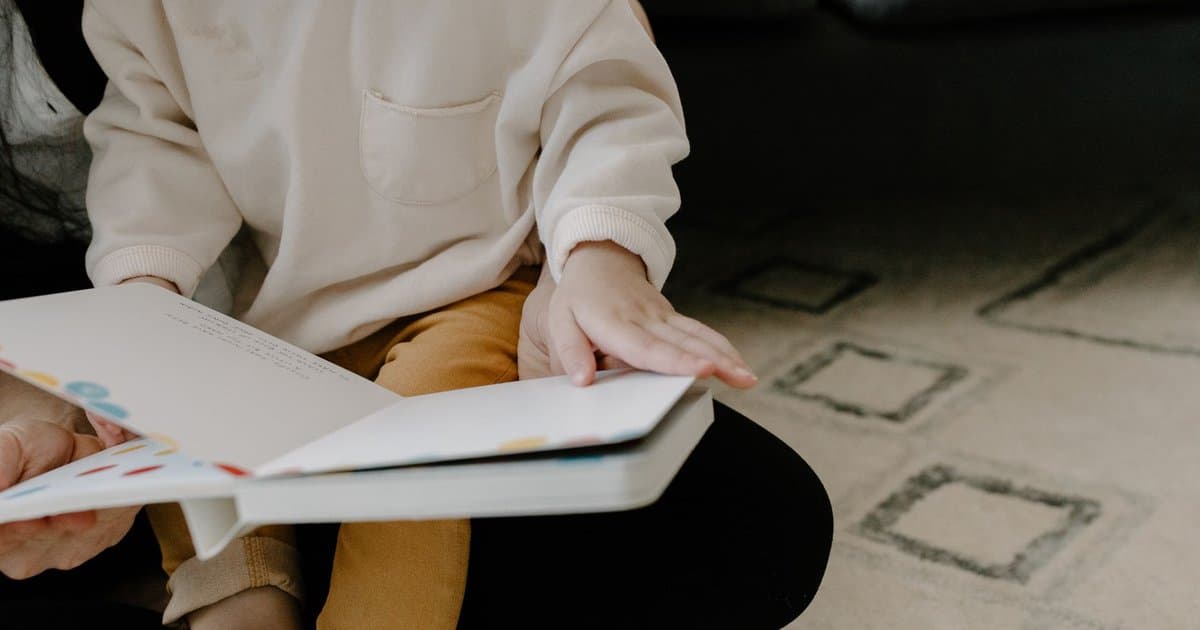
You're staring at a wall of board books, or scrolling through dozens of options online, trying to find the right happy 1st birthday book for a child who still puts everything in their mouth. You want something meaningful, not another plastic toy that plays a jingle for two weeks and ends up in a donation bin.
Here's the good news: a book is one of the most developmentally useful gifts you can give a one-year-old. But not all books are created equal for this age. Some are too fragile. Others are too visually complex. And a few are genuinely perfect, sturdy, engaging, and worth reading fifty times without losing your mind.
According to the American Academy of Pediatrics, reading aloud to children from infancy promotes brain development, strengthens parent-child bonds, and builds early language skills (AAP, 2014). This guide will help you find a first birthday book that actually works, for the child and the adults who'll be reading it on repeat.
What 1-Year-Olds Actually Get Out of Books
At 12 months, your toddler isn't following a storyline. They're exploring. They're grabbing pages, mouthing corners, pointing at bright images, and soaking in the sound of your voice. That's not a failure of reading, that is reading at this age.
Research from the Reach Out and Read program emphasizes that the primary benefit of books for infants and toddlers comes from the shared interaction between child and caregiver, not from the content itself (Reach Out and Read, 2023). When you narrate pictures, make animal sounds, or pause for your child to babble back, you're building neural connections.
Toddlers learn through repetition. Hearing the same words tied to the same images helps them map language to meaning. A study published in Frontiers in Psychology found that repeated shared reading of the same book led to greater word learning in toddlers compared to reading a variety of different books (Horst et al., 2011).
So the "best" book isn't the most beautiful one. It's the one you'll both return to again and again.
Board Books vs. Picture Books for a 1-Year-Old
Board books are the clear winner at 12 months. Their thick, laminated pages survive chewing, throwing, and the occasional encounter with mashed banana. They're sized for small hands, and many are waterproof enough to wipe clean.
Traditional picture books, the kind with thin paper pages and detailed illustrations, are gorgeous. But they're not practical for daily use at this age. A one-year-old's fine motor skills aren't refined enough to turn thin pages without tearing them, and the frustration can actually create negative associations with reading.
Children's librarians consistently recommend saving picture books for around age two and up, when kids develop the pincer grasp strength and impulse control to handle delicate pages (ZERO TO THREE, 2016).
If someone gives your baby a beautiful picture book, accept it gratefully and put it on a high shelf. It'll be perfect in a year. For now, board books are your daily workhorses.
Features That Make a Happy 1st Birthday Book Special
The best books for 12-month-olds share a few key features. Look for:
High-contrast images. At one year, a child's visual acuity is still developing. Bold colors and clear shapes against simple backgrounds are easier for them to process than intricate watercolor illustrations. According to the American Optometric Association, by 12 months most infants can see clearly but still prefer high-contrast and brightly colored objects (AOA, 2023).
Minimal text. One to two short sentences per page is ideal. Anything longer and you'll lose their attention, and your own patience on the fortieth reading.
Tactile and interactive elements. Flaps to lift, textured patches to touch, or mirrors to look into all extend engagement. These sensory elements keep little hands busy and make the book feel like an activity, not a passive experience.
Familiar subjects. Animals, family members, food, vehicles, objects your child encounters daily help build vocabulary they can actually use.
Is Personalization Worth It for a 1-Year-Old's Book?
Here's the honest truth: your one-year-old won't understand that the name on the page is theirs. They can't read. They don't have a developed sense of self-as-character yet.
But personalization isn't really for the one-year-old. It's for the family.
A happy 1st birthday book with a child's name, photo, or personal details woven into the story becomes a keepsake. Parents report re-reading personalized books long after their child has outgrown them, sometimes pulling them out at high school graduations or weddings. The emotional value compounds over time.
Some parents find that reading a personalized story helps create a stronger ritual because the child's name naturally draws attention during read-aloud sessions. As children grow into toddlerhood (18–24 months) and begin recognizing their own name in print, the book takes on new meaning.
If you choose a personalized book, prioritize quality. Make sure the text is genuinely readable and engaging, not just a name stamped onto a generic template. And confirm it comes in a durable board book format if it's intended for daily use.
Popular 1st Birthday Books Parents Actually Return To
These titles consistently circulate in libraries, show up in parenting forums, and survive years of toddler handling:
"Dear Zoo" by Rod Campbell. Lift-the-flap format, repetitive text, animal reveals. It's been in print since 1982 for good reason, the pacing is perfect for short attention spans.
"Brown Bear, Brown Bear, What Do You See?" by Bill Martin Jr. and Eric Carle. The rhythmic, predictable text is almost musical. According to the National Association for the Education of Young Children (NAEYC), predictable and rhyming texts support early phonological awareness even in pre-verbal children (NAEYC, 2017).
"Where Is Baby's Belly Button?" by Karen Katz. Interactive flaps and body-part vocabulary make this a hit for self-discovery at 12 months.
"Goodnight Moon" by Margaret Wise Brown. The slow, repetitive rhythm genuinely helps with bedtime wind-down. Many parents report it becomes part of their nightly routine for years.
Avoid overly complex pop-up books or battery-operated sound books at this age. They tend to overstimulate rather than engage, and the mechanics break quickly under toddler-level enthusiasm.
When to Give a Book as the Main Gift vs. an Add-On
A book alone can feel underwhelming at a first birthday party surrounded by large, colorful boxes. That's not a reflection of the book's value, it's just the reality of gift-opening optics.
If you're giving a happy 1st birthday book as your primary gift, consider pairing it with something tactile: a set of stacking cups, a small stuffed animal that matches a character in the book, or a simple sensory toy. This creates a "gift experience" that feels complete.
If you know the family well, ask what they'd prefer. Some parents actively request books instead of toys, they're trying to manage clutter or build a home library. In those families, a single well-chosen book is the most appreciated gift you could give.
For grandparents or close relatives who want to give something with lasting emotional weight, a book with a handwritten inscription often becomes the most treasured item from the entire birthday.
When This Is Normal: 1-Year-Olds Who Aren't Interested in Books
If your one-year-old squirms away, chews the book, or shows zero interest in sitting for a story — that's completely normal. You haven't failed. They haven't failed.
At 12 months, a child's attention span for a single activity is typically just two to three minutes (ZERO TO THREE, 2016). Some toddlers are more physical than verbal at this stage and would rather climb, crawl, or bang things together. That doesn't predict anything about their future relationship with reading.
What helps is brief, frequent exposure. Read for two minutes during a calm moment — after a bath, before a nap. Don't force it. If they crawl away, let them. Try again tomorrow.
Many parents find that interest in books blooms dramatically between 15 and 20 months, when language development accelerates and toddlers start pointing at pictures and naming things. The seeds you plant now with short, low-pressure reading moments genuinely matter — even when it doesn't look like it.
When to Talk to Your Pediatrician
While variable interest in books is normal at age one, there are a few signs worth mentioning at your child's next well-visit:
- No response to your voice when you read aloud or talk to them (possible hearing concern)
- No interest in looking at any images or objects you point to by 12 months
- No babbling, gesturing, or attempts to communicate by 12 months
- Complete avoidance of being held during reading or other close activities
These don't necessarily indicate a problem. But your pediatrician can screen for hearing, vision, or developmental concerns and provide reassurance or early support. The AAP recommends developmental screening at 9, 18, and 30 months as part of routine well-child visits (AAP, 2020).
Early intervention, when needed, is most effective when it starts early. Trust your instincts — you know your child better than anyone.
How to Make Book-Giving Meaningful
The most memorable first birthday books aren't always the fanciest. They're the ones with context.
Write a short note inside the front cover. Explain why you chose this book. Share a memory — maybe it was your favorite as a child, or the animal on the cover reminds you of a family pet. These inscriptions transform a $10 board book into something irreplaceable.
If you're giving the book at a party, tell the story out loud: "I picked this because your mom and I used to read it together when we were little." That two-sentence explanation gives the gift emotional weight that no amount of wrapping paper can match.
Some families start a tradition where every birthday guest brings a book instead of a card, each with a personal inscription. By the time the child is five, they have a small library full of messages from people who love them. It costs almost nothing and creates something genuinely lasting.
Key Takeaways
- Board books are essential at 12 months. Save delicate picture books for later.
- Interaction matters more than content. Your voice, your pointing, your pauses — that's where the learning happens.
- Repetition is your friend. The same book read fifty times builds more language than fifty different books read once.
- Personalized books are keepsakes. They grow in meaning as the child grows.
- Short sessions work best. Two to three minutes of reading is plenty at this age.
- Don't stress if your baby isn't interested yet. Exposure now pays off later.
- A handwritten inscription makes any book a treasure.
Get practical parenting tips delivered weekly
Evidence-based guidance for the moments that matter. No spam, unsubscribe anytime.
Frequently Asked Questions
Keep reading
How to Create a Dog Memorial Book (With Printable Templates)
Create a dog memorial book with photos, stories, and mementos. Learn 5 organizational tips and design ideas for honoring your pet's memory.
8 min read
How to Write a Wedding Speech for Your Aunt and Uncle (With Examples)
Write a heartfelt 3-5 minute wedding speech for your aunt and uncle. Follow this proven structure with character-focused stories and authentic delivery tips.
7 min read
Cat Memorial Book Ideas: Creating a Lasting Tribute
Create a cat memorial book with photos, memories, and keepsakes. Learn 6 meaningful ways to honor your pet and process grief with this personalized tribute.
7 min read
Get weekly parenting tips backed by research
Evidence-based guidance for the moments that matter. No spam, unsubscribe anytime.