What Actually Matters for a 1st Birthday Gift—Beyond the Toy Box
Discover meaningful first birthday gift ideas grounded in child development. Learn why sentimental gifts beat toys and how to choose presents your child will treasure.

Matt Li
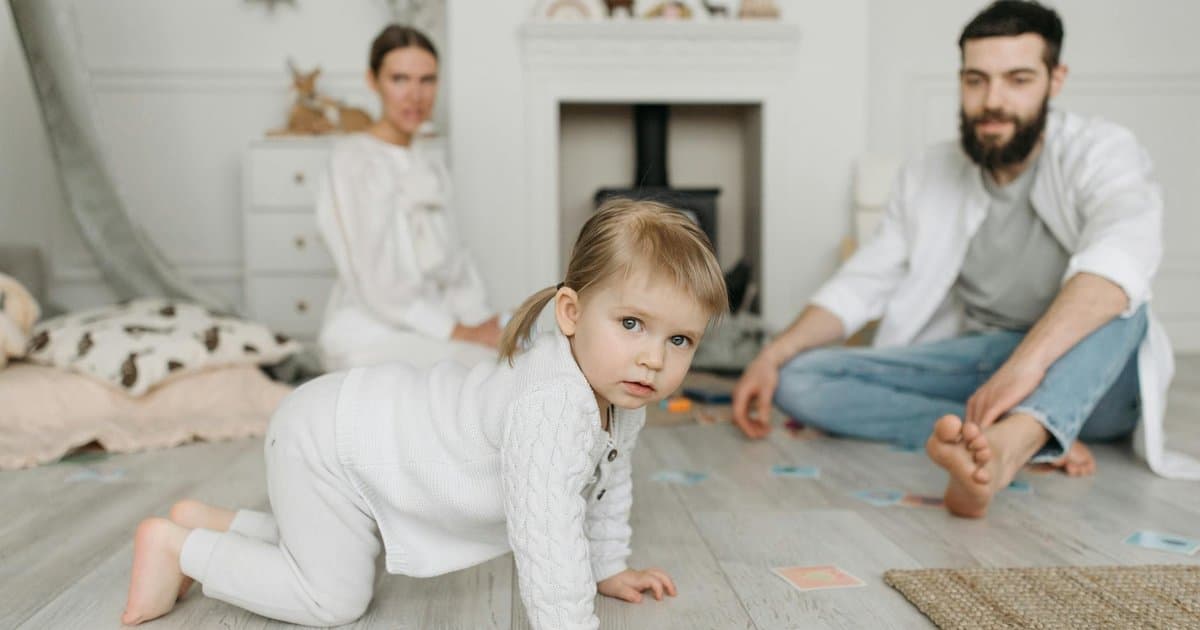
Your baby's first birthday is approaching, and if you're anything like most parents, you're caught between two feelings: wanting to make it magical and wondering whether your one-year-old will care more about the wrapping paper than the gift inside. (Spoiler: they probably will, and that's completely fine.)
Here's what might help you breathe easier. The best first birthday gifts aren't the flashiest ones on the shelf. They're the ones that support what your child actually needs right now, sensory exploration, emotional connection, and simple routines. A personalised 1st birthday book, a quality stacking toy, or even a zoo membership can mean more than an overflowing toy bin ever will.
This guide walks you through what one-year-olds genuinely need, why sentimental gifts hold surprising power, and how to handle the well-meaning relatives who show up with seventeen plastic gadgets.
What 1-Year-Olds Actually Need (vs. What Stores Tell You to Buy)
At twelve months, your child's brain is building roughly one million new neural connections every second, according to Harvard's Center on the Developing Child (2023). That's staggering, and it means their environment matters far more than any single toy.
What supports all that brain-building? Sensory exploration, things they can touch, stack, shake, and mouth safely. Textured balls, wooden blocks, and simple musical instruments all outperform blinking electronic gadgets because they require the child to do something, not just watch.
Fine and gross motor development should guide your choices. A push walker that helps them practice cruising beats a tablet propped in their lap. Stacking cups they can knock over and rebuild teach cause and effect in a way no screen can replicate.
Above all, safety and durability matter more than novelty. A toy that survives being dropped, chewed, and hurled across the room is worth ten fragile ones that break before naptime.
Why Sentimental Gifts Outlast Every Toy in the Box
Think about your own childhood. You probably don't remember a specific plastic figurine, but you might remember a stuffed animal, a blanket, or a book that someone read to you over and over.
Sentimental gifts work because they carry emotional weight that compounds over time. Research by Aknin, Hamlin, and Dunn (2012) published in PLOS ONE found that even toddlers show greater happiness when giving or receiving items tied to personal connection rather than material novelty. The emotional resonance matters more than the price tag.
A personalised 1st birthday book, a hand-knitted blanket with their name, or a photo album of their first year, these are the items parents pull out at graduation parties. They become part of your family story, not landfill.
Plastic wears out. Batteries die. But a keepsake that says this was made for you tells a child they were known, celebrated, and deeply loved from the very start.
The Case for a Personalised 1st Birthday Book as a Gift
Reading aloud to children, even before they can understand the words, is one of the most powerful things a parent can do. The American Academy of Pediatrics (2014) recommends reading aloud from infancy, citing evidence that early reading exposure builds language skills, strengthens parent-child bonds, and supports literacy development years later.
A personalised book amplifies these benefits. When a child sees their own name on the page, or recognizes their face in an illustration, it creates a moment of delight and recognition. Research from Kucirkova, Messer, and Whitelock (2013) found that children showed significantly higher engagement and motivation when reading personalised books compared to non-personalised versions.
Beyond development, there's the bedtime routine factor. One-year-olds crave predictability. A short, familiar book read every night becomes an anchor in their day, something steady in a world that's constantly new and overwhelming.
And unlike a toy that gets outgrown in months, a book becomes a keepsake. It sits on the shelf, gets rediscovered at age four, and eventually becomes the thing your child reads to their baby.
How to Choose a Personalised Book That Actually Gets Read
Not all personalised books are created equal. The difference between a book that gets read a hundred times and one that collects dust comes down to a few practical details.
Construction matters. For a one-year-old, board book format is non-negotiable. Thin paper pages will be torn, chewed, and destroyed within a week. Board books survive the love of a toddler, and that's exactly what you want.
Keep it short. At twelve months, attention spans are brief. According to ZERO TO THREE (2016), toddlers typically focus on a single activity for one to three minutes. A book of 10–16 pages with simple, rhythmic text hits the sweet spot. Anything longer and you'll be reading to yourself while they crawl away.
Illustrations should be bold and clear, not cluttered. Overstimulating visuals can make bedtime reading counterproductive. Look for warm colors, large faces, and simple scenes.
Relevance drives rereading. A story about turning one, exploring the world, or celebrating their name will resonate more than a generic adventure. The more a child connects with the content, the more they'll reach for it again.
When Your 1-Year-Old Ignores Their Birthday Gifts Entirely
Here's something nobody warns you about: your one-year-old might push every gift aside and play with a cardboard box for forty-five minutes. This is completely, beautifully normal.
At twelve months, most children don't understand the concept of gift-giving. According to the CDC's developmental milestones (2022), children typically begin showing interest in specific objects and demonstrating preferences around 15–18 months. Before that, they're driven by whatever captures their sensory curiosity in the moment, and crinkly wrapping paper is very sensory.
Don't interpret their indifference as a problem. They're not ungrateful. They're doing exactly what their brain tells them to: explore textures, test cause and effect, and process a very stimulating party environment.
If anything, the pressure to perform gratitude, to smile for the camera while unwrapping, can stress a toddler who's already overwhelmed by noise, people, and disrupted routines. Let them explore at their own pace. The gift will still be there tomorrow, when they discover it on their own terms.
Building a Meaningful First-Birthday Memory, Not Just a Photo Op
It's tempting to measure your child's first birthday by the Instagram photos. But the most meaningful part of this milestone isn't the party backdrop, it's the connection.
Many parents find that the best first-birthday memories come from quiet moments: reading a new book together before bed that night, watching their child stack a new set of cups for the first time, or simply sitting on the floor surrounded by torn wrapping paper and laughing together.
Consider starting a tradition that grows with your child. Some families read a special birthday book together every year. Others write a letter to their child on each birthday, tucked into a keepsake box. These rituals cost almost nothing but create an emotional throughline across childhood.
Quality over quantity applies to memories too. You don't need twenty activities and a smash cake and a bounce house. You need presence. Your one-year-old won't remember the decorations, but over time, they'll internalize the feeling of being celebrated.
Gift Ideas That Work at Every Budget Level
Meaningful gifting doesn't require a big spend. Here are options across price ranges that prioritize connection and development over clutter:
Under $20: Quality board books (personalised or classic), textured sensory balls, stacking cups, a wooden rattle. Simple, durable, and genuinely useful.
$20–$50: A personalised storybook, a push walker, a music class trial, a soft baby doll, or a set of Grimm's wooden blocks. Some parents find that a personalised story about turning one helps because children see themselves as the hero of their own milestone — and it becomes a keepsake parents treasure for years.
$50+: Experience gifts shine here. A zoo or children's museum membership provides months of shared outings. A savings bond or investment contribution grows with the child. A professionally made photo book of their first year becomes an heirloom.
According to a survey by ZERO TO THREE (2016), 90% of parents believe children under two have too many toys. You have full permission to choose fewer, better things.
When Other People's Gift Expectations Don't Match Your Values
Your mother-in-law bought a battery-operated dinosaur that roars. Your neighbor brought a bag of hand-me-down stuffed animals. Your colleague gave a toy with forty-seven small parts.
First: these people love your child. Their gifts come from a good place, even when they don't match your preferences.
That said, you get to decide what stays in your home. It's okay to quietly donate duplicates, regift items that aren't age-appropriate, or rotate toys so your child isn't overwhelmed by choice. Research by Dauch et al. (2018) published in Infant Behavior and Development found that toddlers actually played longer, more creatively, and with greater focus when they had fewer toys available.
If you want to redirect gift-givers before the party, try something simple: "We're keeping things minimal this year — books, experience gifts, or contributions to child's name's savings account would mean so much." Most people appreciate the guidance. It takes the guessing game out of gifting.
You're not being ungrateful. You're being intentional.
When to Talk to Your Pediatrician
While most one-year-olds are perfectly on track even if they ignore gifts or seem uninterested in books, a few signs are worth mentioning at your next well-child visit:
- No response to their name by 12 months
- No interest in any objects — not just gifts, but toys, household items, or food
- No babbling or attempts at words by 12 months
- No gestures like pointing, waving, or reaching by 12 months
- Loss of previously acquired skills at any age
These don't necessarily indicate a problem, but early identification of developmental differences leads to better outcomes. According to the CDC (2022), early intervention services can significantly improve developmental trajectories when concerns are identified before age three.
Trust your instincts. You know your child best.
Key Takeaways
- One-year-olds need sensory exploration and connection, not complex or expensive toys.
- Sentimental gifts — especially personalised books — carry emotional value that compounds over decades.
- Board book construction, short length, and bold illustrations make a personalised 1st birthday book one that actually gets read.
- Your child ignoring gifts at their party is completely normal. Genuine engagement with specific objects develops closer to 18 months.
- Fewer, better gifts reduce overwhelm for both toddlers and parents.
- It's okay to set boundaries with well-meaning gift-givers. Being intentional isn't being ungrateful.
- The best first-birthday gift is your presence — reading together, playing on the floor, and simply being there.
Get practical parenting tips delivered weekly
Evidence-based guidance for the moments that matter. No spam, unsubscribe anytime.
Frequently Asked Questions
Keep reading
How to Create a Dog Memorial Book (With Printable Templates)
Create a dog memorial book with photos, stories, and mementos. Learn 5 organizational tips and design ideas for honoring your pet's memory.
8 min read
How to Write a Wedding Speech for Your Aunt and Uncle (With Examples)
Write a heartfelt 3-5 minute wedding speech for your aunt and uncle. Follow this proven structure with character-focused stories and authentic delivery tips.
7 min read
Cat Memorial Book Ideas: Creating a Lasting Tribute
Create a cat memorial book with photos, memories, and keepsakes. Learn 6 meaningful ways to honor your pet and process grief with this personalized tribute.
7 min read
Get weekly parenting tips backed by research
Evidence-based guidance for the moments that matter. No spam, unsubscribe anytime.