Why Personalized Books Matter for Newborns (& How to Choose)
Discover why personalized books matter for newborn development, when to introduce them, and expert tips for choosing quality options that promote early literacy.

Matt Li
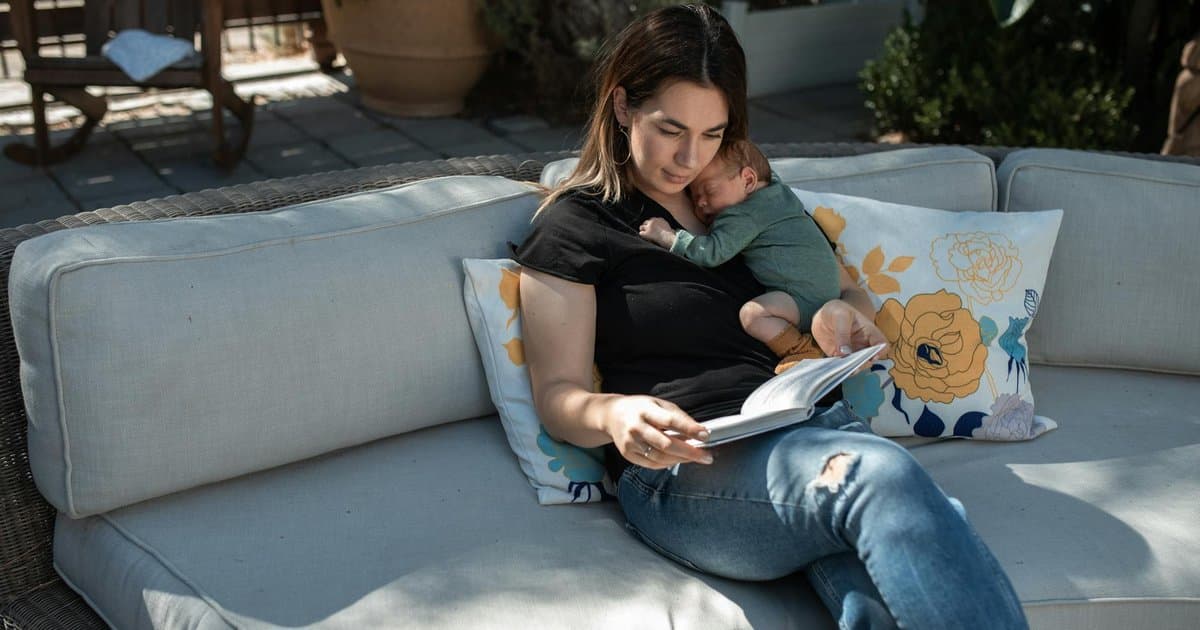
You're staring at a registry full of onesies, swaddles, and sound machines, and someone suggests a book. Not just any book, but a personalized book for your newborn. Your first thought might be: They can't even see clearly yet. Is this a waste of money?
It's a fair question. Newborns don't read. They can barely focus past 12 inches. But here's what they can do: hear your voice, respond to rhythm, and begin forming the neural connections that will shape language for the rest of their lives. Personalized books for newborns aren't really about the baby reading, they're about giving you a reason to read aloud, consistently, starting from day one.
This guide walks you through what the research actually says, how to choose well, and when a classic board book works just as effectively.
What Newborns Actually Gain from Personalized Books
Newborns can't follow a plot. But they're listening, and that matters more than you might think.
According to a landmark study by Hart and Risley (1995), the quantity of words a child hears in their earliest years is one of the strongest predictors of later language ability and school readiness. Reading aloud, to any book, is one of the simplest ways to increase that word exposure.
A personalized book adds something specific: your baby's name woven into the narrative. Research published in Psychological Science by Mandel, Jusczyk, and Pisoni (1995) found that infants as young as 4.5 months show a preference for the sound of their own name over other names. Hearing their name paired with your warm voice and a cozy reading moment creates positive associations early on.
The book also becomes a keepsake, something parents revisit at age one, age three, and beyond. Many parents find that personalized books feel more intentional than generic gifts, which means they're more likely to actually get read.
When to Introduce a Personalized Book to a Newborn
There is no "too early." If you're reading aloud, your baby benefits, even in the first week of life.
Birth to 8 weeks: Newborns hear language but can't focus on images. Your voice is the point. Read during calm moments, after feeding, during skin-to-skin time. The American Academy of Pediatrics (AAP) recommends reading aloud from birth as a core part of early literacy promotion (AAP, 2014).
8 weeks to 6 months: Babies begin tracking high-contrast objects and bright colors. Books with bold illustrations become more visually engaging. This is when many parents notice their baby looking at the pages.
6 months and beyond: Babies start recognizing their own name reliably and enjoying repetition. A personalized story becomes genuinely engaging at this stage, they perk up when they hear their name in the narrative.
The reading ritual matters more than the specific book. Consistency builds neural pathways. Start whenever you're ready.
How to Choose a Quality Personalized Newborn Book
Not all personalized books are created equal. Here's what to look for, and what to avoid.
Format matters. Board books are safer and more durable for newborns and young babies. Paper pages tear easily and pose a minor choking hazard once babies start grabbing.
Check the illustrations. For babies under six months, high-contrast and bold, simple images work best. After six months, more colorful and detailed illustrations become appropriate. According to research from Fantz (1963), infants show strong visual preferences for patterns with high contrast, especially in the first months.
Read the text aloud before buying. Is it rhythmic? Simple? Repetitive? Babies learn language patterns through rhythm and repetition, the same reason nursery rhymes have persisted for centuries. If the personalization feels forced or interrupts the story's flow, it's a red flag.
Practical checks: Look for sample page previews, read reviews from parents of actual newborns, and confirm the return policy before ordering.
Are Personalized Newborn Books Worth the Cost?
A quality personalized board book typically costs $25–$45. That's two to three times the price of a classic board book from the bookstore. So is it worth it?
Think about it this way: if you read the book three times a week for one year, that's over 150 readings. A $30 book at 150 reads costs $0.20 per reading session, comparable to what you'd spend borrowing from a library after gas and late fees.
The developmental benefit of a personalized book versus a traditional one is essentially identical. Research from the National Institute of Child Health and Human Development (NICHD) consistently shows that what matters most is reading frequency and caregiver engagement, not the specific book.
Where personalized books earn their value is emotional. They feel special, so parents prioritize reading them. For gift-givers on a budget, pairing a classic board book with a custom bookplate (name and date) achieves a similar sentimental effect for under $15.
Personalized Books vs. Traditional Newborn Books
Both work. The difference is emotional, not cognitive.
Traditional classics like Goodnight Moon and Brown Bear, Brown Bear, What Do You See? have proven appeal, beautiful illustrations, rhythmic text, and decades of parent approval. They're affordable, widely available, and beloved for good reason.
Personalized books add one thing: the baby's name and sometimes family details woven into the story. This doesn't create a measurable cognitive advantage. But many parents report feeling more motivated to read a personalized book because it feels like "their" book, not just any book from the shelf.
A practical approach: start with one personalized book and supplement with three to four classic board books. This gives your baby variety in illustration styles, rhythms, and narratives, which ZERO TO THREE (2020) recommends for healthy language development. First-time parents tend to gravitate toward personalized books for the novelty; experienced parents often prefer trusted classics. Neither choice is wrong.
What If Your Newborn Doesn't Seem Interested?
This is completely normal. Please don't panic, and don't shelve the book permanently.
Newborn attention spans range from 30 seconds to about two minutes. Some days your baby will stare at a page; other days they'll fuss through the first sentence. This has nothing to do with the book's quality or your baby's intelligence.
Keep reading anyway. According to the AAP's Reach Out and Read initiative, passive language exposure, hearing words even when the baby isn't visually engaged — still supports vocabulary development and auditory processing (Zuckerman, 2009).
Try different times of day. Many parents find that post-feeding, when the baby is alert but calm, works best. If the book truly sits unused for months, set it aside and reintroduce it around 8–12 months. Many parents report a completely different reception when their baby is older, more alert, and recognizes their own name.
Some babies simply prefer touch-and-feel or high-contrast books over narrative stories. That's a preference, not a problem.
How to Build a Reading Routine with Personalized Newborn Books
The secret to making reading stick isn't willpower — it's anchoring it to something you already do.
Attach reading to an existing routine. After a feeding. Before the afternoon nap. During the bedtime wind-down. When reading follows a predictable cue, it becomes automatic rather than aspirational.
Start with two to three minutes. Quality beats duration every time. A short, engaged session is worth more than ten distracted minutes.
Repeat shamelessly. Reading the same book five to ten times per week isn't boring to a baby — it's exactly how they learn. Research from Horst, Parsons, and Bryan (2011) found that toddlers who heard the same stories repeatedly learned new words significantly faster than those exposed to different stories each time.
Involve all caregivers. Partners, grandparents, babysitters — when everyone reads, reading becomes a shared family value rather than one parent's job.
Some parents find that a personalized story about their baby helps create a sense of ritual, since the child's name in the narrative makes the reading feel like a dedicated moment just for them.
Personalized Books as Gifts: What Every Gift-Giver Should Know
If you're buying a personalized book for someone else's baby, a little planning goes a long way.
Order early. Most personalized books take two to four weeks to print and ship. If you're buying for a baby shower, order at least six weeks ahead. For a birth gift, place the order as soon as you confirm the baby's name.
Double-check every detail. Verify spelling carefully. If the book allows you to include parent names or a dedication, confirm those details with someone close to the family.
Pair it thoughtfully. A personalized book plus a small reading light, a cozy swaddle blanket, or a simple milestone journal creates a "reading ritual kit" that feels intentional and complete.
Include a note. Something like: "I chose this so [baby's name] could hear their own story from day one." Parents who understand the intention behind the gift are more likely to actually read the book regularly. Personalized newborn books make especially meaningful gifts from grandparents, godparents, and close friends — the people whose connection to the baby you want the child to remember.
When to Talk to Your Pediatrician
Reading aloud supports language development, but it isn't a treatment for delays. Know when to seek professional guidance.
By 6–8 months, babies should be babbling and responding to sounds. By 12 months, they should turn toward their name and make simple gestures like pointing or waving. By 18 months, most children say at least 10–15 words, according to the CDC's developmental milestone guidelines (CDC, 2022).
If your baby isn't hitting these markers, mention it to your pediatrician. The most important first step is usually a hearing screening — hearing is the foundation of all language development, and early identification of hearing loss leads to significantly better outcomes.
Babies develop language at wildly different rates. Early talking doesn't predict intelligence, and late talking doesn't necessarily signal a problem. But if something feels off, trust your instincts and ask. Early intervention services are free in most states and can make a meaningful difference.
Key Takeaways
- Reading aloud from birth matters. The specific book matters far less than the consistency of the habit.
- Personalized books for newborns add emotional value, not a cognitive advantage. They motivate parents to read more often.
- Choose board books with bold illustrations, rhythmic text, and natural-feeling personalization.
- Start anytime. There is no "too early" for reading aloud to your baby.
- Repetition is your friend. Babies learn through hearing the same stories again and again.
- One personalized book plus a few classics is an ideal starter library.
- If your baby seems uninterested, keep reading. Passive language exposure still counts.
- Your voice is the most important part. More than any illustration, customization, or price point — it's you that makes reading matter.
Get practical parenting tips delivered weekly
Evidence-based guidance for the moments that matter. No spam, unsubscribe anytime.
Frequently Asked Questions
Keep reading
How to Create a Dog Memorial Book (With Printable Templates)
Create a dog memorial book with photos, stories, and mementos. Learn 5 organizational tips and design ideas for honoring your pet's memory.
8 min read
How to Write a Wedding Speech for Your Aunt and Uncle (With Examples)
Write a heartfelt 3-5 minute wedding speech for your aunt and uncle. Follow this proven structure with character-focused stories and authentic delivery tips.
7 min read

Cat Memorial Book Ideas: Creating a Lasting Tribute
Create a cat memorial book with photos, memories, and keepsakes. Learn 6 meaningful ways to honor your pet and process grief with this personalized tribute.
7 min read
Get weekly parenting tips backed by research
Evidence-based guidance for the moments that matter. No spam, unsubscribe anytime.