Autism Social Stories: A Practical Guide for Parents and Teachers
Learn how to write and use autism social stories effectively. Evidence shows positive effects for teaching expected behaviors to autistic children.
Erika Wong
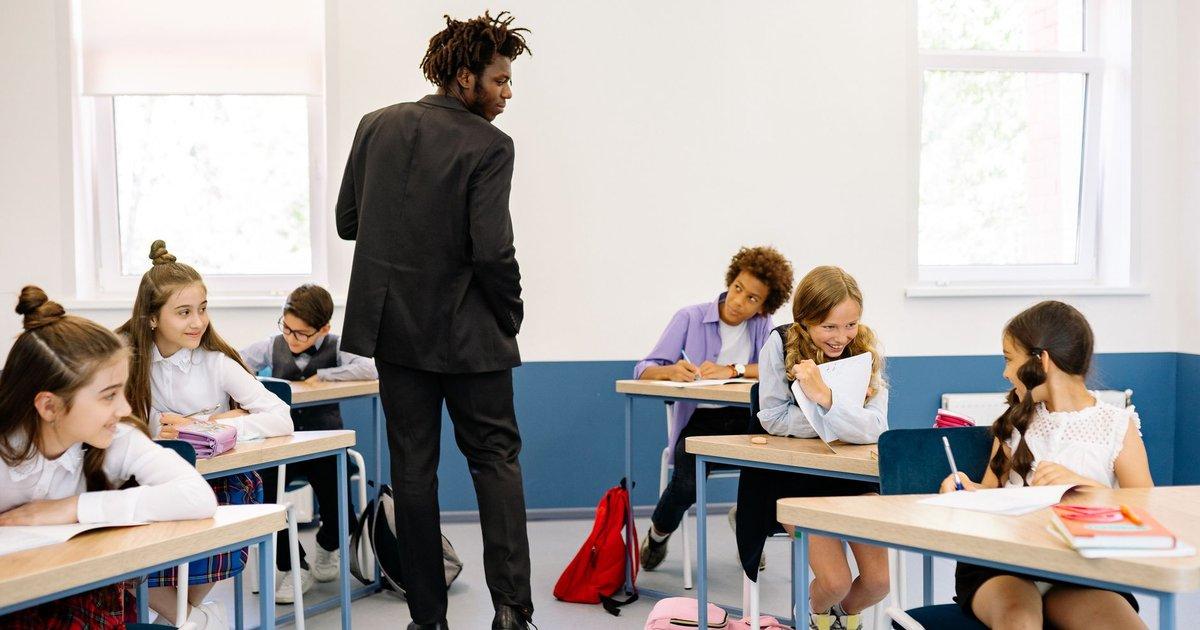
Autism social stories are short, personalized narratives written from the child's point of view that describe a specific situation: what will happen, what the child will see and hear, and why people behave the way they do. They work as preparation, read calmly several times before the haircut or the fire drill, not as a correction delivered after something goes wrong. The research base is genuine but modest, so treat them as one reliable support among several rather than a fix.
Key Takeaways
- Social stories describe what will happen; they are not behaviour charts or consequences.
- Write in first person, in literal language, focused on one situation at a time.
- Read the story three to five times before the event, during calm moments.
- Karkhaneh (2010) found social stories show promise but with small, varied effect sizes.
- Pair stories with visual schedules, video modelling, or practice for stronger results.
What Autism Social Stories Are and Why They Matter
Carol Gray developed Social Stories™ in the early 1990s after noticing that autistic students were often expected to infer social rules nobody had ever stated out loud. A social story fills that gap. It names the setting, the sequence, the sensory details, and the perspectives of other people, in plain descriptive sentences.
The mechanism is predictability. A child who already knows the dentist's chair tips back, the light is bright, and the cleaning tool makes a buzzing sound is managing a familiar event rather than an ambush. That drop in uncertainty is usually where the behaviour change comes from.
A systematic review and meta-analysis by Zhou (2024) [1] examined social story interventions used to teach expected behaviours to preschool children and reported positive overall effects, while noting that study quality varied considerably. That pattern repeats across the literature: real benefit, inconsistent size, heavily dependent on how well the story is written and how consistently it is used.
How Social Stories Differ From Other Teaching Tools
A social story is not a rule list with a cartoon on it. The difference shows up in the grammar.
Rule list: "You must sit quietly during assembly."
Social story: "At assembly, children sit on the floor in rows. The room can get loud when everyone claps. I can cover my ears if the clapping hurts. My teacher will be sitting near me."
Three things changed. The voice is first person. The sentences describe rather than demand. And the child's own experience, including the uncomfortable part, is acknowledged instead of edited out.
Gray's framework asks writers to use mostly descriptive sentences and only a small number of directive ones. A common ratio taught in training is at least two descriptive, perspective, or affirmative sentences for every sentence that coaches an action. That restraint matters. Stories that drift into instruction read as discipline, and children recognise that immediately.
This also separates social stories from behaviour plans. A behaviour plan manages consequences. A story builds understanding before the moment arrives.
Situations Where Autism Social Stories Work Best
Social stories earn their keep in four situations.
Transitions. Moving from preferred to non-preferred activities, leaving the house, changing classrooms. If you want more depth here, see our guide to social stories about transitions.
First visits to unfamiliar places. Dentist, GP, barber, airport, new school building. These are high-sensory, low-control environments.
Changes to routine. A substitute teacher, a cancelled swimming lesson, a grandparent visiting.
Situations with invisible rules. Taking turns in conversation, personal space, what to do when you win a game and your friend does not.
They also suit personal care routines that involve privacy and body awareness, which is why social stories about hygiene are among the most requested in schools.
Where they work less well: as an in-the-moment calming tool during a meltdown, or as a response to behaviour that is actually driven by pain, hunger, or sensory overload. Fix the underlying cause first.
Writing an Effective Autism Social Story Step by Step
1. Pick one situation. Not "being a good friend." Something like "what happens during the fire drill."
2. Gather the real details. Visit the place if you can. Note the lighting, the smells, who will be there, how long it lasts, what the noise is like. Specificity is what makes a story land.
3. Write in first person, present or future tense. Short sentences. No idioms, no sarcasm, no "butterflies in your tummy."
4. Include perspective sentences. "The dentist wants to keep my teeth healthy." "My friends feel happy when someone passes them the ball."
5. Add one or two coaching sentences, maximum. "I can squeeze my hands together if I feel worried."
6. Match visuals to the text. Photographs of the actual room beat generic clipart for most children.
7. End on something reassuring and true. Not a promise you cannot keep. "When the drill is over, we go back inside and finish our work."
Read it aloud before you use it. Anything that sounds like a lecture needs rewriting.
Finding and Vetting Pre-Written Stories
Plenty of free libraries exist. The Gray Center maintains Carol Gray's original criteria and sample stories, and large organizations including Autism Speaks and the Autism Society host downloadable collections for common situations. Many school districts also keep internal banks written by their own speech pathologists and special education teams, which are often the most practical because they reference real local routines. Teachers building a classroom set may find our overview of social stories for special needs students useful for structuring a library.
Vet anything you download against four questions. Is it written in first person? Does it describe more than it directs? Does it acknowledge how the child might feel, including negative feelings? Is it about one situation only?
Stories that fail those tests tend to be compliance scripts wearing a social story costume. They are not harmful, exactly, but they rarely reduce anxiety, and some children shut down when they sense they are being managed.
Adapting Stories to Your Child's Sensory Profile and Interests
A downloaded story is a template, not a finished product. The adaptation is where most of the value sits.
Swap generic descriptions for your child's actual environment. "The waiting room" becomes "the waiting room with the blue fish tank." Replace stock illustrations with photos you took on a scouting visit. If your child has a strong interest in trains or a particular character, build that in; interest-based content holds attention longer for many autistic children.
Adjust complexity honestly. A six-year-old with emerging language may need six sentences and one picture per page. A ten-year-old reading at grade level can handle a page of text and may prefer a short video version.
Starting school is the situation parents ask about most, and a personalized story is one option among several. Some families find a first day of school story that names their child and shows their actual routine helps more than a generic version, because the child sees themselves getting through it successfully. Photo books, slideshows on a tablet, and hand-drawn stapled booklets all do the same job.
Using Autism Social Stories at Home and in the Classroom
Timing is most of the technique. Read the story during a calm, ordinary moment: after breakfast, during quiet reading, at bedtime if that is settled time in your house. Never during escalation, and never immediately after an incident, which turns the story into a reprimand.
Most practitioners suggest three to five readings spread across the days before the event, then one final read shortly beforehand. Afterwards, revisit it to consolidate what went well.
Consistency across settings multiplies the effect. If school and home use the same wording, the child gets one script instead of two.
This is also where my classroom habit applies. I treat expected behaviours as taught skills, not assumptions: how to line up, how to set up a notebook, how to sit. We practise them repeatedly and I give specific feedback so a child knows exactly what to adjust. A social story is the explanation step. The practice still has to happen, and so does the specific praise afterwards.
What to Try When Social Stories Are Not Working
If you have read a story five or six times with no change, stop and diagnose rather than repeating.
Check the fit first. Is the language too abstract? Is the story about the wrong problem? A child avoiding assembly because of noise will not be helped by a story about sitting still.
Then consider alternatives and combinations. Video modelling, where the child watches someone complete the routine, suits visual learners and often outperforms text. Visual schedules provide the sequence without the narrative load. Role-play and rehearsal in the real location add the practice element that stories alone cannot provide.
Karkhaneh (2010) [2] reviewed controlled studies of social stories for autistic children and concluded the evidence showed promise but was limited by small samples and inconsistent results, which supports combining approaches rather than relying on one. Wright (2016) [4] developed a manualised training toolkit precisely because stories written without training were so variable in quality.
When to Seek Additional Support
Needing explicit preparation for new situations is not a problem to be cured. Many autistic children will use some version of this strategy for life, in the same way adults read reviews and look up a restaurant menu before going somewhere new.
Talk to your child's paediatrician, occupational therapist, or speech and language therapist when anxiety is interfering with daily functioning: school refusal, loss of previously established skills, sleep disruption, or distress that takes hours to recover from. Social stories are a teaching tool, not a treatment for an anxiety disorder, and some children need both.
Expect gradual change. The ASSSIST-2 randomised controlled trial by Wright (2025) [3], conducted across UK primary schools, tested Social Stories delivered by trained school staff and found the intervention practical to deliver, while results on broad standardised measures were more modest than many practitioners expect. Individual goals shifted more than global scores. Set your own expectations the same way: one situation, one small improvement, measured over weeks.
Get practical parenting tips delivered weekly
Evidence-based guidance for the moments that matter. No spam, unsubscribe anytime.
Frequently Asked Questions
Keep reading
Making Friends Social Story: A Free PDF Guide for Parents & Teachers
Learn how social stories help children initiate friendships. Evidence-based strategies, free PDF templates, and step-by-step implementation tips for parents
10 min read
Preparing Your Child for Kindergarten: A Practical Guide
Master kindergarten prep in 4-6 weeks. Build emotional skills, practice separation, and create routines that reduce anxiety and boost school readiness.
9 min read

How to Write a Social Story for Autism: Examples and Templates
Learn to write effective social stories for autistic children. Includes 5-sentence structure, 3 examples, and evidence from 6 studies showing measurable
10 min read
Get weekly parenting tips backed by research
Evidence-based guidance for the moments that matter. No spam, unsubscribe anytime.