Social Stories About Hygiene: A Guide for Parents & Teachers
Learn how to write effective social stories for hygiene routines. Evidence-based strategies for handwashing, toileting, and tooth brushing in children with
Erika Wong
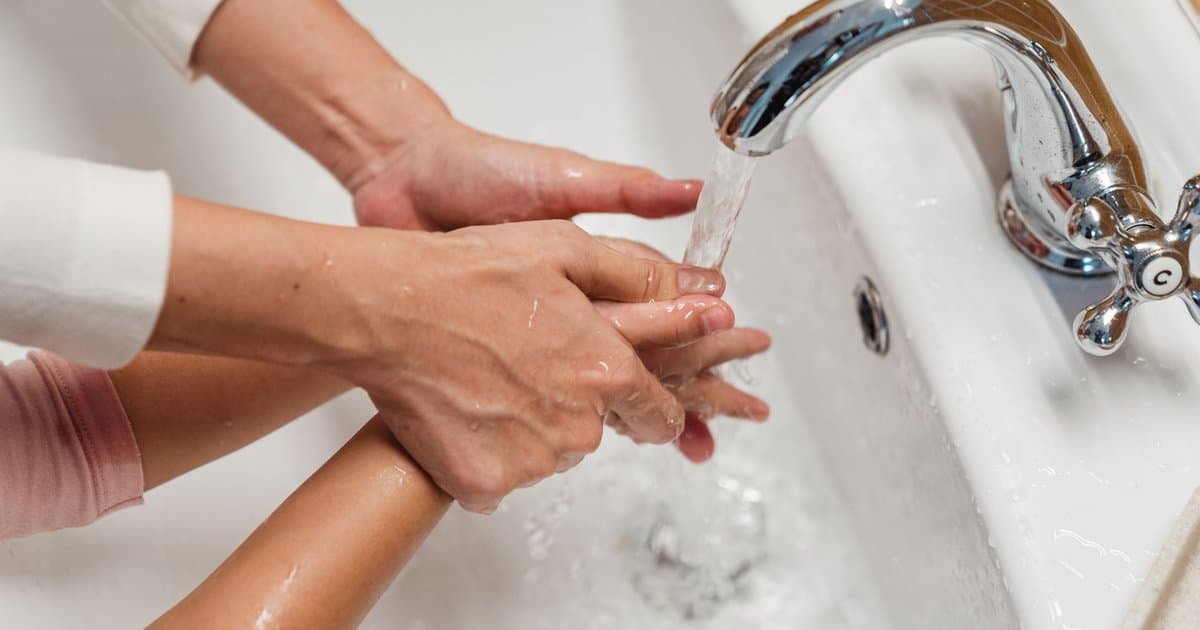
Social stories about hygiene are short, illustrated scripts that walk a child through one routine, handwashing or toileting or tooth brushing, in the exact order it happens, written from the child's point of view. They work because they strip out the guesswork: the child no longer has to hold eight steps in working memory, read adult tone, or predict what the water will feel like. A 2024 systematic review and meta-analysis by Zhou 1 found social story interventions effective for training expected behaviours in preschool children.
Key Takeaways
- Social stories follow four parts: description, perspective, directive, and affirmation.
- Zhou (2020) 6 found social story training improved toothbrushing skills in special-care children with and without autism.
- Name the sensory details explicitly: water temperature, soap smell, the sound of the hand dryer.
- Teach one routine at a time and stay with it for about three weeks before adding a second.
- Screaming at water, skin irritation, or refusing to wash after toileting warrants an OT or pediatric review.
What Social Stories About Hygiene Are and Why They Work
A social story is not a reminder. It is a short narrative, usually 4 to 12 sentences, that describes a situation, explains why it matters, states what the child does, and validates how the child might feel about it.
The mechanism is mostly cognitive load. Handwashing looks simple to an adult, but it is a sequence of turn on tap, wet hands, pump soap, rub twenty seconds, rinse, turn off, dry. For a child with autism, ADHD, or a language delay, that sequence lives entirely in working memory unless something external holds it. A picture holds it.
Karkhaneh (2010) 3], in a systematic review of Social Stories for children with autism spectrum disorder, found positive effects on targeted social skills, while noting that study quality varied and effects were strongest for specific, concrete, well-defined behaviours. Hygiene routines are exactly that kind of target. The same logic underpins broader [social stories for special needs students.
Core Hygiene Topics Worth Covering First
Pick one routine. Resist the urge to build a whole library in a weekend, because a child managing three new stories is managing three new demands.
Handwashing is the usual starting point: it happens many times a day, so you get frequent practice opportunities.
Bathroom routines need the physical steps and the feelings. Nervousness and pride both belong in the text. If you are working on this alongside toilet learning, the pacing advice in potty training girls in preschool pairs well with a story.
Tooth brushing is the most sensory-loaded of the three and the best evidenced. Zhou (2020) 6 found that social story intervention improved toothbrushing skills among special-care children both with and without autism, which matters because the skill involves taste, texture, and someone else's hands near the face.
Personal space and private body parts come next for school-age children, and overlap with body safety for kids.
How to Write or Adapt a Hygiene Social Story
Use the four-part structure. Present tense, short sentences, no sarcasm, no shame.
Description. "When it is time to wash my hands, I go to the sink. The water is warm. The soap makes bubbles."
Perspective. "Washing hands takes germs off my skin. Germs can make people sick. Clean hands help me stay well."
Directive. "I pump the soap one time. I rub my hands while I count to twenty. I rinse. I dry."
Affirmation. "Sometimes I need help. That is okay. Lots of kids are learning this too."
Keep the directive sentences outnumbered by descriptive ones. A story that is seven commands in a row reads as a telling-off, and children hear it that way.
Decide on first person or third person based on the child. Some children find "I wash my hands" easier to adopt; others do better watching a named character do it first.
Age Adaptations From Toddlers to Early School Age
Match vocabulary to comprehension level, not birthday. A verbal 7-year-old with processing differences may need the toddler version, and that is a reasonable accommodation, not a step backwards.
Age range | Text length | Format that works | What to include |
|---|---|---|---|
2–3 years | 1–4 words per page | Real photos, one step per page | "Hands. Water. Rub. Dry." One step at a time |
3–5 years | 4–6 short sentences | Photos or simple drawings, light rhyme | One "why" sentence: "Soap makes germs go away" |
5–8 years | 8–12 sentences | Photo sequence or booklet they hold | Full routine, simple germ logic, link to independence |
For digital delivery, Vandermeer (2015) 4 tested iPad-presented social stories with young children with autism and found results varied considerably between individual children. The practical read: tablet, laminated card, or printed booklet are all legitimate. Choose the format the child will actually engage with and reach for.
Supporting Sensory and Emotional Needs in Your Stories
Do not assume "warm water" is pleasant. For a child with tactile defensiveness, warm wet hands can feel genuinely alarming, and the story should say so rather than pretend otherwise.
Name the sensations precisely. "The water is warm but not hot. The soap smells like lemon. My hands feel slippery when I rub them. Then they feel wet. Then the towel makes them dry."
Validate the discomfort instead of arguing with it. "Some kids do not like wet hands. After I dry them, they feel normal again." That sentence does more for cooperation than any sticker chart, because it tells the child you already know, and that the unpleasant part ends.
Build a choice into the routine. Soap pump or bar. Blue towel or green. Brush teeth standing or sitting. Agency inside a non-negotiable routine removes most of the power struggle without removing the expectation.
Using Social Stories at Home and in the Classroom
Read the story two or three times during a calm moment, well away from the sink. Ask "what happens next?" to check comprehension rather than compliance.
Then prime: "Let's look at our handwashing story. What is first?" Then keep the story visible during the task and point to the picture rather than issuing another verbal instruction. Narrate what you see: "You are rubbing while you count, just like page three."
Teachers often assume children arrive knowing how to behave, then spend their energy managing small disruptions instead of teaching. I treat expected behaviours as skills. How to line up, how to set up a notebook, how to sit, and yes, how to wash hands. We practise them over and over and I give feedback specific enough that a child knows exactly what to adjust next time. Hygiene is no different from lining up. It is a taught sequence.
Wright (2025) 2, in the ASSSIST-2 randomised controlled trial across UK primary schools, found Social Stories feasible and acceptable to staff and families, with modest effects on broad social outcomes. That finding supports targeting narrow, concrete routines rather than expecting a story to reshape general social skills.
Templates, Photos, and Personalised Versions
Free hygiene social story templates circulate widely through special education resource sites and school district SLP pages. They are a fine starting point, and on a Tuesday night with nothing prepared, a generic story beats no story.
Customised versions generally pull better engagement. Photograph your own bathroom, your own soap dispenser, your own child's hands. Caption each photo with one sentence. Laminate, hole-punch, put it on a ring, hang it by the sink. Children recognise their own taps and their own towel hook, and the transfer from page to behaviour is shorter.
Some families find a personalised book, where the child is the named character managing the routine successfully, holds attention better than a photocopied worksheet. A story built around big kid potty time works on the same principle as a homemade photo sequence: the child sees themselves coping, not a stranger coping.
Measuring Progress and Adjusting Your Approach
Give any story three weeks before you judge it. Track four markers: does the child ask for the story, do they start the routine without a prompt, has the number of verbal reminders dropped, and are they completing more steps alone?
If progress stalls, simplify before you add. Cut the story in half. Drop to one step per page. Switch format.
Comparison data is useful here. Gandhi (2024) 5 compared video modelling and social stories for improving oral hygiene in children with autism in a pilot study, and found both interventions produced improvement in their small sample. If a printed story is not landing, a short video of the routine is a reasonable next trial rather than an admission of failure.
Revisit monthly. New school, new bathroom, new toothpaste flavour, and a mastered routine can wobble.
When Resistance Is Normal and When to Talk to Your Pediatrician
Most hygiene resistance is ordinary autonomy-seeking. A 4-year-old refusing the toothbrush, forgetting to wash after the sandpit, objecting to "too much" soap: keep the story, stay calm, keep practising.
Flag these for a pediatrician or occupational therapist:
- Screaming, gagging, or panic at water contact rather than simple protest
- Refusing to wash after toileting, consistently, past age 5
- Skin breakdown, rashes, or dental decay linked to avoidance
- Eating or sleep changes alongside the hygiene refusal
- Regression after genuine mastery, which can signal stress, a sensory shift, or a change at school
An OT assessment for sensory processing is not an escalation. It usually produces small environmental fixes, a different soap, a vibrating toothbrush, a lower water temperature, that make the social story usable again.
Get practical parenting tips delivered weekly
Evidence-based guidance for the moments that matter. No spam, unsubscribe anytime.
Frequently Asked Questions
Keep reading
Social Stories for Inappropriate Touching: Keeping Kids Safe and Confident
Learn how social stories teach body safety to kids ages 2-8. Evidence-based approach with concrete scripts, trusted adults, and personalization tips.
10 min read
Social Stories for Autistic Teens: A Practical Guide to Meaningful Transitions
Learn how social stories reduce anxiety for autistic teens at transitions. Evidence-backed strategies for co-writing personalized stories that work.
11 min read

Hospital Social Stories: Preparing Children for Medical Visits
Learn how social stories reduce hospital anxiety in children. Discover age-appropriate strategies, personalization tips, and when to use them alongside
8 min read
Get weekly parenting tips backed by research
Evidence-based guidance for the moments that matter. No spam, unsubscribe anytime.