Making Friends Social Story: A Free PDF Guide for Parents & Teachers
Learn how social stories help children initiate friendships. Evidence-based strategies, free PDF templates, and step-by-step implementation tips for parents
Erika Wong
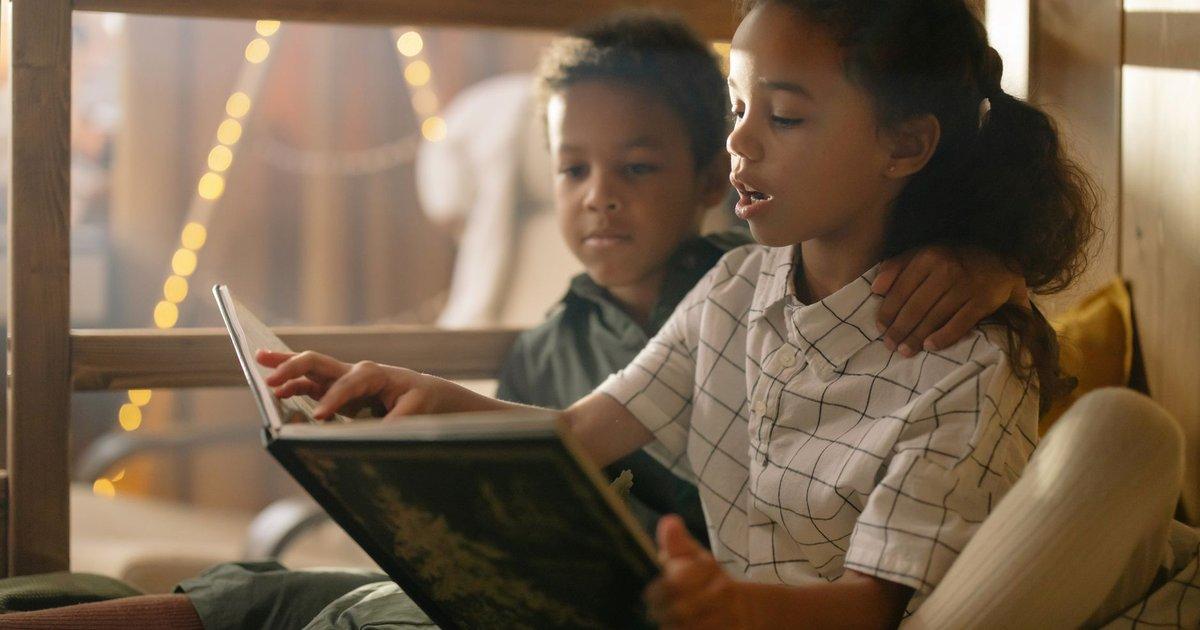
A making friends social story is a short, illustrated script that breaks friendship into concrete steps a child can rehearse before they need them: walk over, say hi, ask "Can I play too?", and wait for an answer. You can find a free making friends social story PDF through school district resource libraries, speech-language pathology sites, and autism support organisations, but the quality varies enormously. The ones that work share four features: simple sentences, clear pictures, a character the child recognises, and a plan for what to do if the answer is no.
Key Takeaways
- Social stories are evidence-based for preschoolers and autistic children, with meta-analytic support from Zhou (2024) 1 and Karkhaneh (2010) 2.
- The strongest stories teach what TO do, not a list of prohibitions, and include a response to rejection.
- Read the story 3 to 5 times per week during calm moments, never during or right after a social failure.
- Most children show measurable change within 4 to 6 weeks of consistent use.
- Free PDFs are templates; swapping in your child's name and real classroom details sharply increases engagement.
What a Making Friends Social Story Actually Does
A social story describes a situation, the people in it, and the expected responses, written in first person from the child's point of view. The format was developed by Carol Gray in the 1990s and has been adopted widely in schools and speech therapy clinics because it does something ordinary coaching does not: it front-loads the information before the stressful moment.
The evidence base is real. A systematic review and meta-analysis by Zhou (2024) 1] found that [social story interventions improved expected behaviours in preschool children across multiple studies. Karkhaneh (2010) 2 reviewed controlled trials of Social Stories for autistic children and reported promising effects on social skills, while noting the research base was still small at that point.
Mechanically, the story works like cognitive rehearsal. The child reads a predictable sequence enough times that the sequence becomes familiar, which lowers the uncertainty that drives freezing. Visuals carry the load for children with limited expressive language.
Why Children Struggle to Initiate Friendships
Freezing at the edge of the playground is rarely defiance or disinterest. Most children who hover are running a calculation: I don't know the words, I don't know if they'll say no, and I don't know what I do next if they do.
There are several common drivers. Uncertainty about the script itself. Fear of visible rejection in front of peers. Sensory overwhelm, because a playground at lunchtime is loud, fast, and unpredictable. And prior experience, since one bad attempt at joining a game can shut a five-year-old down for months.
Here is the part teachers get wrong most often. We assume children arrive knowing how to behave and how to socialise, then spend our energy managing the fallout instead of teaching the skill. In my classroom I treat expected behaviours as taught skills: how to line up, how to set up a notebook, how to sit. We practise them over and over, with specific feedback. Joining play is exactly the same kind of skill. Some children absorb it by watching. Others need it broken down and rehearsed.
Key Components of an Effective Making Friends Social Story
Not every PDF labelled "social story" follows the format properly. The weak ones read as rule lists: Don't grab toys. Don't interrupt. Don't stand too close. A child who is already anxious now has three more things to fail at.
A well-built story includes:
Component | What it looks like | Why it matters |
|---|---|---|
Descriptive sentences | "At recess, children play together on the grass." | Establishes the setting without judgement |
Perspective sentences | "My friends feel happy when someone asks to join." | Explains what others think and feel |
Directive sentences | "I can say, 'Can I play too?'" | Gives the exact words to use |
Response to rejection | "Sometimes they say no. I can find another group." | Removes the catastrophic outcome |
Affirming close | "I am learning how to make friends." | Builds identity, not just compliance |
Carol Gray's original ratio guidance is important: for every directive sentence, include two or more descriptive or perspective sentences. A story that is 80% instructions stops being a story and becomes a lecture. Keep illustrations consistent, and make the main character resemble your child in hair, skin tone, or interests where you can.
How Speech Therapists Use Social Stories in Practice
Reading the story once and hoping is the most common mistake. In clinical and classroom practice, the story is a rehearsal tool used on a schedule.
Introduce it during a calm moment, never immediately after a hard playground day. A child who has just been excluded is dysregulated, and a dysregulated brain cannot take in new information. Sit with the feeling first, name it, and bring out the story the next morning.
Read it 3 to 5 times per week. Many families use bedtime, after-school snack time, or the car ride before a playdate. Then add the second layer: role-play. You be the group of children, let your child practise walking over and saying the line. Swap roles so they practise saying yes to someone else.
Finally, use the story's exact language as a cue in real settings. "What's the first step?" works far better than "go on, go play." Track which steps your child has mastered so you know when to move on. Wright (2016) 4] built a [manualised training toolkit precisely because fidelity of delivery, not the story itself, predicts whether it works.
Finding a Free Making Friends Social Story PDF Worth Printing
When you search for a free making friends social story PDF, you'll mostly hit three sources: school district special education pages, SLP and occupational therapy blogs, and autism charity resource libraries. All three can be excellent. All three also host stories written fifteen years ago with clip-art visuals and vocabulary that doesn't match your child.
Use this filter before you print:
- Does it include illustrations on every page, not just the cover?
- Is it written in first person ("I can...") rather than second person ("You should...")?
- Does it address your child's specific sticking point? Saying hello, joining an existing game, and recovering from a no are three different stories.
- Is the sentence length a match for your child's expressive language, not just their age?
- Does it end on capability rather than compliance?
Print rather than display on a tablet for children under six, if you can. A physical booklet can be carried, pointed at, and left in a backpack. Older children with longer attention spans often do fine with a screen version. Laminate it if it's going anywhere near a lunchbox.
Adapting Social Stories for Different Ages and Abilities
Three and four-year-olds need very short stories with heavy visuals, four to six pages at most, focused on parallel play and sharing rather than conversation. "I can play next to my friend. We can both use the blocks."
Five and six-year-olds can handle conversation starters and joining group play, which is where most kindergarten social skills work sits. Stories at this age can include two outcomes: what happens if they say yes, and what happens if they say no.
Seven and eight-year-olds can manage multi-step social problem-solving, including repair after a conflict. At this age, stories about perspective-taking overlap usefully with teaching empathy through stories.
For autistic children, add visual supports alongside the story: a visual schedule, a scripted phrase card, a quiet rehearsal space. Wright (2025) 3] ran a pragmatic randomised controlled trial of Social Stories in UK primary schools, [ASSSIST-2, which highlighted how much implementation support schools need to deliver the intervention properly. If you want format examples specific to this, see our guide to building a social story for autism.
When to Use a Social Story and When to Seek Additional Support
Social stories are skill-building tools, not treatment for an anxiety disorder. They suit mild shyness, specific skill gaps, transitions into new classrooms, and children who simply haven't been taught the steps.
Contact your GP, paediatrician, school counsellor, or a speech-language pathologist if you see any of the following:
- No change at all after 4 to 6 weeks of consistent, correctly delivered use
- Physical symptoms before social settings: stomach aches, vomiting, refusal to leave the car
- Your child speaks freely at home but not at all at school for more than a month
- Aggression toward peers rather than withdrawal from them
- Your child becomes distressed by the story itself
Karkhaneh (2010) 2 noted that effect sizes in the Social Stories literature vary widely between children, which matches what practitioners see. Some children respond in a fortnight. Others need the story plus a clinician-led social skills group. Neither outcome says anything about your parenting.
Personalizing the Story for Deeper Engagement
A free PDF is a template, and templates are a genuinely good place to start. But the children who ask for the story again and again are usually the ones who can see themselves on the page.
Personalisation is simple to do by hand. Cross out the character's name and write your child's. Replace "the park" with the actual name of their school playground. Swap in two real classmates' names. Stick in a photo of the classroom door. These five-minute edits reliably increase how often a child requests the book, which matters because repetition is the active ingredient.
Some families go further and use a personalised story where the child is the main character working through the exact scenario they struggle with, such as a book built around asking to join a game. Children who see themselves succeeding in print tend to carry that image into the real playground. It is one option among several, and a photocopied, hand-edited free PDF read five times a week will always beat a beautiful book read once.
Get practical parenting tips delivered weekly
Evidence-based guidance for the moments that matter. No spam, unsubscribe anytime.
Frequently Asked Questions
Keep reading

Autism Social Stories: A Practical Guide for Parents and Teachers
Learn how to write and use autism social stories effectively. Evidence shows positive effects for teaching expected behaviors to autistic children.
10 min read

Preparing Your Child for Kindergarten: A Practical Guide
Master kindergarten prep in 4-6 weeks. Build emotional skills, practice separation, and create routines that reduce anxiety and boost school readiness.
9 min read

How to Write a Social Story for Autism: Examples and Templates
Learn to write effective social stories for autistic children. Includes 5-sentence structure, 3 examples, and evidence from 6 studies showing measurable
10 min read
Get weekly parenting tips backed by research
Evidence-based guidance for the moments that matter. No spam, unsubscribe anytime.