Diwali and the Ramayana: Understanding the Festival's Sacred Story
Learn how the Ramayana shapes Diwali celebrations across India. Explore Rama's 14-year journey, Ravana's complexity, and age-appropriate ways to teach children

Matt Li
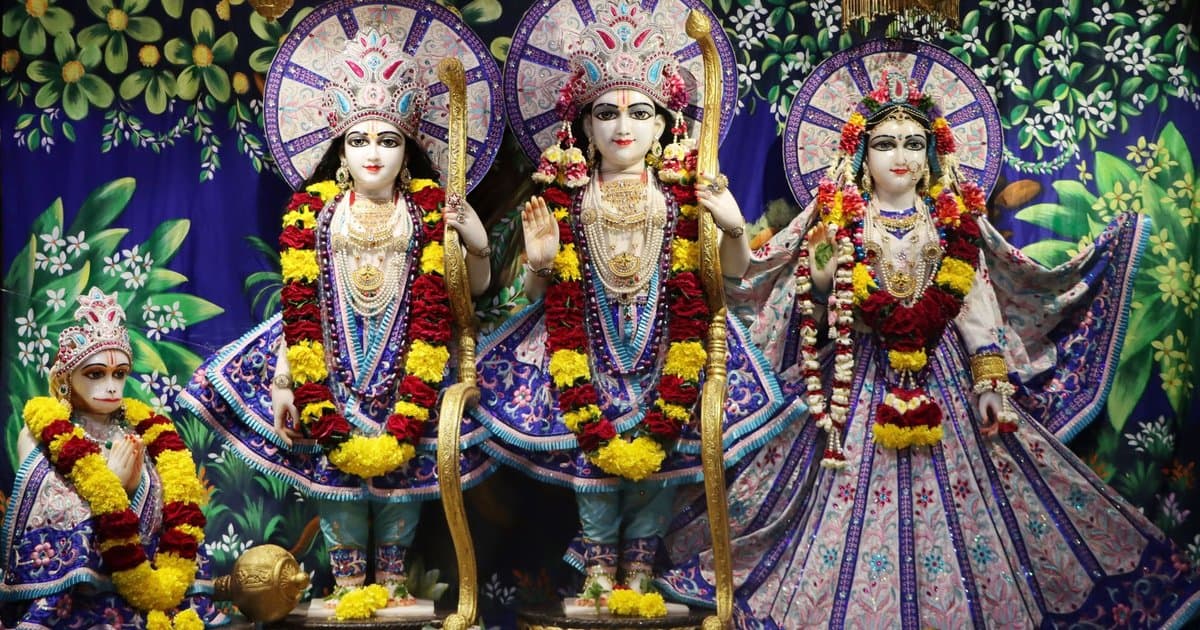
Diwali celebrates Lord Rama's triumphant return to the kingdom of Ayodhya after 14 years of exile and his victory over the demon king Ravana. The Diwali mythology Ramayana connection runs deep: citizens lit thousands of oil lamps to welcome Rama home, and that act of illumination became the festival's defining ritual. Understanding this story gives families a way to share not just a celebration, but a philosophy about courage, duty, and the persistence of good.
Key Takeaways
- Diwali marks Rama's return to Ayodhya after defeating Ravana and completing 14 years of exile.
- The festival's lamps symbolize knowledge, truth, and dharma triumphing over ignorance and chaos.
- Different regions of India emphasize distinct aspects of the Ramayana during Diwali.
- Sita's resilience and agency are central to the story, not secondary.
- Children benefit from age-appropriate engagement with the epic's moral complexity.
The Ramayana and Its Central Role in Diwali
Diwali is directly tied to the Ramayana because the festival commemorates the final chapter of this ancient epic: Rama's defeat of Ravana and his homecoming after exile. According to The Many Legends of Diwali on Google Arts & Culture 1, the people of Ayodhya lit rows of clay lamps to guide Rama, Sita, and Lakshmana home, creating the tradition of illumination that defines Diwali today.
The Ramayana is attributed to the sage Valmiki and has been transmitted through oral tradition for thousands of years before being written down. It is far more than an adventure story. The epic weaves together lessons about loyalty, sacrifice, moral duty (dharma), and the consequences of unchecked pride. For Hindu families, Diwali is a moment to revisit these teachings and pass them to the next generation. Different communities across India, and across the global diaspora, emphasize different episodes and characters, making the festival's connection to the Ramayana both universal and deeply personal.
Who Rama Was and Why His Story Matters
Rama is revered as the seventh avatar of Vishnu, the preserver deity in the Hindu trinity. He represents the ideal of dharma: living according to one's duty and moral code, even when it demands enormous personal sacrifice. When his father, King Dasharatha, was bound by a promise to exile Rama for 14 years, Rama accepted without protest. That choice defines his character.
His loyalty to his wife Sita, his devotion to his brother Lakshmana, and his commitment to justice make Rama a figure many Hindu families hold up when teaching children about integrity. As noted by Legends of Diwali 2, Rama's journey illustrates how righteousness prevails despite immense suffering. His struggles feel human, not abstract. He doubts, he grieves, he perseveres. That humanity is precisely why the story has endured across millennia and why children respond to it.
Ravana and the Battle Between Order and Chaos
Ravana, the ten-headed demon king of Lanka, is one of mythology's most complex antagonists. His ten heads symbolize the ten senses and desires that pull people toward destructive behavior. He was a brilliant scholar, a skilled musician, and a powerful ruler. His downfall came from pride and unchecked desire, not ignorance.
According to The Mythological Stories Behind Diwali 3, Ravana's abduction of Sita triggers the war that ultimately restores cosmic order. This is not a simple story of "good people" versus "bad people." It is a narrative about choices and consequences. Ravana had every gift, yet his ego consumed him. For parents, this nuance matters. Children who understand that antagonists have backstories develop stronger critical thinking. The Diwali mythology Ramayana connection teaches that darkness is not an outside force, but something that can grow within anyone who loses their moral compass.
Sita's Journey: Devotion, Sacrifice, and Strength
Sita is not a passive figure in the Ramayana. Her choice to follow Rama into exile demonstrates agency and commitment. During her captivity in Lanka, she refuses Ravana's demands with unwavering conviction. Her resilience across 14 years of hardship is central to the story's emotional power.
Different regional traditions interpret Sita's role in distinct ways. Some celebrate her as a warrior figure. Others emphasize her devotion as a spouse. Both perspectives have deep roots in Indian literary tradition. For modern families, Sita's story opens important conversations about women's strength, autonomy, and resilience under pressure. Children often ask why Sita had to endure so much. These questions deserve honest, thoughtful responses rather than dismissal. Her story is a reminder that the Ramayana belongs to all its characters, not only to Rama. Diwali, at its heart, celebrates their reunion and the restoration of a family torn apart by injustice.
Why Light Defeats Darkness During Diwali
The lighting of diyas, or oil lamps, during Diwali directly mirrors the Ramayana's climactic moment. When Rama returned to Ayodhya, citizens placed lamps along every path and rooftop. That physical act of illumination carries spiritual meaning: light represents knowledge, truth, and divine presence, while darkness represents ignorance and delusion.
In Hindu philosophy, Rama's victory is understood as a restoration of cosmic balance, not simply a military conquest. The 14-year exile itself represents a period of spiritual trial and growth, making the homecoming more significant. As described by The Story of Diwali 4, the festival's rituals of lighting lamps, sharing sweets, and gathering with family all trace back to this core narrative of dharma overcoming adharma. Every diya a child lights connects them to this ancient moment. This is why explaining the Ramayana to children transforms Diwali from a beautiful spectacle into a meaningful experience.
Regional Variations in How the Ramayana Shapes Diwali
The Diwali mythology Ramayana connection is not uniform across India. In North India, the festival explicitly celebrates Rama's homecoming. Ramlila performances, which dramatize scenes from the epic across multiple evenings, are a staple of the season. In parts of South India, greater emphasis falls on Dussehra (also called Vijayadashami), which marks Ravana's defeat and sometimes precedes the Diwali celebrations.
Region | Emphasis | Key Tradition |
|---|---|---|
North India | Rama's return to Ayodhya | Ramlila performances, fireworks |
South India | Victory over Ravana | Dussehra effigies, temple rituals |
West India (Gujarat) | New Year, Lakshmi worship | Chopda Pujan (account book blessing) |
East India (Bengal) | Kali Puja | Goddess Kali worship alongside Diwali |
According to Google Arts & Culture 1, these variations reflect how a single ancient epic is interpreted and lived differently across communities. For families raising multicultural children, this diversity offers multiple entry points into the story.
Teaching the Ramayana to Children: Age-Appropriate Approaches
Young children respond to the Ramayana's adventure, its heroes, and its clear emotional arc. Older children can grapple with the moral complexity that makes the epic enduring. Meeting children where they are is essential.
Ages 3 to 6: Focus on the journey. Rama and Sita go away, face challenges, and come home. The whole town lights up to welcome them. Keep it simple, vivid, and joyful. Picture books and animated retellings work well here. A personalized Diwali celebration story can help young children see themselves inside the festival's traditions.
Ages 7 to 10: Introduce character motivations. Why did Ravana make the choices he made? What does dharma mean in everyday life? Children this age can handle the idea that people (and characters) are complicated.
Ages 11 and older: Explore different versions of the Ramayana, regional interpretations, and how ancient wisdom applies to modern ethical questions. Encourage them to form their own views.
The Ramayana in Modern Diwali Celebrations
Traditional Ramlila performances have been part of Diwali preparations for centuries. In North India, entire communities gather over several nights to watch actors portray key scenes from the epic. According to Legends of Diwali 2, these performances keep the narrative alive as a communal, participatory experience rather than something only read in books.
For diaspora families, modern adaptations include animated retellings, illustrated picture books by authors like Devdutt Pattanaik, and family discussions during Diwali gatherings. Some families watch films together. Others cook traditional foods while retelling specific episodes. The format matters less than the intention: keeping the story alive and relevant to each generation. Many parents find that learning alongside their child, rather than lecturing, creates a richer shared experience.
Navigating Difficult Questions About the Story
The Ramayana contains elements that feel uncomfortable by modern standards. Sita's trial by fire, Rama's testing of her loyalty, and the violence of the war all raise legitimate questions. Children who ask "Why did Rama do that?" or "Was that fair to Sita?" are showing healthy critical engagement.
Honest responses strengthen understanding. You might say, "The story was written in a very different time. People today might handle that differently. What do you think?" Encouraging children to evaluate characters' choices, rather than accepting them without question, builds moral reasoning. Frame complexity as depth: the Ramayana endures precisely because it is not simplistic. Different scholars, different regions, and different generations interpret its events differently. A child who wrestles with these tensions is doing exactly what the epic invites listeners to do.
Bringing the Ramayana Alive at Home
Experiential learning helps children internalize the story far more than passive listening. Acting out key scenes as a family, even informally, lets children feel the emotional arc of exile, struggle, and reunion. Drawing Ravana's ten heads or painting Rama and Sita connects the story to creative expression.
Practical activities to try during Diwali season:
- Create clay diyas together and discuss why Ayodhya's citizens lit them
- Draw a map of Rama's journey from Ayodhya to Lanka and back
- Assign family members characters and perform a short Ramlila at home
- Discuss what each Diwali decoration represents in the context of the story
These activities work whether your family has celebrated Diwali for generations or is encountering the Ramayana for the first time. The story belongs to anyone willing to engage with it thoughtfully.
Get practical parenting tips delivered weekly
Evidence-based guidance for the moments that matter. No spam, unsubscribe anytime.
Frequently Asked Questions
Keep reading

How to Prepare Your Child for a New Sibling (And What to Expect)
Learn how to prepare your child for a new sibling with age-appropriate strategies. Expect adjustment within 6-8 weeks with this practical guide.
8 min read

Cyberbullying: How to Help Your Child Respond and Recover
Help your child deal with cyberbullying in 4-6 weeks with consistent support. Learn documentation, reporting, and emotional recovery strategies.
10 min read

Managing Anxiety in Elementary Students: Practical Strategies That Work
Help anxious elementary students with 5 proven strategies: grounding techniques, cognitive reframing, and gradual exposure. Reduce anxiety by recognizing early
10 min read
Get weekly parenting tips backed by research
Evidence-based guidance for the moments that matter. No spam, unsubscribe anytime.