Kindergarten to First Grade Transition: What Parents Need to Know
Prepare your child for first grade with expert strategies. Covers readiness signs, managing anxiety, routines, and what changes between kindergarten and first
Erika Wong
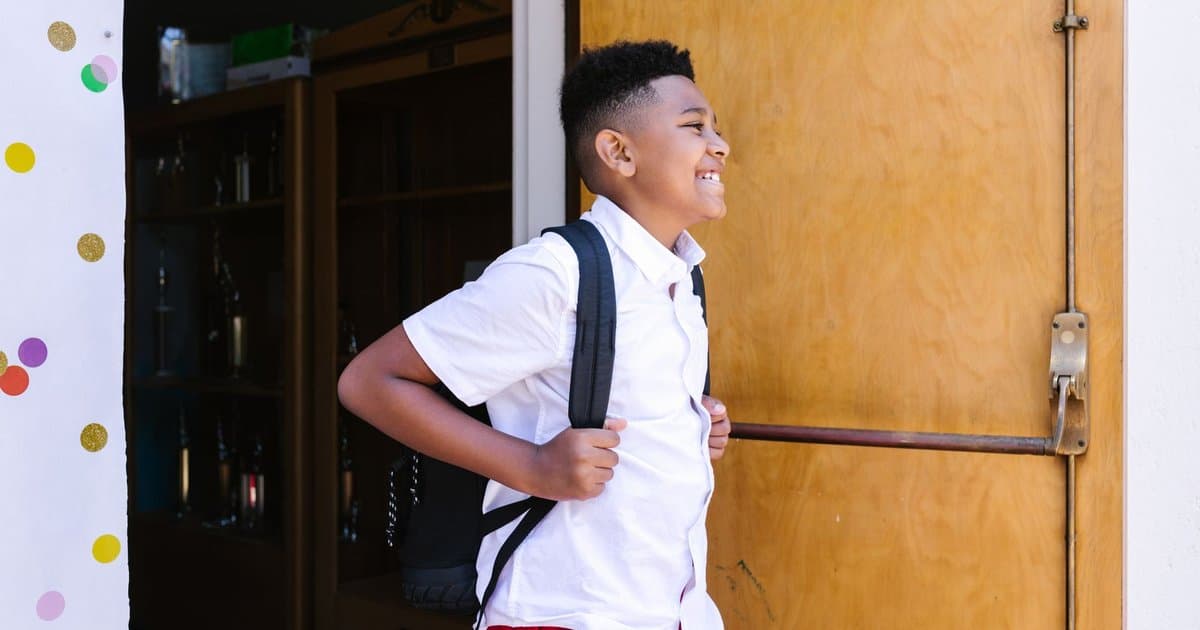
The kindergarten to first grade transition brings longer academic blocks, less free play, and higher expectations for self-regulation and independence. Children who thrived in a play-based kindergarten often need explicit support to adjust to the structured rhythm of first grade. Preparing your child, and yourself, starts with understanding what actually changes and building skills gradually over the summer months.
Key Takeaways
- First grade demands longer focused attention, formal reading instruction, and greater independence with materials.
- Emotional readiness matters as much as academic skills when assessing your child's preparedness.
- Brief regressions (clinginess, baby talk, bathroom accidents) are developmentally normal during the transition.
- Routine adjustments should begin four to six weeks before school starts.
- Persistent school refusal or anxiety beyond six to eight weeks warrants a conversation with the teacher or pediatrician.
What Changes Between Kindergarten and First Grade
Kindergarten classrooms typically rotate between short lessons and extended play. First grade flips that ratio. Lessons get longer, free play shrinks, and children are expected to sit attentively for 15 to 20 minutes at a stretch. Reading, writing, and math shift from exploratory to formal, with benchmarks and assessments that didn't exist in kindergarten.
Independence expectations rise, too. First-graders manage their own materials, follow multi-step directions, and transition between activities without constant adult prompting. According to Vandenbroucke et al. (2016) 3, executive functioning develops significantly across this transition period, and physical activity supports that growth. In my classroom, I teach every routine explicitly. "How to unpack your bag" gets a full lesson. "How to set up your notebook" gets another. These are taught skills, not things kids should already know.
Social dynamics also shift. Class sizes may increase, recess becomes more competitive, and peer relationships require more negotiation.
Recognizing Readiness for the Kindergarten to First Grade Transition
Readiness involves more than knowing the alphabet. A child prepared for first grade can typically follow two-step directions, sit for short focused periods, communicate needs verbally, and manage basic self-care like using the bathroom independently and opening their own lunch containers.
Academic markers include recognizing most letters, understanding some letter sounds, counting to 20, and attempting to write their name. If your child is still working on teaching letter recognition to young children, summer practice through games and stories can help close that gap without pressure.
Emotional readiness is equally critical. According to Zafiropoulou (2007) 4, self-concept in kindergarten and first grade is closely related to school adjustment. Children who feel capable and valued tend to adapt more smoothly. Watch for whether your child can handle minor disappointments, wait for turns, and calm down with some adult guidance.
Addressing Academic Anxiety Before It Starts
Many five- and six-year-olds pick up on the idea that first grade is "real school." They hear older siblings talk about tests. They notice parents getting serious about homework. That absorbed pressure can create anxiety before school even begins.
Counter this by keeping your language relaxed and specific. Instead of "You need to be a big kid now," try "In first grade, you'll learn to read bigger books. That's going to be cool." Visit the new classroom if the school allows it. Walk the hallways. Find the bathroom. Familiarity reduces fear.
Read books about the transition together. Titles like The Kissing Hand normalize nervous feelings. According to Jin (2025) 1, how children receive feedback during this transition shapes their self-evaluation. Absolute feedback ("You wrote three sentences today!") tends to be more helpful than comparative feedback ("You wrote more than your sister did") for building healthy academic self-concept.
Managing the Social and Emotional Shift
First grade asks children to navigate bigger peer groups with less adult scaffolding. Recess conflicts, lunch table politics, and group project dynamics become part of daily life. Some children adapt quickly. Others struggle to find their footing.
Role-playing common scenarios at home is one of the most effective tools I've seen. Give your child the exact words: "Can I play with you?" or "That hurt my feelings. Please stop." Then practice. Rehearse the exchange two or three times so the language feels natural. If you're looking for more strategies, How to Help Your Child Make Friends at the Playground covers this in depth.
Some regression is completely predictable. Thumb-sucking, clinginess, or baby talk may reappear under stress. According to Leblond (2026) 5, the quality of children's social interactions during the transition to school predicts the development of anxious and depressive symptoms in first grade. Creating a safe space at home where your child can decompress matters. First-graders often hold it together at school, then fall apart the moment they walk through your front door.
Supporting the Homework and Reading Routine
First grade typically introduces homework, and it can strain family evenings if expectations aren't clear upfront. Most first-graders receive 10 to 20 minutes of homework. Your role is to provide a calm, consistent space, not to re-teach the lesson.
Set up a homework station: a quiet spot with good light, pencils, and minimal distractions. Pick a regular time, but stay flexible. Some kids need a snack and 30 minutes of play before they can focus. Others do best getting it done right away.
Reading practice works best when it feels joyful. If nightly reading has become a battle, pause and rebuild the connection to stories first. Read aloud together. Let your child choose books. According to Tanji (2023) 2, the home literacy environment has a measurable impact on early reading skills during the transition from kindergarten to primary school. That means your read-aloud time, access to books, and enthusiasm about stories all make a real difference.
Practical Preparation Steps for Summer
Start routine adjustments four to six weeks before the first day. Shift bedtimes earlier in 15-minute increments. Practice the morning sequence: wake up, get dressed, eat breakfast, brush teeth, grab the backpack. Run through it on a Saturday so it feels familiar.
Practice the small physical tasks that trip kids up. Can your child open their water bottle? Zip their jacket? Manage buttons or snaps in the bathroom? These sound minor, but a child who can't open their lunch container independently at noon will feel helpless. Let your child pack their own backpack, even if it takes three times longer than doing it yourself.
If possible, arrange playdates with future classmates. Knowing one or two faces on the first day reduces anxiety significantly. Walk or drive the route to school together. Point out landmarks. With my daughter Nora, we practiced the "try again" approach all summer before first grade. If she ignored "Time to pack your bag," I'd model it: "When I say it's time to pack up, you say, 'Ok Mama!'" We'd rehearse, then do it for real. By September, the morning routine ran without conflict because the expectation had been taught, practiced, and praised.
How Teachers Bridge the Kindergarten to First Grade Transition
Effective first-grade teachers spend the first two to three weeks building community, teaching routines, and assessing where children are. Academics come second to relationships during those early days.
In my classroom, every expectation is posted with pictures. How to line up. How to ask for help. How to transition from carpet to desk. Nothing is assumed. I explicitly teach and re-teach these routines, because expecting a six-year-old to just know how school works sets them up to fail.
Movement breaks remain essential. Research by Vandenbroucke et al. (2016) 3 found that physical activity across this transition supports executive functioning development. Good first-grade teachers blend academics with hands-on learning, music, art, and structured play. Flexible grouping allows advanced readers to be challenged while struggling readers receive targeted support. If a classroom feels like nothing but worksheets and sitting still, that's worth a conversation with the teacher.
Using Stories and Role-Play to Normalize the Change
Children process unfamiliar experiences through stories and pretend play. Reading books about first grade helps kids rehearse emotions before they feel them in real life. The Kissing Hand and similar titles validate nervousness and show characters working through it.
Play-based preparation at home is equally powerful. Set up a pretend classroom. Let your child be the teacher. Act out the lunchroom, the bus ride, the moment the bell rings. For anxious or sensitive children, this kind of imaginative rehearsal builds genuine confidence.
Some parents find that reading a personalized story about starting first grade helps, because children see themselves navigating the transition successfully. A book like *One Big Step: First Day of Kindergarten to First Grade* can make the experience feel less abstract and more personal.
Consider creating a "first grade journal" together. Your child can draw predictions about what first grade will be like, then revisit those drawings in October. The contrast between their fears and their actual experience teaches them that they are more capable than they think.
Partnering With Teachers for a Smooth Start
Share relevant information about your child's temperament early. A brief note or a quick conversation at orientation goes a long way. Does your child need transition warnings before switching activities? Do they shut down when corrected publicly? Are they prone to first day of preschool anxiety that carried over from earlier years? Teachers want to know this.
Ask the teacher about their approach: "What will the first week look like?" and "How do you prefer to communicate with families?" Establish communication norms early. Weekly check-ins are helpful. Daily negative reports, on the other hand, can increase parental anxiety, which children absorb.
Trust the process. Teachers see your child in a context you never will. Their observations about peer interactions, attention span, and emotional regulation at school provide valuable information that complements what you see at home.
When to Worry and When This Is Normal
Initial shyness, extra tiredness, repetitive questions about school, and temporary clinginess are all within the normal range for this transition. Many children take three to six weeks to settle in fully.
Watch for patterns that intensify rather than improve. Intense school refusal, complete social withdrawal, regression in skills that were previously solid, and complaints of physical pain without a medical cause all warrant attention. According to Leblond (2026) 5, elevated morning cortisol levels during the school transition predict anxious and depressive symptoms. If your child's distress seems to be escalating after six to eight weeks, bring your observations to the teacher first, then consider talking with your pediatrician.
Be factual when sharing concerns. "She's been crying every morning for five weeks and says her stomach hurts" gives a teacher something to work with. "She hates school" does not.
Managing Your Own Emotions During This Shift
Your child reads your emotional tone with remarkable accuracy. If you're anxious about whether they'll keep up academically, they'll feel that pressure even if you never say it aloud.
Process your feelings separately. Talk to your partner, a friend, or other first-grade parents. Recognize that you're losing a phase, too. The baby who started preschool is now a school-age child with homework and opinions about lunch.
Choose your questions carefully. "Tell me something funny that happened today" invites connection. "Were you good today?" invites shame. "Did you get in trouble?" teaches a child that your primary concern is their behavior record, not their experience. Stay curious. Project calm confidence. And give yourself the same grace you're giving your child.
Get practical parenting tips delivered weekly
Evidence-based guidance for the moments that matter. No spam, unsubscribe anytime.
Frequently Asked Questions
Keep reading

Supporting Siblings During NICU Stay: What Parents Need to Know
Help siblings cope with NICU stress through honest explanations, routines, and connection activities. Most behavioral changes resolve within weeks of discharge.
10 min read
Teaching Empathy Through Children's Stories: A Practical Guide
Learn how to teach empathy through children's stories with practical techniques. Research shows kids develop stronger peer relationships with regular diverse
10 min read

How to Motivate Students on Classroom Behavior (Strategies That Work)
Master 8 proven strategies to motivate students on classroom behavior. Learn why specific praise and consistency outperform rewards, plus tools that work.
9 min read
Get weekly parenting tips backed by research
Evidence-based guidance for the moments that matter. No spam, unsubscribe anytime.