Teaching Letter Recognition to Young Children: What Actually Works
Learn effective, play-based methods for teaching letter recognition to young children without worksheets or pressure. Expert-backed strategies that actually work.
Erika Wong
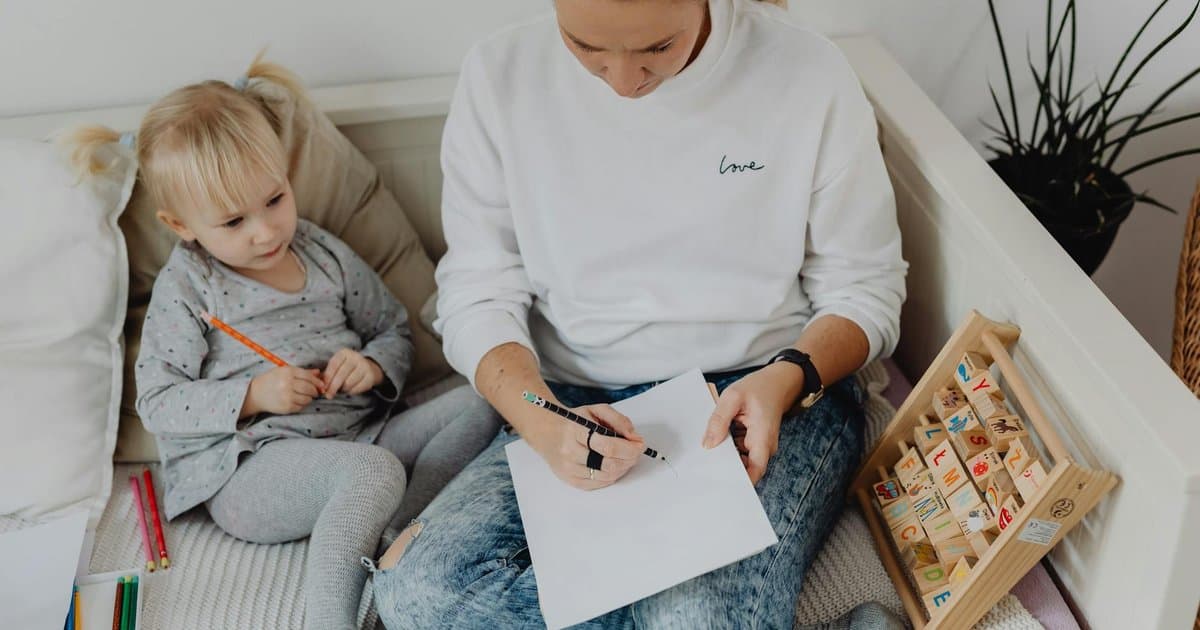
The most effective way of teaching letter recognition to young children is combining playful, daily exposure with patience. Start with the letters in your child's name, use alphabet books and magnetic letters, and weave letter-naming into everyday moments rather than formal lessons. Most children develop reliable letter recognition between ages 3 and 5, and pushing before a child shows interest rarely speeds things up.
Key Takeaways
- Children typically show letter readiness between ages 2.5 and 4, based on interest, not age alone.
- Teaching letter names before letter sounds creates a stronger foundation for reading.
- Playful, low-pressure exposure outperforms flashcards and worksheets for young learners.
- Letters in a child's own name are the fastest path to early recognition.
- Letter reversals and forgotten progress are normal developmental steps, not warning signs.
When Children Are Actually Ready to Learn Letters
Readiness for letter learning shows up as curiosity, not compliance. A child who points at signs, asks "What does that say?" or scribbles with intention is showing early print awareness. According to the National Association for the Education of Young Children (NAEYC), this interest typically emerges between ages 2.5 and 4 1.
Fine motor development matters just as much as interest. A child who can hold a crayon, scribble with purpose, and turn pages in a book has the physical readiness that letter learning requires. Some children recognize a handful of letters at age 2.5; others aren't interested until closer to 4. Both timelines are completely normal.
Research consistently shows that early academic pressure doesn't improve long-term reading outcomes. According to Suggate (2012) 2, children who started formal literacy instruction later caught up to early starters by age 11. Follow your child's lead rather than a calendar.
The Foundation: Letter Names vs. Letter Sounds
Start with letter names, not sounds. This might feel counterintuitive since reading ultimately depends on sounds, but young children need to separate the concept of a letter from how it functions. A letter name gives them a concrete label to attach to a visual shape.
According to Treiman and Kessler (2003) 3, children who learn letter names first actually acquire letter sounds more easily afterward. The name of a letter often contains its sound (the letter B says "bee," which starts with the /b/ sound), so names act as a natural bridge.
Once your child knows 10 to 15 letter names confidently, you can begin introducing sounds casually. "That's the letter S, and it makes a sssss sound." Don't drill both simultaneously. Many parents and educators find that children naturally begin connecting names to sounds through repeated read-alouds, especially with phonetic picture books.
Proven Methods for Teaching Letter Recognition Without Worksheets
Worksheets and flashcards feel productive, but they're among the least effective tools for children under five. Play-based learning creates stronger memory traces because it involves multiple senses and emotional engagement.
Here are approaches that consistently work well:
- Alphabet picture books with one letter per page and clear illustrations. Read them repeatedly, because repetition is the engine of recognition.
- Magnetic letters on the fridge. These invite spontaneous play and conversation without structured "lessons."
- Alphabet songs. Melody helps embed letter order in memory. Singing engages different brain regions than speaking.
- Environmental print. Point out letters on cereal boxes, street signs, and clothing labels. This normalizes letters as part of daily life.
- Tactile tracing. Let children trace letters in sand, shaving cream, or finger paint. Occupational therapists often recommend this because it strengthens the connection between visual memory and motor memory.
The common thread is low pressure and high repetition.
The "Point and Name" Game: A Daily Practice That Sticks
This is the simplest habit you can build, and many educators consider it the most effective. Throughout your day, point to a letter your child can see and name it naturally. "Look, there's the letter T on that truck." Do this three to five times daily.
Consistency matters far more than intensity. Three 30-second moments scattered throughout the day beat a concentrated hour-long lesson on Saturday. Your child absorbs letter knowledge through casual, repeated exposure, not through concentrated effort.
Start with letters your child already notices, especially the first letter of their name or letters on favorite products. If they guess wrong, don't correct them directly. Simply restate: "That one is actually the letter P. P is a fun one." Keep your tone light. The moment it feels like a test, children shut down.
Track progress informally. The day your child points to a letter unprompted and names it correctly, you'll know it's working.
Connecting Letters to a Child's Name
A child's name is the most powerful entry point for letter recognition. Their name carries emotional weight that the letter Q sitting on a flashcard never will. Start with the first letter of their name, because it's the letter they'll encounter most often.
Write their name on their artwork, on their lunchbox, on their bedroom door. This repeated visual exposure builds familiarity without instruction. According to ZERO TO THREE, children often recognize the first letter of their own name before any other letter 4.
Once they know their first initial confidently, introduce the remaining letters of their name one at a time. Then branch outward to family members' names, pet names, or friends' names. Some parents find that reading a personalized ABC adventure that features their child's name throughout reinforces this connection, because children see familiar letters appearing in a story about them. This personal relevance creates motivation that abstract letter drills cannot match.
Screen Time, Apps, and Digital Tools
Quality alphabet apps can reinforce letter learning, but they work best as occasional supplements, not primary tools. The American Academy of Pediatrics (AAP) recommends limiting screen time for children ages 2 to 5 to one hour per day of high-quality programming 5. Letter-learning apps should fit within that limit, not expand it.
Apps with letter-tracing features engage fine motor skills more effectively than apps that only display letters passively. Watching alphabet videos, even well-produced ones, is a passive activity. Active engagement builds memory; passive viewing does not.
A practical approach: use an app like Duolingo ABC for 10 to 15 minutes as a supplement to hands-on play. If your child is already getting rich letter exposure through books, magnetic letters, and environmental print, screens are unnecessary. Physical manipulation of letter shapes builds stronger neural connections than tapping a screen. When exploring how AI is changing early childhood education, remember that technology works best when it enhances play, not replaces it.
Normal Developmental Steps: Reversed Letters and Forgotten Progress
Your child wrote a perfect B last week. This week, it's backward. This is not a problem.
Letter reversals are developmentally normal until age 6 or 7. Young children's brains are still developing the spatial awareness needed to distinguish between mirror-image shapes like b and d or p and q. According to the International Dyslexia Association 6, reversals alone are not a sign of dyslexia in children under age 7.
Forgotten progress is equally normal. A child may confidently name the letter M on Monday and stare at it blankly on Friday. This is how working memory develops. Information cycles through the brain repeatedly before it becomes stable, long-term knowledge.
Children also don't need to learn the alphabet in order. Skipping from A to M to S is natural. The alphabet song teaches sequence, but recognition doesn't require sequence. Let your child learn letters in whatever order captures their attention.
Signs of Genuine Difficulty Worth Discussing with Your Pediatrician
Most letter-learning struggles resolve with time and continued low-pressure exposure. However, certain patterns are worth mentioning at a checkup.
If your child shows little to no letter recognition by age 5 despite consistent daily exposure, bring it up. The concern isn't the letters themselves but what the difficulty might indicate about visual processing or learning differences.
Watch for clusters of challenges: persistent fine motor difficulty (trouble with scissors, drawing, and zippers beyond age 4), combined with limited letter recognition and speech or language delays. These combinations, not individual struggles, suggest a professional evaluation could be helpful.
Early childhood special education services are supportive, not stigmatizing. An assessment is simply information. If your child qualifies for extra support, starting early makes a meaningful difference. Pediatric occupational therapists and speech-language pathologists frequently work with children on pre-literacy skills.
Building Confidence When a Child Resists
If your child shuts down, pushes away the book, or says "I don't want to," stop immediately. Forcing letter practice creates negative associations that are harder to undo than the letters are to learn.
Shift entirely to play. Magnetic letters become toys. Alphabet books become stories to enjoy, not quizzes. Zero expectations. Many children who resist one-on-one practice thrive in group settings where they learn alongside peers, so preschool or playgroup can spark interest that home practice didn't.
Praise effort and curiosity, never correctness. "You're noticing all the letters on that sign!" is more motivating than "You got it right!" Building confidence through social stories for teaching kids to make friends follows a similar principle: children engage more deeply when they feel safe, not evaluated. One frustrated interaction between parent and child can erase more progress than a week of skipped practice.
Letter Recognition as One Step in a Bigger Picture
Letter recognition matters, but it's one building block toward reading, not reading itself. A child who can name all 26 letters but hasn't developed phonemic awareness (the ability to hear and manipulate sounds in spoken words) won't read fluently.
The broader skills that predict reading success include listening comprehension, rhyming ability, awareness of individual words in sentences, and genuine interest in books and stories. Children who love being read to develop stronger reading skills than children who are drilled on letters, according to findings reviewed by the National Early Literacy Panel (2008) 7.
Focus on creating a print-rich home. Label shelves. Leave books accessible. Read aloud daily, not to teach letters, but because stories build vocabulary, comprehension, and a love of language. The letters come naturally in that context. Even personalized books for newborns can begin building print awareness long before a child recognizes a single letter.
Practical Tools and Resources Worth Using
You don't need expensive programs. The most effective tools for teaching letter recognition to young children are simple, affordable, and widely available.
A library card is your single greatest resource. Alphabet picture books are abundant, and borrowing new ones every few weeks keeps the novelty alive. Look for books with clean illustrations and one letter per page. Overstimulating designs with busy backgrounds actually make letters harder to isolate visually.
Wooden block letters and magnetic letter sets are durable, satisfying to hold, and invite repeated play. Low-tech games work beautifully: play "I Spy" for letters around the house, cut letters out of magazines, or make letters from playdough.
Skip the expensive subscription boxes and workbook programs unless your child genuinely enjoys them. The research consistently points to the same conclusion: frequent, playful, low-pressure exposure builds letter recognition more effectively than any curriculum.
Get practical parenting tips delivered weekly
Evidence-based guidance for the moments that matter. No spam, unsubscribe anytime.
Frequently Asked Questions
Keep reading

Supporting Siblings During NICU Stay: What Parents Need to Know
Help siblings cope with NICU stress through honest explanations, routines, and connection activities. Most behavioral changes resolve within weeks of discharge.
10 min read

Teaching Empathy Through Children's Stories: A Practical Guide
Learn how to teach empathy through children's stories with practical techniques. Research shows kids develop stronger peer relationships with regular diverse
10 min read

How to Motivate Students on Classroom Behavior (Strategies That Work)
Master 8 proven strategies to motivate students on classroom behavior. Learn why specific praise and consistency outperform rewards, plus tools that work.
9 min read
Get weekly parenting tips backed by research
Evidence-based guidance for the moments that matter. No spam, unsubscribe anytime.