Kindergarten to First Grade: Building Social Skills That Last
Help your child build social skills for first grade success. Learn 5 key skills to practice, strategies for shy kids, and red flags after 6 weeks.
Erika Wong
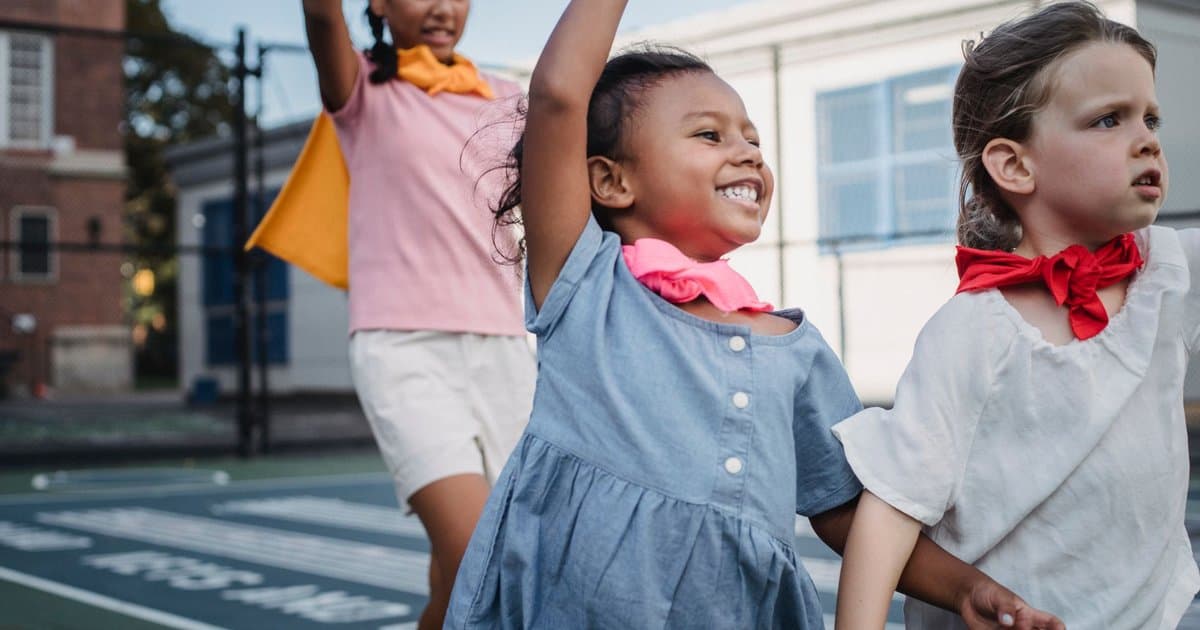
Children moving from kindergarten to first grade need stronger social skills because the classroom shifts from teacher-directed play to peer collaboration, longer group work, and more unstructured time with less adult support. The kindergarten social skills your child practiced (sharing, basic turn-taking, following directions) become the foundation for first grade demands like resolving conflicts independently, reading social cues during group projects, and navigating lunch and recess without a teacher nearby. Building these skills deliberately, over the summer and into the school year, gives your child the best chance of adjusting with confidence.
Key Takeaways
- First grade requires children to manage peer conflicts and group work more independently than kindergarten.
- The most important skills to practice are turn-taking, joining play, and expressing frustration with words.
- Most children adjust socially to first grade within four to six weeks.
- Shy children benefit from consistent, repeated exposure to the same peers, not large group settings.
- Persistent social difficulty after six weeks warrants a conversation with the teacher.
Why Social Skills Matter More in First Grade
First grade asks children to do something kindergarten often doesn't: work collaboratively with peers for extended periods. According to Hubert (2017) 1, cognitive self-regulation and social functioning are closely linked during the transition from kindergarten to first grade, meaning a child's ability to manage emotions directly affects how well they learn alongside others.
In my classroom, I see this play out daily. The child who can wait, listen to a partner's idea, and try again after a mistake stays engaged. The child who melts down when someone disagrees checks out of learning entirely. Social confidence also predicts academic risk-taking. Children who feel accepted by peers are more willing to raise their hand, try a hard problem, and ask for help. According to Stormont (2019) 2, teacher-rated social readiness in kindergarten predicted first grade outcomes across multiple domains, not just social ones. Peer acceptance isn't a nice bonus. It's a driver of school success.
The Social Differences Between Kindergarten and First Grade
Kindergarten is designed around play, exploration, and heavy teacher scaffolding. When two kids fight over a block, the teacher steps in, models the language, and resolves it. First grade still has adult support, but the expectations shift. Children are asked to solve smaller conflicts themselves, work in pairs or groups with less supervision, and manage unstructured social time at lunch and recess.
Area | Kindergarten | First Grade |
|---|---|---|
Play style | Mostly parallel or teacher-led | Peer-directed, collaborative |
Conflict resolution | Teacher mediates most disputes | Children expected to try first |
Recess | Often structured, supervised | Longer, less adult direction |
Friendships | Activity-based ("we both like blocks") | Personality-based ("she's nice to me") |
Group work | Short, teacher-guided tasks | Longer projects with peer input |
This table isn't meant to alarm you. It's meant to show where the gaps might appear so you can prepare your child for the specific skills first grade requires.
Friendship Skills Your Child Needs Before First Grade
Five kindergarten social skills matter most heading into first grade: turn-taking, listening without interrupting, joining play already in progress, expressing frustration with words instead of actions, and celebrating a peer's success. That last one is harder than it sounds for five- and six-year-olds.
What I actually do with my daughter Nora is practice these at home. We play board games and I narrate: "You waited for your turn even though it was hard. That's exactly what good teammates do." Specific feedback like this teaches far more than "good job" ever will. According to Broekhuizen et al. (2016) 3, classroom quality in pre-kindergarten and kindergarten significantly predicted children's social skills and behavior outcomes, which means the environments where kids practice these skills genuinely shape their trajectory.
If your child struggles with joining play, give them the exact words: "Can I play too?" or "What are you building?" Then have them rehearse. Role-play feels silly to adults, but children need to physically practice saying the words before they can use them under social pressure.
How to Practice Kindergarten Social Skills Over the Summer
Summer is your best window for low-pressure practice. Schedule regular playdates with one or two children, not large groups. Small settings let your child practice real skills (negotiating, compromising, recovering from small disappointments) without the overwhelm of a crowd.
Here's what works in my experience. Let children problem-solve minor conflicts before you step in. If two kids both want the red shovel, wait ten seconds. You'll be surprised how often they figure it out. If they can't, step in with language: "You both want it. What could you try?" Then praise the solution, not just the outcome.
Use everyday errands as practice, too. Ordering at a restaurant, saying thank you at the grocery store, greeting a neighbor. These moments build the social confidence that transfers to the classroom. At dinner, try "what would you do?" scenarios: "What if someone took the swing you were waiting for?" Listen to their answer without correcting. Ask follow-up questions. If your child has first day of preschool anxiety memories, talk through how they got through it and how first grade will be similar.
Supporting a Shy or Cautious Child
Shy children often have strong social skills. They just take longer to deploy them. In my classroom, some of my most socially skilled students are the ones who watch carefully for the first week, then join in with real understanding of the group's dynamics.
What helps: consistency over volume. The same playdate partner, the same park, the same routine. Cautious children need to feel safe before they'll take social risks. Avoid labeling your child "shy" in front of them or other adults. Labels stick, and children internalize them quickly.
According to Barbarin (2013) 4, social-emotional competence develops along trajectories from pre-K through second grade, and early patterns of caution don't necessarily predict long-term difficulty. Many children who are reserved in kindergarten become socially confident by mid-first grade with the right support.
Let your child observe before participating. Watching is a valid strategy, not a problem to fix. When they do join in, offer specific praise: "You introduced yourself to that girl at the sandbox. That took courage." Just avoid framing it as bravery vs. fear, which can imply that their natural caution is something shameful.
Red Flags and When to Seek Support
Most social adjustment takes four to six weeks into first grade. Some children need eight to ten weeks, and occasional rough days are normal well beyond that.
Talk to the teacher if your child shows any of these patterns after six weeks:
- Persistent refusal to participate in group activities
- Aggression toward peers (hitting, pushing, name-calling) that isn't improving
- Complete withdrawal during lunch and recess
- Physical symptoms like stomachaches or headaches every school morning
- Significant anxiety about going to school that disrupts the family's routine
One thing I've learned as both a teacher and a parent: early conversations prevent small struggles from becoming entrenched patterns. Reaching out to the teacher at the four-week mark isn't overreacting. It's good parenting.
How to Communicate With Your Child's First Grade Teacher
Share observations, not labels. Instead of "my child is shy," try "she tends to watch for a few days before joining activities." Instead of "he has anger issues," try "he sometimes hits when he's frustrated, and we're working on using words." This kind of preschool communication with parents carries over into elementary school.
Ask the teacher specific questions: "How does she do at lunch? Does he participate during group work? What do you see at recess?" These moments reveal more about your child's social adjustment than report cards ever will.
Schedule check-ins at two weeks, six weeks, and the end of the first term. Many teachers welcome early communication because it helps them support your child before problems escalate. And don't assume problems exist. Many children behave quite differently at school than at home, sometimes better, sometimes worse.
When Social Skills Work Becomes a Bigger Conversation
If your child struggles socially across multiple settings (home, school, sports, family gatherings) by mid-first grade, it may be worth exploring further. A pediatrician or child psychologist can screen for social anxiety, ADHD, or sensory processing differences that make social interactions genuinely harder for your child.
Speech-language pathologists assess social communication, which goes beyond vocabulary into understanding tone, body language, and conversational flow. Occupational therapists work with sensory and self-regulation challenges that might look like "behavior problems" but are actually sensory overwhelm.
Early assessment doesn't label your child. It opens doors to support. In my experience, the families who seek help early are the ones whose children make the most progress. Frame it for your child as skill-building: "We're going to practice some things that will make school easier," not "something is wrong with you."
Building Your Child's Confidence for the Transition
Confidence comes from feeling known and capable. Tell your child specific stories about times they've navigated something hard: "Remember when you didn't know anyone at soccer camp? By the end of the week you had two friends." These concrete reminders build a child's narrative of themselves as someone who can handle new situations.
Create simple routines for the first grade morning. Let your child help: picking out their backpack, organizing supplies, decorating their lunch box. Ownership creates investment.
Some parents find that reading a personalized story about starting first grade or learning how to make friends at the playground helps children see themselves navigating the transition successfully. A story like *Can I Play Too?* puts your child into the situation and gives them language to use. Follow up with open-ended questions: "How did that character feel? Have you ever felt that way?"
Your child also absorbs your attitude. If you're anxious about the transition, they'll pick up on it. Stay calm, be honest ("First grade will be different, and some things might feel hard at first"), and let them know you're confident they can handle it.
Get practical parenting tips delivered weekly
Evidence-based guidance for the moments that matter. No spam, unsubscribe anytime.
Frequently Asked Questions
Keep reading
Supporting Siblings During NICU Stay: What Parents Need to Know
Help siblings cope with NICU stress through honest explanations, routines, and connection activities. Most behavioral changes resolve within weeks of discharge.
10 min read
Teaching Empathy Through Children's Stories: A Practical Guide
Learn how to teach empathy through children's stories with practical techniques. Research shows kids develop stronger peer relationships with regular diverse
10 min read
How to Motivate Students on Classroom Behavior (Strategies That Work)
Master 8 proven strategies to motivate students on classroom behavior. Learn why specific praise and consistency outperform rewards, plus tools that work.
9 min read
Get weekly parenting tips backed by research
Evidence-based guidance for the moments that matter. No spam, unsubscribe anytime.