Teaching Empathy Through Children's Stories: A Practical Guide
Learn how to teach empathy through children's stories with practical techniques. Research shows kids develop stronger peer relationships with regular diverse
Erika Wong
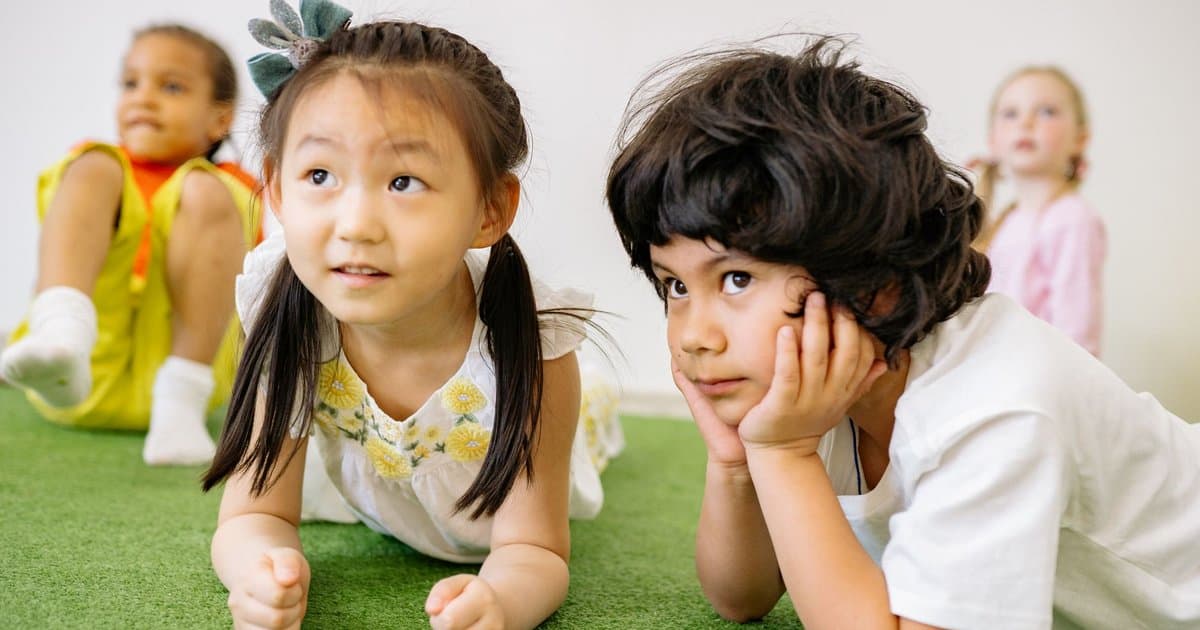
Stories let children step safely into someone else's emotional world and practise feeling what that person feels. Teaching empathy through children's stories works because characters become both mirrors (reflecting a child's own emotions back) and windows (showing lives and feelings they haven't encountered yet). Empathy is not a personality trait some kids are born with; it is a skill built through intentional, repeated practice, and books are one of the most effective tools we have to build it.
Key Takeaways
- Empathy is a taught skill, not an inborn trait, and stories are a primary training ground.
- Pausing to ask open-ended questions during reading turns passive listening into active emotional learning.
- Children who regularly encounter diverse characters in books develop stronger peer relationships over time.
- Picture books with clear emotions suit ages 4–6; early chapter books with mixed feelings suit ages 7–8.
- Real empathy grows over months of practice, not from a single powerful book.
Why Stories Are One of the Most Powerful Tools for Building Empathy
When a child listens to a story, their brain doesn't neatly separate "real" from "fictional." They feel the character's fear, excitement, or loneliness as though it were happening to someone they know. According to Kucirkova (2019) 3, children's storybooks promote empathy through mechanisms that literary theory and developmental psychology both support: identification with characters, emotional transportation, and repeated exposure to perspectives unlike the child's own.
In my classroom, I've watched this happen in real time. A five-year-old who struggled to notice when classmates were upset began, after weeks of reading stories with emotionally expressive characters, asking other children, "Are you okay? You look sad." That shift didn't come from a lecture about being kind. It came from sitting with a character's sadness dozens of times until recognising it became automatic.
Stories also remove the pressure of real social stakes. A child can explore jealousy, shame, or disappointment on the page without worrying about consequences. That emotional rehearsal is powerful.
What to Look for in Empathy-Building Stories
Not every children's book builds empathy equally. The most effective stories share a few features. Characters should have visible, named emotions. You want a book where the illustration or text shows you why a character feels the way they do, not just what they do about it. Look for protagonists whose inner lives matter as much as the plot action.
Resolution matters too. Stories where conflict ends through understanding, communication, or kindness teach different lessons than stories where the "bad guy" simply gets punished. According to Brazzelli (2021) 2, conversation-based approaches that guide toddlers through prosocial reasoning, rather than simply directing behaviour, produce lasting gains in prosocial behaviour. The same principle applies to books: stories that invite children to think about why characters act, rather than just labelling actions as good or bad, do more to develop empathy.
Also look for diversity of experience. Books that depict different family structures, abilities, cultures, and socioeconomic realities give children practice understanding lives beyond their own.
How to Read for Maximum Empathy Impact
The way you read a book matters more than the book itself. Passive reading, where a child listens while you turn pages, is pleasant but limited. Active reading, where you pause, question, and connect, transforms a bedtime story into genuine empathy practice.
Here is what I actually do, whether at home with Nora and Ollie or with my class. I pause at a moment of strong emotion and ask, "How do you think she feels right now? What makes you think that?" I don't correct the answer. If a child says a character looks "angry" when the text says "scared," we talk about how those feelings can look similar. I share my own reactions: "That part made me feel worried. Did it make you feel anything?" According to Borhani (2025) 4, children with stronger emotional security show greater story appreciation, which suggests that creating a warm, safe reading environment is part of the empathy equation.
One technique that works well: pause before the resolution and ask, "What do you think should happen next?" This lets children practise generating kind solutions, not just receiving them.
Stories That Celebrate Love in All Its Forms
Children's books that show multi-generational families, same-sex parents, adoptive families, blended households, and single-parent homes teach children that love looks different in every home. These stories are not extras or "special topics." For children who see their own families reflected, these books provide belonging. For children whose families look different, these books normalise the reality that families come in many shapes.
Stories about celebrations are particularly effective. Weddings, new babies, holidays, and milestones carry strong positive emotion, and when children see these joyful moments across different family structures, acceptance follows naturally. A picture book about a child making a gift for their grandmother, or a story about celebrating what makes a parent special, lets children connect emotionally to characters whose lives may differ from their own. Many parents find that revisiting these types of stories across the year, not just during awareness months, helps normalise diversity as an ordinary part of life rather than a lesson to be learned once.
Building Empathy Conversations After Reading
The conversation after a book is where empathy transfers from fiction to real life. I keep post-reading discussions short (three to five minutes is plenty for a young child) and open-ended. Three questions that consistently generate real reflection:
- "What surprised you about that story?"
- "Has anything like that ever happened to you?"
- "What would you do if you were character's name?"
These questions work because they don't have correct answers. They invite children to connect a character's experience to their own emotional memory. According to Zeng (2025) 1, preschoolers with stronger empathy skills maintain better peer relationships over time, and the relationship between empathy and social connection reinforces itself across at least a year. That means each empathy conversation during storytime is contributing to a cycle that pays off in friendships and classroom behaviour months later.
Revisiting favourite books deepens this work. The third or fourth time through a story, children notice emotions and motivations they missed completely the first time.
Teaching Empathy Through Children's Stories Across Ages
Different ages need different emotional complexity. Here is how I think about matching stories to developmental stages.
Age Range | Story Features | Reading Approach |
|---|---|---|
4–5 years | Big, clear emotions (happy, sad, scared, angry). Simple resolution. Expressive illustrations. | Name emotions aloud. Point to faces. Ask "How does he feel?" |
5–6 years | Friendship conflicts, sharing, fairness. Characters who make mistakes and repair them. | Ask "Why did she do that?" Begin exploring motivation. |
6–7 years | Jealousy, disappointment, embarrassment. Characters from unfamiliar backgrounds. | Ask "Have you ever felt like that?" Connect to real experiences. |
7–8 years | Mixed feelings, multiple perspectives, moral ambiguity. Chapter books with inner monologue. | Ask "Was she right or wrong? Could both be true?" |
Preschoolers need stories where you can point at an illustration and say, "Look at her face. She's frustrated." By age seven or eight, children can handle a character feeling happy and guilty at the same time. Understanding how children develop emotional intelligence at different stages helps you pick the right book and ask the right questions.
Recognising When a Story Isn't Working
Not every book works for every child, and forcing emotional engagement defeats the purpose. Watch for these signs that a story is too much or a poor fit:
- Your child asks to stop reading, covers their ears, or physically turns away.
- They fixate on a scary detail and can't move past it, even with reassurance.
- They seem angry at the book itself ("That's a stupid story") rather than engaged with the emotions in it.
If any of these happen, stop. You haven't failed. Some children need gentler entry points. A child who can't handle a story about loss might be perfectly ready for a story about a character feeling left out. Start where your child is, not where you wish they were.
I learned this with Ollie, who at four refused any book where a character cried. We spent months on stories about characters solving problems together before he could tolerate sadder emotional territory. That gradual approach worked. Pushing would not have.
When to Talk to Your Pediatrician
Most children develop empathy gradually, and wide variation is normal through age eight. But bring it up with your pediatrician if your child consistently shows no recognition of others' emotions by age five, if they seem unable to feel distress when another child is hurt, or if a lack of emotional responsiveness is paired with other developmental concerns like limited eye contact or very rigid play patterns. These signs don't necessarily indicate a problem, but they are worth discussing.
Combining Stories With Real-World Empathy Practice
Stories plant seeds. Daily life is where empathy actually grows. The bridge between books and behaviour is language. When Nora is upset because a friend didn't share, I can say, "Remember in the book when Lily felt left out? You're feeling something like that right now." That story reference gives her a framework for an emotion she might not otherwise have words for.
Some parents find that personalized stories, where their child appears as the character navigating a social situation, help children see themselves practising empathy. This works because the emotional distance between "me" and "a character who is me" is almost zero. Building confidence through narratives is a related approach that uses the same principle: when children see themselves succeeding in a story, they believe they can succeed in real life.
Model empathy aloud. In the grocery store: "That little boy dropped his ice cream. How do you think he feels?" At school pickup: "Your friend looked really excited today. I wonder what happened." These micro-moments, combined with months of reading together, are what build a child who notices and cares about the people around them. The process takes time. In my experience, you start seeing consistent change after several months of regular practice, and that timeline is completely reasonable.
Get practical parenting tips delivered weekly
Evidence-based guidance for the moments that matter. No spam, unsubscribe anytime.
Frequently Asked Questions
Keep reading
Supporting Siblings During NICU Stay: What Parents Need to Know
Help siblings cope with NICU stress through honest explanations, routines, and connection activities. Most behavioral changes resolve within weeks of discharge.
10 min read

How to Motivate Students on Classroom Behavior (Strategies That Work)
Master 8 proven strategies to motivate students on classroom behavior. Learn why specific praise and consistency outperform rewards, plus tools that work.
9 min read
Teaching Kids About Different Family Structures: A Practical Guide
Teach kids about diverse families with proven strategies. Early exposure reduces bias, builds empathy, and helps all children develop stronger social skills.
10 min read
Get weekly parenting tips backed by research
Evidence-based guidance for the moments that matter. No spam, unsubscribe anytime.