How to Motivate Students on Classroom Behavior (Strategies That Work)
Master 8 proven strategies to motivate students on classroom behavior. Learn why specific praise and consistency outperform rewards, plus tools that work.
Erika Wong
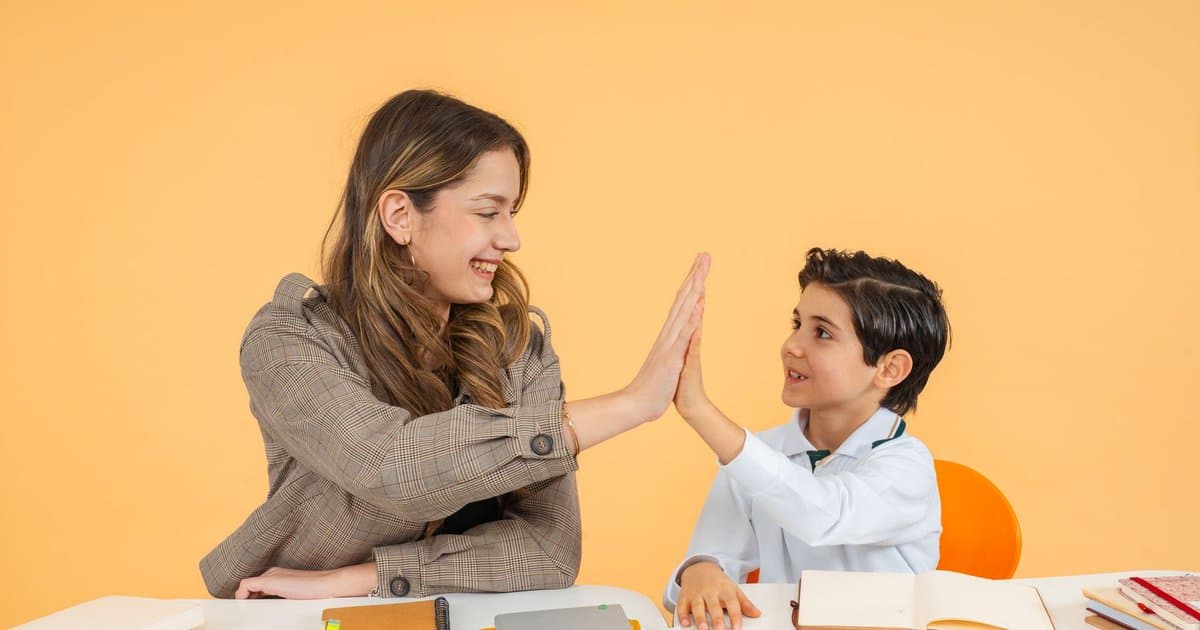
The most reliable way to motivate students on classroom behavior is to combine explicit teaching of expected behaviors with specific, immediate recognition when students meet those expectations. Intrinsic motivation (built through autonomy, belonging, and genuine connection) sustains behavior change far longer than sticker charts alone. Start by teaching the exact behaviors you want, practice them until they're automatic, and respond to what you see with precise feedback that tells students what they did right and why it matters.
Key Takeaways
- Teach expected behaviors as skills, practiced repeatedly, not assumed.
- Specific praise tied to real effort outperforms vague "good job" every time.
- Consistency across days matters more than severity of consequences.
- Intrinsic motivation grows when students have choice and feel belonging.
- Behavior that resists positive strategies often signals an underlying need.
Understand What Actually Motivates Students in the Classroom
Student motivation falls into two broad categories. Intrinsic motivation comes from internal drive: curiosity, the satisfaction of mastery, feeling like you belong. Extrinsic motivation comes from outside: points, rewards, public recognition. Most teachers I know have discovered that extrinsic rewards can jumpstart progress, but they don't stick unless you build intrinsic motivation alongside them.
According to Clark (2019) 3, fostering curiosity and autonomy in adolescents increases their engagement in learning, and that principle holds for behavior too. Younger students (K-2) need more frequent positive feedback. Older students, especially in grades 6-8, respond better to autonomy and peer respect than to a marble jar. The key shift: stop thinking about how to motivate students on classroom behavior through rewards, and start thinking about how to make good behavior feel worthwhile from the inside.
Create a Positive Recognition System That Feels Personal
Recognition works better than punishment for changing behavior. But the quality of your recognition matters enormously. "Good job" teaches nothing. "You stayed focused during independent reading even when your neighbor was talking" tells a student exactly what they did, why it mattered, and that you noticed.
In my classroom, I aim for at least three positive comments for every correction. That ratio isn't accidental. Many teachers find it transforms the room's energy within a week. Immediate recognition, delivered the same day, carries more weight than a delayed reward. And here's something worth paying attention to: some students light up with public praise, while others shut down. I have students who prefer a quiet word at their desk or a sticky note on their paper. Matching the recognition to the student is what makes a system feel personal rather than mechanical.
Build Autonomy Into Behavior Expectations
Students are more motivated to follow rules they helped create. At the beginning of the year, I walk my class through a conversation: "What do you need from each other to learn well?" Their answers almost always cover respect, quiet working time, and kindness. Now those are their rules, not mine imposed on them.
Offering limited choices also builds buy-in. "You can sit at your desk or at the back table during independent work" gives a student genuine autonomy without chaos. For older students (grades 4-8), explaining the reasoning behind expectations is non-negotiable. "We line up quietly because the hallway is shared space, and other classes are still learning" is more motivating than "because I said so." According to D'Alessandro et al. (2022) 2, when elementary students were asked about interventions in their own classrooms, their sense of agency and voice directly shaped how engaged they were.
Use Proximity and Presence to Prevent Behavior Drift
Many classroom behavior problems happen because a student isn't getting attention. Any attention. Strategic physical proximity, simply standing near a student who's drifting off task, communicates expectation without a single word. It's one of the most underrated tools in teaching.
I circulate constantly during independent work. When I pause near a student who's starting to fidget or chat, they often self-correct before I say anything. That's the goal: you're not catching them doing something wrong. You're preventing the problem. Regular brief check-ins with students who struggle behaviorally ("How's it going? What are you working on?") build relationship and catch drift early. For younger students and those with attention challenges, physical nearness is especially powerful. It signals care, not surveillance.
Frame Mistakes as Learning Moments
When a student misbehaves, separate the behavior from the child. "You called out without raising your hand" is about an action. "You're always disrupting" is about identity. The first invites a redo. The second triggers defensiveness.
With my daughter Nora, I use a "try again" approach that works identically in the classroom. If she ignores "It's time to tidy up," I model the exchange: "When I say it's time to tidy up, you say, 'Ok mama!'" We rehearse it together, I say it for real, she responds, and she starts tidying. It keeps the relationship intact while making the expectation crystal clear. In class, this looks like: "Let's try that transition again. This time, push in your chair, grab your book, and walk to the carpet." Then we practice. According to Hajovsky et al. (2020) 4, teachers' belief in their own effectiveness directly shapes the quality of teacher-student relationships, and those relationships are the foundation behavior change rests on. Address behavior privately when possible to avoid shame that hardens into defiance.
Establish Clear, Consistent Routines and Transitions
Behavior problems spike during ambiguous moments: transitions, cleanup, switching activities. Students are more motivated when they know exactly what's expected and the routine has been practiced until it's automatic.
I treat expected behaviors as taught skills. How to line up, how to set up a notebook, how to sit ready to learn. We practice them over and over. I give specific feedback so a child knows exactly what to do better. When the learning behaviors are strong (sitting up, tracking the speaker, hands still), focus follows. For K-2, visual schedules on the wall reduce the cognitive load of "what comes next." For older students, consistent routines across days and, ideally, across adults in the building mean students don't have to renegotiate every period. Consistency reduces what I call "behavior fatigue," where kids spend mental energy figuring out expectations instead of learning.
Match Consequences to the Behavior and the Student
Punitive consequences often backfire. Losing recess increases resentment. Detention creates a power struggle. Logical consequences teach the actual skill the student needs. If a student misuses materials, they practice the correct procedure before earning independent access again. If a student disrupts a group, they practice the group routine, then rejoin.
Restorative approaches ("What happened? Who was affected? How can you make it right?") motivate differently than punishment because they maintain dignity. According to Musci et al. (2019) 1, collective student behavior and classroom context significantly influence how well evidence-based interventions are implemented, which means your consequence system shapes the whole room's culture, not just one student's behavior. Consistency matters more than severity. A predictable, small consequence that a student can learn from will always outperform an unpredictable, harsh one.
Classroom Tools That Support Motivation and Behavior
Physical tools make expectations concrete. A visual timer during transitions. A behavior chart the student can see and track themselves. A class-wide recognition system like a marble jar working toward a shared goal. The tool matters less than whether you use it consistently and whether students feel ownership over it.
Some teachers find that reading materials tied to specific social skills reinforce expectations in a low-pressure way. Personalized alphabet books can support early literacy and familiarity. For students working on courage or emotional regulation, brave activities for kids offer structured practice. A personalized story, like a star student of the week book, can help younger children see themselves succeeding. Avoid overcomplicating your systems. The best tool is one you'll actually maintain through February.
Your Own Behavior: The Most Powerful Motivator
Students mirror your emotional regulation. When you stay calm during a disruption, you de-escalate the room. When you raise your voice, you escalate it. This is the hardest part of teaching, and the most important.
Acknowledging your own mistakes ("I handled that wrong. Let me try again.") builds credibility and models exactly the growth mindset you're asking students to adopt. Genuine warmth and interest are non-negotiable. No chart, no system, no marble jar replaces a teacher who knows a student's name, remembers their interests, and communicates, "I see you." Keeping open preschool communication with parents or family check-ins strengthens this further, because students notice when their teacher and their family are connected.
When This Approach Isn't Enough
If a student's behavior doesn't respond to consistent, positive strategies over several weeks, consider whether something else is at play. Learning disabilities, anxiety, trauma, ADHD, and sensory processing differences all affect behavior. This isn't failure on your part or the student's. It's diagnostic information.
Gather data: when does the behavior happen? What happens right before and right after? Share that data with your school counselor, special educator, or the student's family. Collaborate rather than intensify the same strategy that isn't working. Your role is a stable, caring adult in that child's day. Sometimes, that is the intervention.
Get practical parenting tips delivered weekly
Evidence-based guidance for the moments that matter. No spam, unsubscribe anytime.
Frequently Asked Questions
Keep reading
Supporting Siblings During NICU Stay: What Parents Need to Know
Help siblings cope with NICU stress through honest explanations, routines, and connection activities. Most behavioral changes resolve within weeks of discharge.
10 min read
Teaching Empathy Through Children's Stories: A Practical Guide
Learn how to teach empathy through children's stories with practical techniques. Research shows kids develop stronger peer relationships with regular diverse
10 min read
Teaching Kids About Different Family Structures: A Practical Guide
Teach kids about diverse families with proven strategies. Early exposure reduces bias, builds empathy, and helps all children develop stronger social skills.
10 min read
Get weekly parenting tips backed by research
Evidence-based guidance for the moments that matter. No spam, unsubscribe anytime.