Last-Minute Mother's Day Card Ideas That Feel Thoughtful
Easy DIY Mother's Day card ideas you can create in 30 minutes. Handprints, poems, and personalized cards that moms will treasure forever.

Matt Li
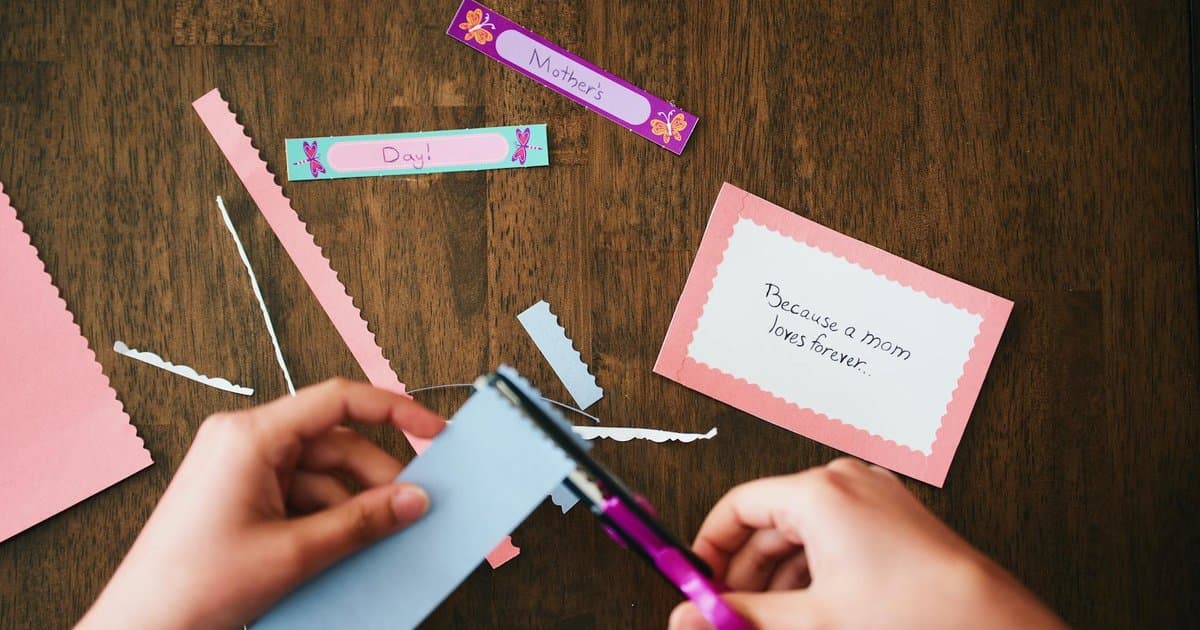
A heartfelt, handmade card created in 20 minutes will mean more to most moms than a $7 store-bought card you grabbed without thinking. The best last minute Mother's Day card ideas rely on personal touches, not production value. Whether your child is two or twelve, a genuine message paired with something only they could create (a handprint, a funny memory, a wobbly drawing) becomes the keepsake that stays on the fridge for years.
Key Takeaways
- A short handwritten note from your child beats any store-bought card for emotional impact.
- Handprint art, acrostic poems, and coupon books all take under 30 minutes.
- Messy, imperfect cards are more meaningful because they're authentically your child's work.
- Every idea here works for stepmoms, grandmothers, teachers, and other mother figures.
- Bought cards become personal when you add a handwritten note or child's drawing inside.
Handwritten Notes in a Decorated Envelope
A short, genuine note from your child beats a generic card every time. You don't need special materials. Grab an envelope, a piece of paper, and whatever your child can use to decorate: stickers, crayons, pressed flowers from the yard, even washi tape.
For toddlers and preschoolers, try dictation. Ask "What do you love about Mama?" and write down their exact words. According to research from the National Association for the Education of Young Children (NAEYC), dictation is a foundational literacy practice that helps young children connect spoken and written language 1. Their phrasing will be funny, specific, and impossibly sweet. "I love Mama because she lets me eat cheese" is more memorable than any Hallmark verse.
Older kids can write their own message. Encourage them to include one specific memory rather than general statements. "Remember when we danced in the kitchen to that silly song?" hits harder than "You're the best mom ever." Pair the note with a small gesture, like making coffee or picking backyard flowers, and you have a complete last-minute Mother's Day gift that costs nothing.
DIY Card with Handprints or Drawings
Turn your child's handprint, fingerprint, or drawing into the card itself. This approach takes under 30 minutes and produces something impossible to replicate. Use washable paint, markers, or even food coloring mixed with a little water.
Handprints are incredibly versatile as design elements. Two handprints become butterfly wings. Fingerprints become flower petals or balloons. A full palm print with fingers spread becomes a sun. Pinterest has thousands of variations, but the simplest version works best when time is short: one handprint on folded cardstock with "Happy Mother's Day" written below it.
Research published in Early Childhood Education Journal confirms that process-focused art (where children explore materials freely) supports both creativity and emotional expression 2]. In other words, the messy fingerprints your toddler smears across the card aren't a mistake. They're developmentally appropriate self-expression. Moms understand this instinctively, which is why handprint cards are the ones they keep in memory boxes for decades. For more ideas along these lines, explore [DIY handmade gifts that kids of any age can create.
Personalized Story-Based Card
A short personalized story where your child is the hero celebrating mom creates an emotional connection no store card can match. Children see themselves in the narrative. They're the ones giving the gift, saying the kind words, and making mom feel special.
You can write this yourself on a folded piece of paper. Start with your child's name: "Child woke up early on Mother's Day because they had a plan..." Keep it to 4 or 5 sentences. End with something your child actually says or does that makes mom laugh or tear up.
If you want something more polished without the DIY stress, personalized story-based cards offer a ready-to-print option. Some parents find that a personalized "Why I Love Mom" story works beautifully because the child sees themselves navigating the celebration. This approach is one option among many, and it's especially useful when your child is too young to write but old enough to want credit for the gift.
Fill-in-the-Blank Coupon Book
Create a simple coupon booklet with promises like "One breakfast in bed," "Movie night of your choice," or "One guilt-free hour of quiet." It costs nothing, takes 15 minutes, and moms actually use these throughout the year.
Cut 5 or 6 pieces of paper into rectangles. Write "COUPON" at the top of each one. Let your child fill in the promise (or dictate it for younger kids). Staple them together with a decorated cover page. Done.
What makes coupon books work is that they extend Mother's Day beyond a single morning. A survey by the National Retail Federation found that experiences and acts of service are among the most valued Mother's Day gifts 3. Coupons deliver exactly that. They also work beautifully for stepmoms, grandmothers, or any mother figure in your child's life, because you can tailor each coupon to the specific relationship. "One extra-long hug" hits differently when it comes from a stepchild who's still building that bond.
Acrostic Poem Card
Have your child write why they love mom using each letter of "MOTHER" or "MOM." M is for Making pancakes on Saturday. O is for Our walks to the park. T is for Telling me stories at bedtime. This structure gives reluctant writers a framework to follow, which reduces the blank-page anxiety that makes some kids shut down entirely.
For kindergartners and early elementary kids, this format works especially well. According to ZERO TO THREE, children between ages 5 and 7 are developing the ability to express complex emotions through writing, but they often need scaffolding to get started 4. An acrostic provides exactly that scaffolding. Each letter becomes a prompt, not a burden.
Write it on cardstock, construction paper, or even a piece of printer paper folded in half. Decorate the border with stickers or small drawings. The whole project takes about 10 minutes, and the result is something literary and personal. Kids feel proud of acrostic poems in a way they don't always feel about a basic "Happy Mother's Day" message.
Photo Collage Card
Arrange 3 to 5 favorite photos of mom and child on cardstock with a simple "Happy Mother's Day" header. This approach is visual, heartfelt, and completely achievable same-day.
If you have a printer at home, print photos directly onto paper and glue them to a folded card. No printer? Most pharmacies (CVS, Walgreens) offer same-day photo printing for about 30 cents per print. Pick them up, arrange them on cardstock, and add captions underneath each one. "The beach trip where you buried me in sand" or "Our first day of school picture" turns a simple collage into a timeline of your relationship.
Keep the design simple. One common pattern families follow is choosing photos from different years so mom can see how much the child has grown. Research in the journal Memory suggests that looking at personal photographs activates positive emotional memories more strongly than verbal descriptions alone 5. A photo collage card isn't just pretty. It's an emotional experience for the person receiving it.
Letter from a Stuffed Animal or Pet
Write a short, funny letter "from" your child's favorite stuffed animal or family pet explaining why they appreciate mom. This one is unexpected, and it makes moms laugh out loud.
"Dear Mom, it's me, Mr. Whiskers. I know I knock things off the counter, but you still feed me every day. That's love. Happy Mother's Day. P.S. Please stop vacuuming near my food bowl." The humor and personality make these letters memorable enough that moms frame them.
This works for any age. Parents can write on behalf of toddlers, and older kids can channel their creativity into the pet or stuffed animal's "voice." It's a wonderful exercise in perspective-taking, which developmental psychologists consider a key milestone in social-emotional growth 6. The sillier, the better. Moms treasure these because they reveal how their child thinks and what makes them laugh. If your child has a beloved stuffed animal that goes everywhere, let that character be the author.
When a Bought Card Is Perfectly Fine
Store-bought cards aren't thoughtless if you personalize them. Add a handwritten note inside, have your child draw a picture on the back, or tuck in a specific memory that explains why you chose that particular card. "I picked this one because the flowers look like our garden" transforms a generic purchase into something intentional.
Moms remember personal messages, not card brand names. If time is genuinely short, grabbing a card on the way home and spending five minutes writing something real inside is a completely valid approach. No guilt needed.
The key difference between a forgettable store card and a meaningful one is specificity. "You're an amazing mom" is nice. "You're amazing because you stayed up with me when I had that nightmare and didn't complain once" is unforgettable. That handwritten addition takes 60 seconds and matters more than the card it's written in.
When to Talk to Your Pediatrician
Most of this article focuses on fun and creativity, but if your child consistently resists expressing affection, avoids drawing or writing far beyond what's typical for their age, or shows significant distress around holidays involving family relationships, it may be worth mentioning to your pediatrician. These patterns don't always signal a problem, but they're worth discussing, especially if they're part of a broader picture of social or emotional difficulty. Your child's doctor can help determine whether an evaluation for fine motor delays, anxiety, or other developmental concerns would be helpful.
Get practical parenting tips delivered weekly
Evidence-based guidance for the moments that matter. No spam, unsubscribe anytime.
Frequently Asked Questions
Keep reading
How to Create a Dog Memorial Book (With Printable Templates)
Create a dog memorial book with photos, stories, and mementos. Learn 5 organizational tips and design ideas for honoring your pet's memory.
8 min read

How to Write a Wedding Speech for Your Aunt and Uncle (With Examples)
Write a heartfelt 3-5 minute wedding speech for your aunt and uncle. Follow this proven structure with character-focused stories and authentic delivery tips.
7 min read

Cat Memorial Book Ideas: Creating a Lasting Tribute
Create a cat memorial book with photos, memories, and keepsakes. Learn 6 meaningful ways to honor your pet and process grief with this personalized tribute.
7 min read
Get weekly parenting tips backed by research
Evidence-based guidance for the moments that matter. No spam, unsubscribe anytime.