Mother's Day Books for Preschoolers: Meaningful Gifts Kids Actually Love
Discover meaningful Mother's Day book gifts for preschoolers. Learn what makes great picture books, find age-appropriate titles, and get budget-friendly gift ideas.
Erika Wong
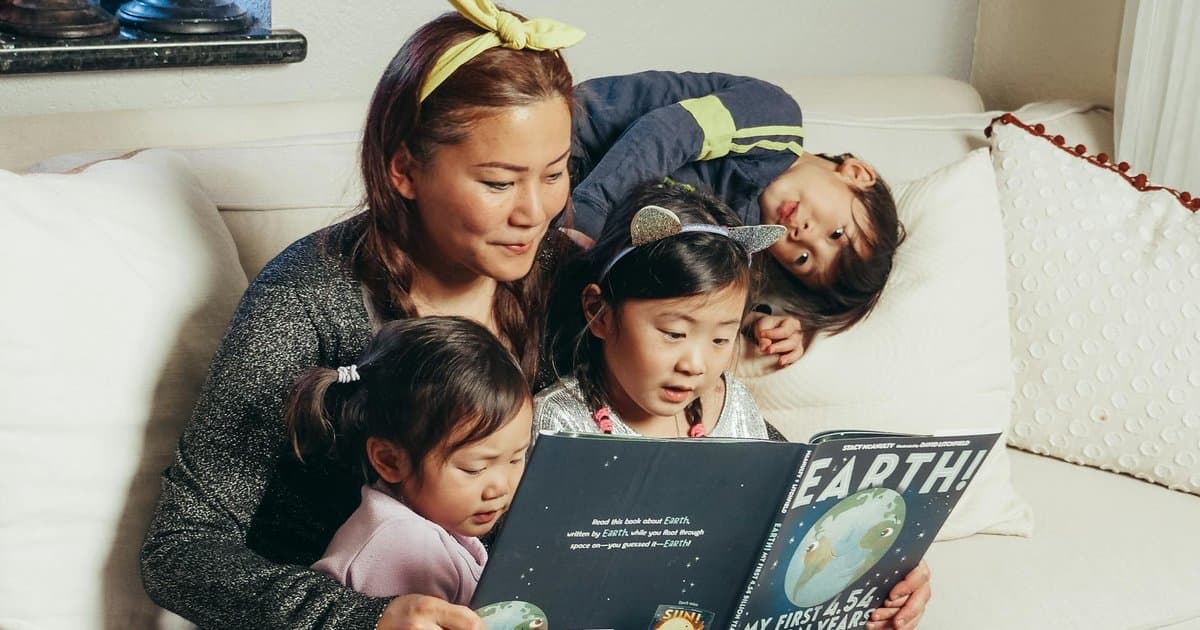
You want your preschooler to give something meaningful this Mother's Day, not another macaroni necklace that falls apart by lunch. A mother's day book for preschoolers might be exactly what you're looking for: a gift that feels personal, lasts for years, and gives your child a way to say "I love you" with words they can actually understand.
But the children's book market is overwhelming. There are hundreds of options, and not all of them land well with a two-year-old or a four-year-old. Some are too long. Some are too abstract. Some are beautiful for adults but boring for kids.
This guide helps you find the right book for your child's age, attention span, and budget, so the gift actually gets reread, not shelved.
Why Mother's Day Books Work Better Than Toys for Preschoolers
If you're debating between a book and a toy, consider this: the American Academy of Pediatrics recommends reading aloud to children starting in infancy, noting that shared reading strengthens the parent-child bond and supports language development (AAP, 2014). A picture book is both a gift and a relationship-building activity.
Toys break. Toys clutter. Books become keepsakes.
When a preschooler hands mom a picture book about how much they love her, and then climbs into her lap to "read" it together, that's a moment that sticks. According to a 2019 Scholastic Kids & Family Reading Report, 53% of children ages 0–5 are read to aloud at home 5–7 days a week, meaning books already fit into most families' routines.
A Mother's Day book doesn't require batteries, assembly, or storage bins. It requires ten quiet minutes together. That's the gift.
What Makes a Great Mother's Day Book for Preschoolers
Not all picture books work for this occasion. The best mother's day book for preschoolers has a few key features:
Simple, rhythmic text. Preschoolers love repetition. Books with predictable patterns, "I love you when you… I love you when you…", let kids memorize lines and "read" along. This builds confidence and makes the gift feel like theirs.
Illustrations showing real moments. The strongest books depict everyday life: cooking together, bedtime snuggles, messy playtime. Abstract concepts like "unconditional love" don't land with a three-year-old. Concrete scenes do.
Emotional depth without complexity. A preschooler can understand "I feel safe with you" but not "You sacrificed everything for me." Look for books that name feelings simply.
Brevity. Research from the National Association for the Education of Young Children (NAEYC) emphasizes that effective read-alouds for preschoolers match the child's attention span, typically 10–15 minutes. Books under 500 words work best for this age.
Best Mother's Day Picture Books for Toddlers and Preschoolers
Here are titles that parents and teachers consistently recommend, organized by age:
Ages 18 months – 3 years (board books):
- Mama by Jimmy Fallon, bold illustrations, simple text, perfect for tiny hands
- I Love Mom with The Very Hungry Caterpillar by Eric Carle, a familiar character celebrating mom
- Mama, Do You Love Me? by Barbara M. Joosse, repetitive reassurance that resonates with toddlers
Ages 3–5 (picture books):
- Guess How Much I Love You by Sam McBratney, a classic that preschoolers can recite from memory
- The Wonderful Things You Will Be by Emily Winfield Martin, affirming, gorgeous illustrations
- All Because You Matter by Tami Charles, powerful, lyrical text about a parent's love
According to Scholastic's 2019 report, 83% of children ages 0–5 say they love or like being read to "a lot." Choose a book your child will want to hear again and again, that's how you know the gift truly landed.
How to Choose the Right Mother's Day Book for Your Preschooler's Age
Age matters more than you might think. A book that's too advanced will frustrate your child; one that's too simple won't hold their interest.
18–24 months: Choose board books with 2–5 words per page and bold, high-contrast images. At this age, the book is mostly a sensory experience. Pointing and naming ("That's mama!") matters more than following a story.
Ages 2–3: Look for sturdy picture books with repetitive text and 20–30 pages. Children this age are developing narrative understanding, they can follow a simple sequence of events. Books with a refrain they can repeat are ideal.
Ages 3–5: These children can handle 32-page picture books with storylines and emotional nuance. They can discuss feelings, predict what happens next, and connect stories to their own lives. Research published in Child Development found that dialogic reading, where adults ask children questions during stories, significantly boosts vocabulary and comprehension (Whitehurst et al., 1988).
Pro tip: Test-read at your local library before buying. Your child's reaction will tell you everything.
Personalized Mother's Day Books: A Closer Look
You've probably seen ads for personalized children's books. Are they worth it?
For many families, yes. Personalized books that include your child's name, appearance, or family details can increase engagement. When preschoolers see themselves in a story, they pay closer attention and want to reread it more often. Many parents find that a personalized book about celebrating mom, where the child sees themselves giving hugs, making breakfast, or saying "I love you" — creates a stronger emotional reaction than a generic title.
Some parents find that reading a personalized story about Mother's Day helps because children see themselves navigating the situation successfully. It turns an abstract holiday into something concrete and personal.
That said, personalization alone doesn't make a great book. Look for quality writing, professional illustrations, and durable binding. A beautifully personalized book with clunky text won't get reread. A well-written one becomes a family treasure.
When to Buy and How to Present the Book
Timing matters, especially if you're ordering a personalized or online option.
Standard books: Purchase from a bookstore or online retailer up to one week before Mother's Day. Local bookshops often have curated Mother's Day displays starting in late April.
Personalized books: Order 2–3 weeks before the holiday. Printing and shipping take time, and rushing leads to stress — exactly what you don't need.
Presentation ideas that preschoolers love:
- Let your child decorate the wrapping paper with stamps or stickers
- Practice "reading" the book together several times before the big day, so your child can present it confidently
- Have your child tuck a hand-drawn card inside the front cover
- Record a video of your child "reading" the book aloud — grandparents especially love this
The preparation becomes part of the gift. When your preschooler feels ownership over the book, the giving moment is more meaningful for everyone.
Budget-Friendly Mother's Day Book Ideas
You don't need to spend $30 to give a meaningful book gift. Here's how to keep costs down:
Library checkout (free). Let your child choose their favorite "mom book" from the library. Wrap it, present it, read it together, and return it. The experience is the gift.
Secondhand copies ($2–8). Check local buy/sell groups, thrift stores, or used bookstores. Classic titles like Love You Forever by Robert Munsch are widely available secondhand.
Board book reprints ($5–10). Many beloved picture books have board book editions that are more affordable and more durable for younger children.
Dollar store and discount retailers ($1–5). These sometimes carry classic titles or themed Mother's Day books. Quality varies, so flip through before purchasing.
According to the Scholastic 2019 report, the average price parents expect to pay for a children's book is $5 — and plenty of wonderful options exist at that price point. A meaningful gift doesn't require a meaningful budget.
Activities to Extend the Mother's Day Book Gift
A book doesn't have to be a one-time read. Turn it into a lasting experience:
Create a reading ritual. Designate the Mother's Day book as the "special Sunday book" that gets read every week for a month. Repetition deepens the emotional connection and helps preschoolers memorize the text.
Illustrate a favorite page. Give your child crayons and ask them to draw their favorite scene from the book. Tape their drawing inside the back cover for a personal touch.
Record an audio version. Use your phone to record your child "reading" (or reciting) the book. Save the file — you'll want it in ten years.
Make a craft connection. If the book mentions flowers, plant seeds together. If it references baking, make cookies. Linking the book to a hands-on activity cements the memory.
These activities cost little or nothing but transform a $10 book into a multi-week Mother's Day celebration.
When to Worry: Matching Books to Your Child's Reading Level
If your preschooler shows no interest in picture books, don't panic — and don't force a book-based gift.
Some children at ages 2–3 aren't ready to sit through a full story. They'd rather run, build, or dig. That's developmentally normal. The NAEYC notes that children develop literacy skills along a wide continuum, and a child who isn't interested in books at two may become a passionate reader at four.
Signs that are normal and temporary:
- Preferring to flip pages quickly rather than listen to the story
- Wanting to look at pictures but not hear the words
- Losing interest after 2–3 pages
- Preferring nonfiction (trucks, animals) over narrative stories
When to mention it to your pediatrician:
- Your child shows no interest in any books by age 3, even when read aloud
- They don't respond to their name in stories or point at pictures when asked
- Language development seems delayed alongside book disinterest
If a book isn't the right gift this year, that's okay. A handprint card, a nature walk, or a homemade coupon book for "hugs on demand" can be just as meaningful. Revisit books in 6–12 months.
Real-World Examples: Mother's Day Books That Resonate
Parents consistently report that the most-reread Mother's Day books share one trait: they reflect real life, not idealized motherhood.
Books showing messy kitchens, tired moms, silly moments, and imperfect days feel authentic to preschoolers. They recognize their own lives in those pages. Titles like Because I Had a Teacher (by Kobi Yamada, adapted for mother figures) or Mommy's Khimar by Jamilah Thompkins-Bigelow resonate because they show specific, diverse experiences of being a mom.
Books featuring single moms, adoptive families, grandmothers as primary caregivers, and two-mom families matter too. When a child's family structure is reflected in a story, the emotional impact deepens.
The ultimate test? If your child brings the book to you unprompted three weeks after Mother's Day, asking to read it again — the gift worked. That repeated return to a story is what researchers call "emergent literacy behavior," and it's one of the strongest predictors of later reading success (Whitehurst & Lonigan, 1998).
Key Takeaways
- A mother's day book for preschoolers is a lasting, meaningful gift that doubles as a bonding activity
- Match the book to your child's age: board books for under 3, picture books for 3–5
- Budget-friendly options include library checkouts, secondhand copies, and board book reprints
- Order personalized books 2–3 weeks before Mother's Day
- Turn the book into an experience with reading rituals, crafts, and recorded readings
- If your child isn't interested in books yet, choose a different gift without worry — and revisit later
Get practical parenting tips delivered weekly
Evidence-based guidance for the moments that matter. No spam, unsubscribe anytime.
Frequently Asked Questions
Keep reading

Supporting Siblings During NICU Stay: What Parents Need to Know
Help siblings cope with NICU stress through honest explanations, routines, and connection activities. Most behavioral changes resolve within weeks of discharge.
10 min read
Teaching Empathy Through Children's Stories: A Practical Guide
Learn how to teach empathy through children's stories with practical techniques. Research shows kids develop stronger peer relationships with regular diverse
10 min read

How to Motivate Students on Classroom Behavior (Strategies That Work)
Master 8 proven strategies to motivate students on classroom behavior. Learn why specific praise and consistency outperform rewards, plus tools that work.
9 min read
Get weekly parenting tips backed by research
Evidence-based guidance for the moments that matter. No spam, unsubscribe anytime.