Sibling Dynamics: Building Real Bonds Between Big and Little
Learn how to foster healthy sibling relationships in early childhood. Most siblings need 6-12 months of consistent interaction before genuine cooperation
Erika Wong
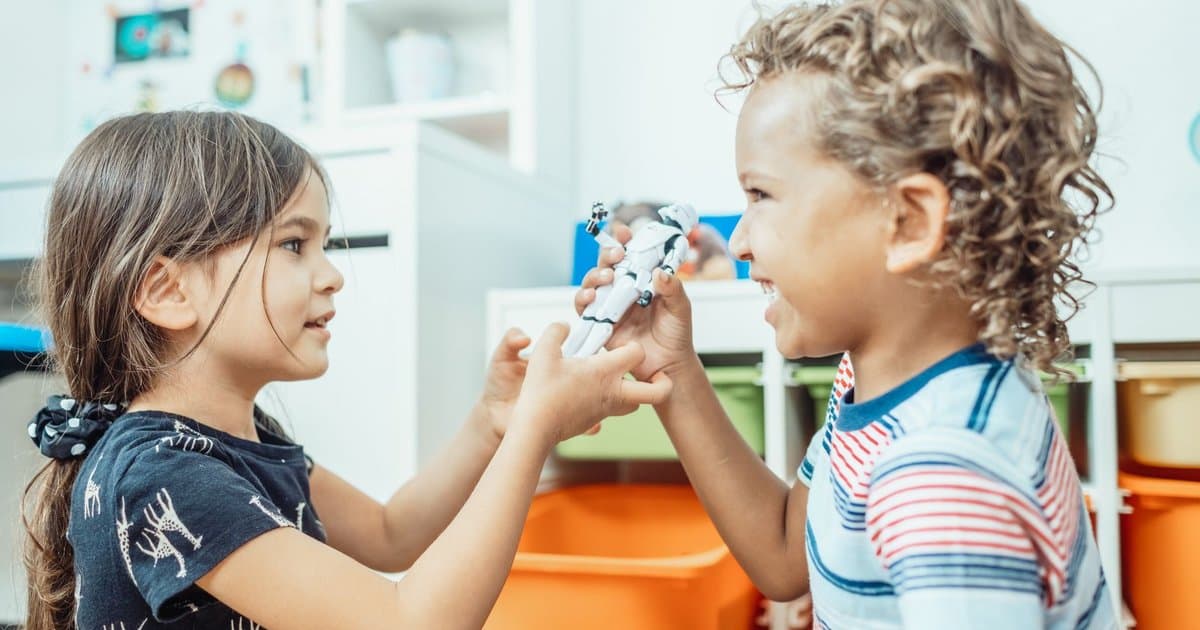
Sibling bonds between toddlers and babies form through repeated, supervised positive interactions, not through a single magical moment of meeting. Most siblings aged 2 to 4 need six to twelve months of consistent, low-pressure shared experiences before they move beyond parallel play into genuine cooperation. The strongest predictor of healthy sibling dynamics and family bonding is whether each child feels securely attached to their parents first.
Key Takeaways
- Jealousy and regression after a new sibling arrives are developmentally normal, not signs of failure.
- Brief, supervised play sessions of 10 to 15 minutes build connection faster than forced togetherness.
- Secure parent-child attachment is the foundation that makes sibling bonding possible.
- Most siblings show genuine interest in cooperative play around age 3 to 4.
- Specific praise for cooperation teaches far more than vague "be nice" instructions.
How Sibling Relationships Actually Develop in Early Childhood
Newborns and toddlers operate on completely different social wavelengths. A baby cannot reciprocate play, share a toy, or laugh at a joke. For a two-year-old, this means their new sibling is, at best, a fascinating but frustrating roommate. According to Sawicki (1997) 1, jealousy and competition between siblings are developmentally expected responses, not indicators of a broken relationship.
What actually moves the needle on sibling dynamics and family bonding is the quality of each child's relationship with their parents. Cierpka (2001) 4 describes how secure attachment to caregivers provides the emotional safety net children need to tolerate a rival for attention. When a toddler trusts that their parent's love isn't being divided, they have more emotional bandwidth to be curious about a sibling rather than threatened.
This process takes months. In my classroom, I watch friendships between three-year-olds develop on the same slow timeline. Expecting instant connection from siblings sets everyone up for disappointment.
Creating Moments Where Connection Naturally Happens
Real bonding doesn't require Pinterest-level activities. It happens during ordinary moments: water play at the kitchen sink, stacking blocks on the floor, or looking at a picture book together while a parent sits nearby. The key ingredient is your calm presence, not the activity itself.
I keep these sessions short. Ten to fifteen minutes of supervised play works far better than an ambitious hour that falls apart when someone grabs or screams. Narrate what you see happening: "You're pouring water into your sister's cup. She's smiling at you." This kind of specific feedback teaches children to notice each other's reactions and builds a shared language around cooperation.
Avoid comparisons between siblings, even positive ones. "You're such a good sharer, not like your brother" poisons the well. Instead, celebrate each child's unique contribution. "You found the red block. And you stacked it on top. You both built that tower." According to Storr (1998) 2, preparing children through concrete, simple experiences helps them adjust to their role alongside a sibling.
Managing Jealousy Without Dismissing Real Feelings
Jealousy typically peaks around six to twelve months after a new sibling arrives, once the novelty has worn off and the reality of shared attention sets in. According to Sawicki (1997) 1, regression in toilet training, sleep habits, or general behavior is a common signal that the older child needs more reassurance, not punishment.
When Nora was adjusting to Ollie, the hardest part wasn't the big tantrums. It was the quiet withdrawal. She stopped asking for help with things she'd previously needed me for. That retreat was her way of testing whether I'd still come to her without being asked. I learned to name what I saw: "You seem sad that I'm feeding Ollie during your puzzle time. That makes sense. Let's save a puzzle for just us after he naps."
Pair that validation with predictable one-on-one time. It doesn't need to be elaborate. Fifteen minutes of undivided attention weekly, doing whatever the older child chooses, goes a long way. Put it on the calendar so they can count on it. Predictability is more powerful than duration.
When Sibling Conflict Escalates: Setting Boundaries While Coaching
Your reaction during sibling conflict teaches children whether disagreements are terrifying or solvable. Stay physically close, separate children before anyone gets hurt, and resist the urge to assign blame. "He's just a baby, you should know better" adds shame on top of normal sibling frustration, and a three-year-old cannot metabolize that combination.
Instead, coach the older child through problem-solving once everyone is calm. "Your brother knocked over your tower. That's frustrating. What could you do next time?" Then give them options: move to a higher surface, ask for help, or build in a different spot. This is managing sibling conflict in a way that builds skills rather than resentment.
With Nora and Ollie, most of the hitting and screaming was a failed attempt to communicate something she didn't have words for. When she snatched a toy from Ollie and screamed, I didn't just correct her. I gave her the exact line: "Say, Ollie, I'm still playing, please can you wait?" I had her repeat it, try it, and then I praised her for using her words. Only after that did I explain why words work better than hands. Giving children the script, then having them practice it, is the single most effective tool I've found in both my classroom and my home.
Redirect big anger toward safe outlets: punch a pillow, run in the yard, stomp feet. These aren't rewards for bad behavior. They're bridges to self-regulation for a brain that literally cannot calm itself down yet.
Building Teamwork Without Forcing Togetherness
Collaborative tasks appropriate to both ages create natural connection points. Sorting laundry by color, feeding the family pet together, or gathering toys into a basket all work well. Praise the cooperation specifically: "You both carried that basket to the door. That took teamwork."
Some important guardrails: never expect the older child to always include or entertain the younger one. That's a fast track to resentment. Frame helping as an invitation, never an obligation. "Would you like to hand your sister her cup?" gives them agency. "Give your sister her cup" takes it away.
Some children are naturally independent. They play better alone, process emotions internally, and need more physical space. Forcing closeness with a sibling who has a different temperament can breed exactly the distance you're trying to prevent. Building family bonds works better when it respects each child's individual wiring.
Sun (2019) 3] found that [sibling dynamics in early years predict relationship orientations into young adulthood. The quality of the relationship matters far more than the quantity of time spent together.
When Bonding Between Siblings Isn't Happening Yet
It is normal for siblings under age four to show minimal interest in each other. Genuine cooperative play, with shared goals, inside jokes, and mutual delight, typically accelerates around age three to four when language, imagination, and humor all come online at roughly the same time.
Age gaps under two years often mean the older child experiences the new sibling as a loss rather than a gain. They don't have the cognitive framework to understand "big sibling" as an identity worth having. Siblings with very different temperaments (one cautious, one bold) may need even longer to find common ground. Cierpka (2001) 4 notes that rivalry and envy between siblings are natural family dynamics that, when handled supportively, can actually strengthen attachment over time.
Pressuring bonding now does not guarantee a strong relationship later. What does help: protecting each child's sense of security, narrating positive moments when they happen organically, and trusting that the relationship has years to develop. Some parents find that reading a personalized story about becoming a big sibling, like a personalized big brother book, helps because children see themselves navigating the new role successfully. Others simply read favorite picture books together at bedtime. Both approaches give siblings a shared, positive experience.
When to Talk to Your Pediatrician
Most sibling struggles fall within normal developmental range, but a few patterns warrant professional input. Talk to your pediatrician if the older child's regression lasts more than a few months without improvement, if aggression toward the baby is frequent and escalating despite consistent coaching, or if the older child shows signs of persistent sadness, withdrawal, or anxiety that disrupts daily functioning.
According to Storr (1998) 2, preparing children and families before and after a new sibling's arrival reduces the intensity of adjustment difficulties. If you feel like you've done that preparation and things still aren't improving, seeking guidance is not an overreaction. It's good parenting.
Get practical parenting tips delivered weekly
Evidence-based guidance for the moments that matter. No spam, unsubscribe anytime.
Frequently Asked Questions
Keep reading

Supporting Siblings During NICU Stay: What Parents Need to Know
Help siblings cope with NICU stress through honest explanations, routines, and connection activities. Most behavioral changes resolve within weeks of discharge.
10 min read

Teaching Empathy Through Children's Stories: A Practical Guide
Learn how to teach empathy through children's stories with practical techniques. Research shows kids develop stronger peer relationships with regular diverse
10 min read

How to Motivate Students on Classroom Behavior (Strategies That Work)
Master 8 proven strategies to motivate students on classroom behavior. Learn why specific praise and consistency outperform rewards, plus tools that work.
9 min read
Get weekly parenting tips backed by research
Evidence-based guidance for the moments that matter. No spam, unsubscribe anytime.