Teaching Gratitude to Children: A Practical Guide for Parents and Teachers
Teach authentic gratitude to kids with specific strategies. Research shows gratitude improves academic adjustment by 23%. Skip the worksheets.
Erika Wong
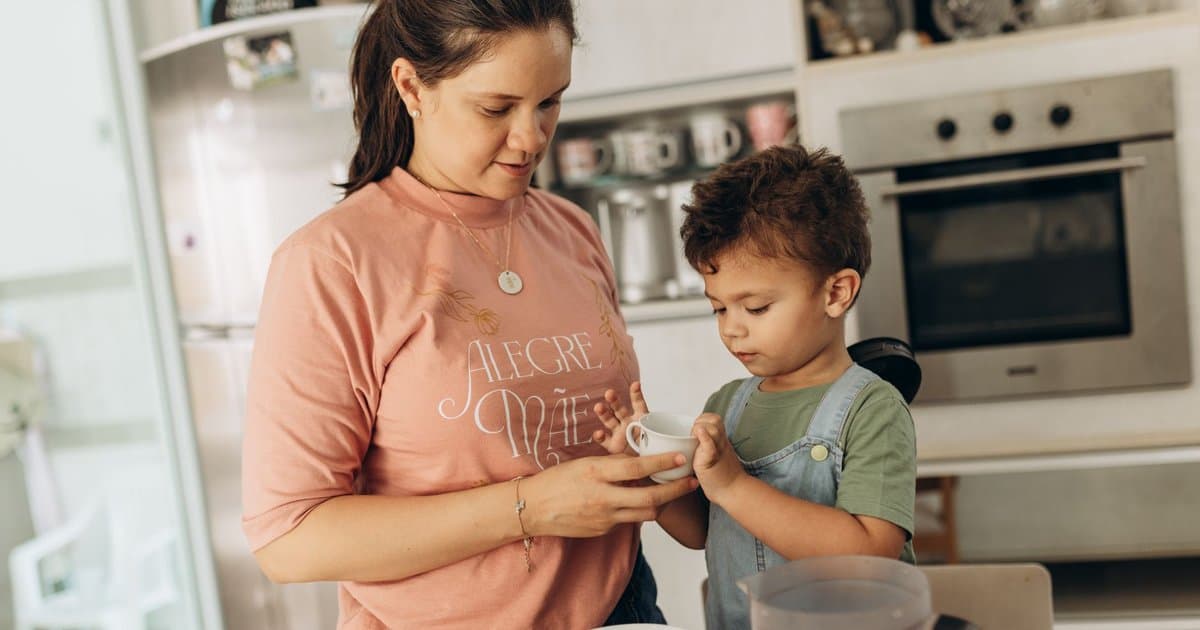
Teaching gratitude to children works best when you stop demanding "say thank you" and start modeling genuine noticing in everyday life. Children learn gratitude the same way they learn any skill: through repeated, low-pressure practice and watching the adults around them do it authentically. The goal is not polite performance but a real internal shift toward recognizing what's good.
Key Takeaways
- Authentic gratitude is a taught skill, not a personality trait children either have or lack.
- Children under age six rarely feel true gratitude; they are still learning cause and effect.
- Modeling specific, genuine thankfulness daily teaches more than any gratitude worksheet.
- Asking "what felt good today?" works better than "what are you thankful for?"
- Gratitude development takes years of consistent, judgment-free practice.
Why Gratitude Matters (and It's Not About Manners)
Gratitude is not a courtesy script. It is a cognitive habit that helps children notice what is working in their lives instead of fixating only on problems. According to Wu (2020) 3, children who developed stronger gratitude trajectories showed better psychosocial and academic adjustment over time. That finding lines up with what I see in my classroom every year: kids who can name something good about their day tend to recover faster from setbacks and treat peers with more care.
Forced "thank you"s create a different outcome entirely. A child who says the words without feeling them is practicing compliance, not gratitude. Compliance has its place, but it does not build resilience or reduce anxiety. Real gratitude grows when a child genuinely registers that someone did something kind, or that a moment felt good. The difference matters. Politeness is a social tool. Gratitude is an emotional one.
Gratitude Development by Age: What to Actually Expect
Expecting a three-year-old to feel genuinely thankful is like expecting them to do long division. The brain structures that support perspective-taking and recognizing others' effort are still under construction. Here is what research and daily experience suggest at each stage.
Age Range | What Children Can Do | What They Cannot Yet Do |
|---|---|---|
2–4 years | Name things they like or enjoy | Understand someone else's effort or sacrifice |
5–7 years | Begin connecting "someone helped me" with a warm feeling | Sustain gratitude beyond the moment or generalize it |
8–10 years | Write meaningful thank-you notes; recognize patterns of kindness | Consistently apply gratitude without adult scaffolding |
According to Freitas (2022) 1, the development of gratitude varies significantly across cultures, meaning there is no single "normal" timeline. If your five-year-old seems oblivious to your efforts, that is developmental, not defiant.
Modeling Gratitude Daily Without Announcing It
The most effective teaching gratitude to children strategy is also the simplest: let them hear you notice good things, out loud, in real time. Not in a lesson. Not in a speech. Just in passing.
"I'm really glad the sun came out. That walk was so nice." "This soup turned out better than I expected. I'm happy about that." "Thank you for carrying that bag, Ollie. That really helped."
In my house, I started doing this deliberately when Nora was about four. I would narrate small moments of appreciation, not directed at her, just out loud. Within a few months, she started doing it back. "I'm glad we have this blanket," she told me one evening. Nobody prompted her. She had absorbed the pattern the same way children absorb any repeated behavior. The key is consistency. One grateful comment per day, said genuinely, teaches more than a weekly gratitude lesson.
The Gratitude Practice That Works: Noticing, Not Listing
"What are you thankful for?" is one of those questions that freezes children. They default to "my family" or "my toys" because those answers feel safe. The question is too big and too abstract for most kids under ten.
A better approach: ask what they noticed. "What felt good today?" "Who helped you with something?" "What made you laugh?" These questions pull from real, specific memory. Specificity is where gratitude lives. "The way my friend waited for me at recess" carries emotional weight. "My friends" does not.
If you keep a gratitude journal with your child, reframe it as a "noticing journal." Some parents find that writing three observations at bedtime, with no pressure to be grateful about them, builds the same neural pathways. Many pediatric psychologists recommend this approach for children prone to worry, since noticing positive moments can gently interrupt anxious thought patterns.
Creating Gratitude Rituals That Feel Natural
Rituals give gratitude a container. Without a consistent moment to practice, the habit drifts. Here are three that work for different families.
Mealtime sharing. Each person at the table names one thing they noticed that day. No turns forced. If someone passes, that is fine. The point is exposure, not extraction.
Bedtime reflection. Before lights out, name one good thing together. I do this with Ollie most nights. Some nights he says "my dinosaur." Some nights he says "when you read to me." Both count. Both are real.
Walking and noticing. On a weekend walk, point out birds, colors, textures, sounds. This grounds gratitude in sensory experience, which is especially effective for children aged three to six who think in concrete terms. Consistency matters more than the ritual you choose. Pick one and stick with it for at least a month before deciding whether it works.
Common Mistakes Parents Make When Teaching Gratitude
Three approaches reliably backfire.
Shaming. "You should be grateful. Some kids don't even have food." This teaches guilt and suppression, not appreciation. Children who hear this learn to hide complaints, not to feel thankful. Using gratitude as a weapon against sadness ("at least you have...") dismisses the child's real emotion.
Forcing performance. Making a child write a thank-you note before they feel anything about the gift creates resentment toward the practice itself. Better to wait a day, talk about the giver's effort, and then ask if they want to draw or write something.
Expecting instant results. Teaching gratitude to children is slow work. I treat it the same way I treat any expected behavior in my classroom. Lining up, setting up a notebook, tracking the speaker: none of these happen after one instruction. I teach them explicitly, we practice over and over, and I give specific feedback so a child knows exactly what to do. Gratitude is no different. It is a taught skill, practiced repeatedly, over months and years.
Gratitude in the Classroom: Practical Teacher Strategies
Morning meetings are one of the strongest gratitude anchors I've found. I start each day with a quick round of "something I noticed" before academics begin. Students name a moment from the previous day: someone sharing a pencil, a funny thing their dog did, a meal they enjoyed. The rule is no commentary from peers. Just listening.
Peer appreciation circles also work well, particularly for children aged seven and up. Each student names one thing a classmate did that helped the group. This builds both gratitude and social awareness. I frame it as noticing, not praising. "Marcus waited quietly while I was talking, and that helped me finish" teaches what is worth appreciating. The practice links directly to building confidence in children because being noticed by peers reinforces a child's sense of belonging.
According to Chen (2025) 2, gratitude can serve as a buffer against social anxiety in children, which supports the idea that classroom gratitude practices may do more than boost mood.
When Your Child Seems Ungrateful: What Is Actually Normal
Complaining, wanting more, and focusing on what they lack are all normal parts of childhood. Young children's brains are wired to notice gaps and unmet desires. This is not a character flaw. It is how developing brains prioritize information.
Genuine concern is warranted only if a child consistently shows zero awareness of other people's effort or feelings, even after years of gentle modeling. That pattern, especially combined with difficulty in peer relationships, may be worth discussing with a pediatrician or school counselor.
For most children, gratitude emerges slowly and unevenly. You will have a week where your child thanks a stranger unprompted, followed by a week of nonstop complaining about what their sibling got. This is normal development, not a sign you have failed.
Using Stories to Deepen Gratitude Conversations
Stories create emotional resonance that direct instruction cannot. When a child hears about a character who notices a friend's kindness, or who learns to appreciate a small moment, the lesson lands differently than a lecture.
Picture books like The Thankful Book by Todd Parr normalize gratitude as quiet observation rather than performance. Family stories work too. Telling your child about a time someone helped you, and how that made you feel, gives gratitude a human face.
Some parents find that reading a personalized story about thankfulness helps because children see themselves navigating the situation. When a child is the character in the story, the emotional connection deepens. Personalized story books can serve this role well for children aged four to eight. Stories also pair naturally with Mother's Day classroom activities, where children can reflect on what family members do for them.
Tracking the Subtle Shifts (Gratitude Is Not Linear)
Do not look for a dramatic transformation. Gratitude shows up in tiny, easy-to-miss moments: an unprompted "thanks, Mom," a child remembering a kind act from two weeks ago, or spontaneously including a left-out peer.
One unprompted "thank you" matters more than a forced list of a hundred things. When you notice these moments, name them with specific feedback. "You thanked your teacher without anyone reminding you. That was thoughtful." This reinforces the behavior far more than vague praise ever could.
Some weeks will feel like nothing is sticking. That is part of the process. According to Wu (2020) 3, gratitude trajectories in children are heterogeneous, meaning children develop this capacity at very different rates and in different patterns. Patience and consistency are your two most important tools. Keep modeling. Keep noticing. The roots grow before the leaves appear.
Get practical parenting tips delivered weekly
Evidence-based guidance for the moments that matter. No spam, unsubscribe anytime.
Frequently Asked Questions
Keep reading
Eid in the Classroom: Activities Elementary Teachers Can Lead Today
Celebrate Eid in your classroom with 5+ simple activities. Partner with families, use crafts and read-alouds, and create an inclusive space for all students.
7 min read

Lunar New Year Activities for the Classroom: 15 Ideas That Celebrate and Educate
Explore 15 culturally respectful Lunar New Year classroom activities across art, movement, writing, and food. Build awareness without centering performance.
8 min read

Teaching Creative Writing Through Superhero Stories: A Classroom Guide
Teach creative writing using superheroes with scaffolded prompts, hero's journey structure, and peer feedback. Works for K-6 students and reluctant writers.
8 min read
Get weekly parenting tips backed by research
Evidence-based guidance for the moments that matter. No spam, unsubscribe anytime.