How to Be Brave Personalized Children's Book
The building inner courage story, rewritten for your child
Every page is redrawn around the child you make it for. Keep the story’s own hero and give them your child’s name, or choose someone new — it takes a minute, and nothing is locked in.
From$34.99 USD
Free to start. No payment to see your child in the story.
- 32 pages, hardcover
- 5.9 × 5.9 in
- Ages 3-5
- Premium, thick pages
- Free standard shipping included
- Printed & delivered in 2-3 weeks (US)
Start with the story’s own hero or pick from our cast — then give them your child’s name.
A gentle story about courage for little ones who feel wobbly inside.
That’s the story. The rest is how it becomes your child’s.
How personalization works
Who is this story about?

Keep the story’s own hero
The hero is already written and drawn for this book. Give them your child’s name if you like — that’s the whole edit.
Or swap in one of our cast
Eight characters to start from, and you rename whoever you pick.
- Luna

- Theo

- Mateo

- Sofia

- Amara

- Layla

- Mei

- Ravi

Or make your own
Describe them in a sentence, or add a photo to guide the likeness. Either way, entirely optional.
The characters are just the start.
Every part of this book is yours to change. Not a name dropped into a template — the whole thing is redrawn around the child you’re making it for.
- Every illustrationAll 32 pages are drawn fresh, not stamped with a face.
- The rooms and placesYour child's actual bedroom, your street, the places the story visits.
- The objects that recurThe specific blanket, the toy they won’t sleep without — carried page to page.
- Everyone else in itSiblings, grandparents, the dog. Named and drawn as themselves.
- The story itselfChange what happens, and the words on the page change with it.
- Or change nothingPick a hero and read it tonight. The rest is there when you want it.
What's Inside This Book
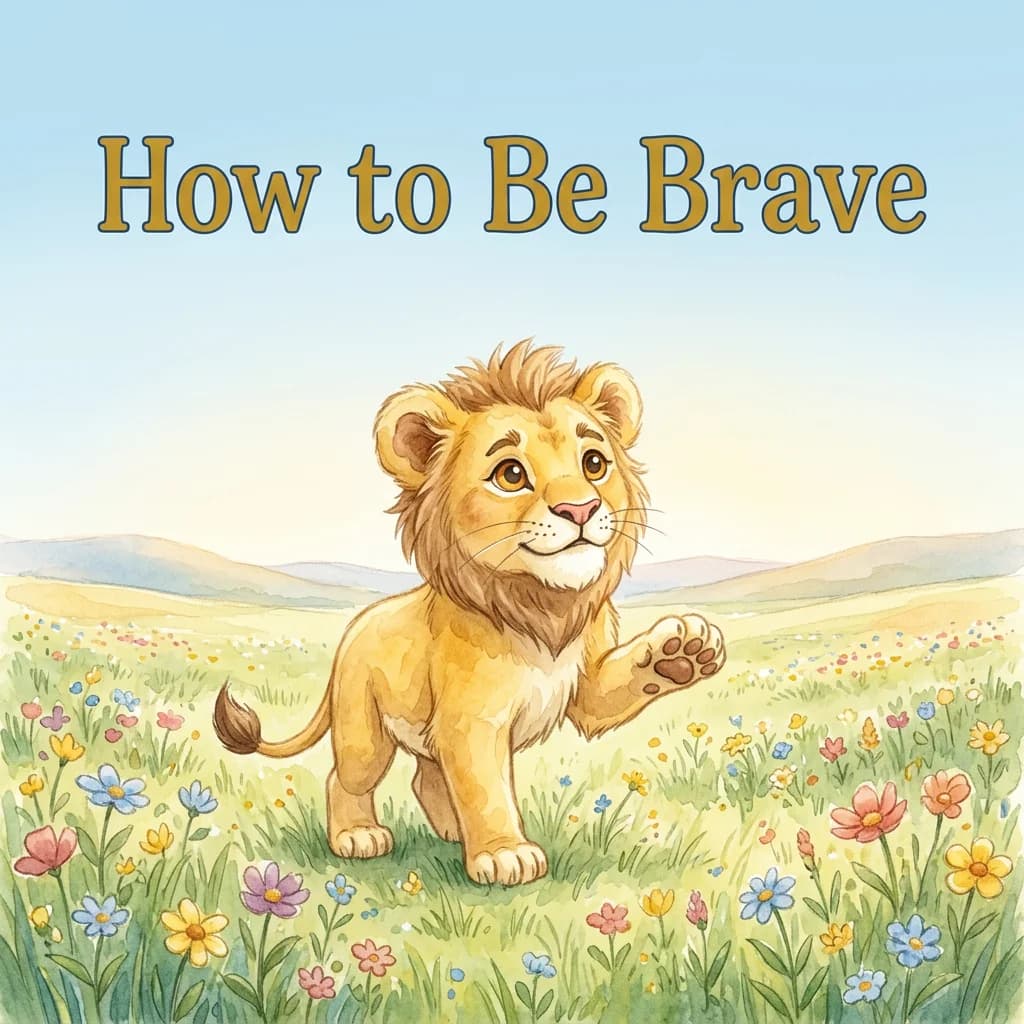
1 of 17 spreads
Every character, scene, and object in this book can be replaced with your own — your child's name, your family photos, your home, your school.
What you get
Free to start. No payment to see your child in the story.
Start free
- Free to start — no card needed
- See your child in the story in minutes
- Rename the hero and edit the story text
- Choose a ready-made character, or add a photo later
- Export a PDF of what you make
Your perfect keepsake
Hardcover book
- Full-color hardcover, 15×15cm
- Free standard shipping included
- Printed & delivered in about 2-3 weeks (US)
- Personalize names, story text & style
- Add your own photos once you are in the editor
Quick summary of How to Be Brave Personalized Children's Book
How to Be Brave is a personalized children's book designed for 3-5 year olds who experience anxiety, fear, or worry. Through a gentle, empathetic story featuring their child's name, it teaches courage and resilience while validating that feeling scared is normal and manageable.
This personalized children's book follows Leo and Wren through a courage-building forest adventure designed for ages 3–5. It teaches that bravery and fear can coexist, using relatable emotions, gentle pacing, and a comforting message your child will carry with them.
Key Takeaways
- Teaches that courage means acting despite fear, not the absence of it
- Models deep breathing as a real, child-friendly anxiety regulation tool
- Builds emotional vocabulary around bravery and fear through Leo's journey
- Reinforces growth mindset by showing courage as something practiced step by step
- Gives children a memorable Wren-voiced mantra to recall during scary moments
Why This Book Works
Research by Dr. Dan Siegel shows that naming emotions — 'name it to tame it' — reduces amygdala activation and helps children regulate fear. In How to Be Brave, Leo explicitly names his 'wobbly tummy' feeling, giving young readers a safe emotional mirror. This narrative technique makes abstract anxiety concrete and manageable for children aged 3–5, who are still developing their emotional vocabulary.
Wren's key line — 'Being brave doesn't mean you're not scared, it means you try anyway' — directly counters the misconception that courage is the absence of fear, a reframe supported by psychologist Dr. Susan David's work on emotional agility. Rather than dismissing Leo's fear, Wren validates it and pairs it with action. This co-regulation model mirrors healthy adult-child emotional coaching, which Dr. John Gottman's research identifies as the single greatest predictor of a child's emotional resilience.
The story's structure — one small step, then another — mirrors exposure-based approaches used in child psychology to gradually reduce fear responses. A 2020 review in the Journal of Clinical Child & Adolescent Psychology found that graded exposure paired with positive reinforcement produces lasting reductions in childhood anxiety. Leo's hidden meadow reward functions as exactly that positive reinforcement, closing the fear loop with joy and self-efficacy.
Common Misconceptions
Brave children don't feel scared at all
Courage always involves fear. Dr. Brené Brown defines bravery as vulnerability in action — children who learn this early develop stronger long-term emotional resilience than those taught to suppress fear.
Reading one book about bravery won't make a real difference
A 2019 University of Sussex study found that bibliotherapy — using stories to process emotions — meaningfully reduces anxiety in children aged 4–8 when combined with parent-led conversation after reading.
This book is only for children with serious fears
How to Be Brave is equally effective for everyday wobbles — new playgrounds, meeting strangers, or trying unfamiliar foods. Its universal message helps all children in the 3–5 developmental window.
How to Read This Book with Your Child
Best time to read: Read 2–3 days before a known challenging event, then again the night before. A calm, connected bedtime session works best.
Tell your child: 'This story is about a brave feeling — but not the kind you might expect.' Ask if they can think of something that made their tummy feel wobbly recently. Keep it light and curious, not pressured. This primes emotional engagement before page one.
Conversation Starters
- “What made Leo's tummy feel wobbly, and has your tummy ever felt like that?”
- “Why do you think Wren said brave and scared can happen at the same time?”
- “What is one small brave step you could take tomorrow?”
Frequently Asked Questions
Is this book appropriate for my 3-year-old who has separation anxiety?
Yes! This book is designed for ages 3-5 and specifically addresses anxiety in age-appropriate ways. The personalization makes it extra meaningful. It's perfect for before bedtime or stressful moments. Start with short readings and revisit the story as your child needs comfort and reassurance.
How does personalization help with overcoming fears?
When children see their own name in the story, they feel directly spoken to and understood. This personal connection makes the courage lessons feel more real and achievable. It transforms a general story into a tailored message just for them, increasing emotional engagement and retention.
What age is this book best for?
This book is designed for preschoolers ages 3-5 years old. The language, story length, and emotional concepts are calibrated for this developmental stage. It works best when read together with a parent or caregiver who can discuss feelings and provide reassurance.
Can this book help with specific fears like the dark, doctors, or starting school?
Absolutely! The personalized story uses gentle, validating language that helps children process any fear. While it addresses fear as a universal feeling, you can relate the story to your child's specific worry during conversations. This makes it versatile across different childhood anxieties.
How often should I read this book with my child?
There's no set schedule—follow your child's lead. Some children benefit from nightly readings, while others prefer a few times a week. Revisit it whenever your child faces a new fear or needs reassurance. The personalized aspect means it never feels stale.
What makes this different from regular courage books?
The personalization is the key differentiator. Instead of reading about a generic character, your child is the hero of their own courage story. This direct connection, combined with gentle messaging about feelings, makes it uniquely impactful for building genuine confidence.
The building inner courage story, rewritten for your child
Free to start. No payment to see your child in the story.
You Might Also Like
More Stories Like This
Losing a Beloved Pet
Goodbye, My Best Friend
A gentle, personalized story helping children ages 3–5 grieve the loss of their dog with love and hope.
Growth Through "Not Yet
The Magnificent Maybe: A Personalized Growth Mindset Book
A personalized story teaching kids that 'not yet' is the start of something great.
Setting Boundaries With Others
It's Okay to Say No – A Personalized How to Say No Book for Kids
Teach your child the power of 'no' through a story starring them. Builds body autonomy and confidence.
Standing Up to Bullies
Be Brave, Be Kind: Standing Up to a Bully
A personalized story that gives kids 5–7 the words and courage to stand up to bullying.