It's Okay to Say No – A Personalized How to Say No Book for Kids
A story about big emotions, rewritten for your child
Every page is redrawn around the child you make it for. Keep the story’s own hero and give them your child’s name, or choose someone new — it takes a minute, and nothing is locked in.
From$34.99 USD
Free to start. No payment to see your child in the story.
- 30 pages, hardcover
- 5.9 × 5.9 in
- Ages 3-5
- Premium, thick pages
- Free standard shipping included
- Printed & delivered in 2-3 weeks (US)
Start with the story’s own hero or pick from our cast — then give them your child’s name.
Teach your child the power of 'no' through a story starring them. Builds body autonomy and confidence.
That’s the story. The rest is how it becomes your child’s.
How personalization works
Who is this story about?

Keep the story’s own hero
The hero is already written and drawn for this book. Give them your child’s name if you like — that’s the whole edit.
Or swap in one of our cast
Eight characters to start from, and you rename whoever you pick.
- Luna

- Theo

- Mateo

- Sofia

- Amara

- Layla

- Mei

- Ravi

Or make your own
Describe them in a sentence, or add a photo to guide the likeness. Either way, entirely optional.
The characters are just the start.
Every part of this book is yours to change. Not a name dropped into a template — the whole thing is redrawn around the child you’re making it for.
- Every illustrationAll 30 pages are drawn fresh, not stamped with a face.
- The rooms and placesYour child's actual bedroom, your street, the places the story visits.
- The objects that recurThe specific blanket, the toy they won’t sleep without — carried page to page.
- Everyone else in itSiblings, grandparents, the dog. Named and drawn as themselves.
- The story itselfChange what happens, and the words on the page change with it.
- Or change nothingPick a hero and read it tonight. The rest is there when you want it.
What's Inside This Book
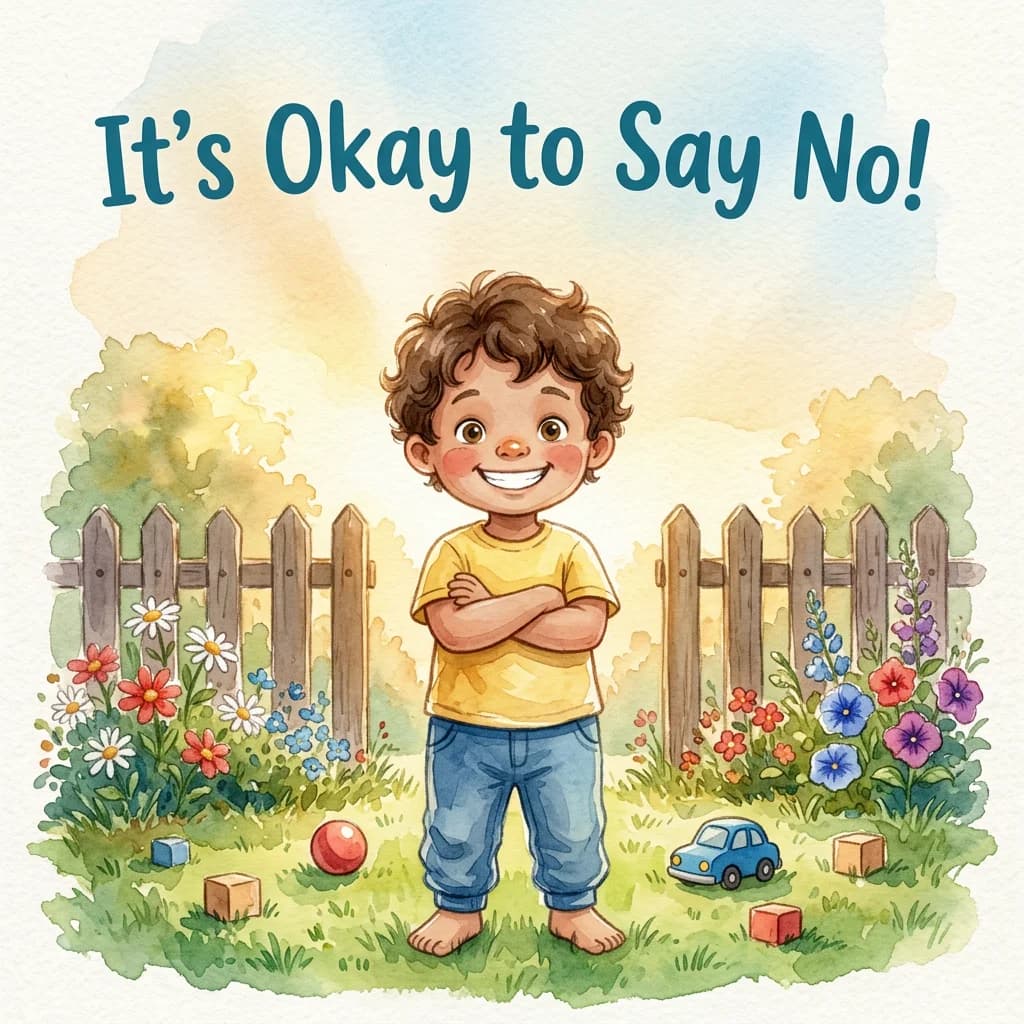
1 of 16 spreads
Every character, scene, and object in this book can be replaced with your own — your child's name, your family photos, your home, your school.
What you get
Free to start. No payment to see your child in the story.
Start free
- Free to start — no card needed
- See your child in the story in minutes
- Rename the hero and edit the story text
- Choose a ready-made character, or add a photo later
- Export a PDF of what you make
Your perfect keepsake
Hardcover book
- Full-color hardcover, 15×15cm
- Free standard shipping included
- Printed & delivered in about 2-3 weeks (US)
- Personalize names, story text & style
- Add your own photos once you are in the editor
Quick summary of It's Okay to Say No – A Personalized How to Say No Book for Kids
A personalized storybook where your child is the hero learning to confidently say no to situations that make them uncomfortable. It builds body autonomy, teaches boundary-setting, and empowers kids ages 3-5 with the language and confidence to protect themselves.
This personalized children's book follows Pip through four real-life 'say no' moments — food, risky dares, strangers, and sharing boundaries. Designed for ages 3–5, it weaves your child's name and family details into an empowering narrative about body autonomy and emotional courage.
Key Takeaways
- Builds assertiveness through four realistic peer and safety scenarios kids age 3–5 actually face
- Teaches body autonomy with the core message 'your body is yours' — a foundation of child safety education
- Models healthy boundary-setting by showing a trusted adult's proud, validating response immediately after refusal
- Normalizes the physical discomfort of saying no so children feel prepared, not ashamed, when their voice shakes
- Sparks ongoing safety conversations through story moments parents can revisit long after the book is closed
Why This Book Works
Personalized books dramatically improve a child's emotional identification with a story's protagonist, accelerating skill transfer to real life. A 2017 study by Dr. Evan Kidd at the Australian National University found children who see their own name in a narrative engage more deeply and recall lessons longer. When Pip's story mirrors your child's name and family, the message 'it's okay to say no' stops being fiction and becomes personal truth.
Body-autonomy education starting before age five is one of the strongest protective factors against childhood sexual abuse, according to Darkness to Light's Stewards of Children program. Research consistently shows children who can clearly articulate 'my body is mine' and practice refusal in low-stakes settings — like turning down food or a dare — are better equipped to refuse unwanted touch. This book rehearses that exact skill across four progressively serious scenarios, creating what psychologists call 'graduated exposure' to assertiveness.
Dr. John Gottman's emotion-coaching research demonstrates that parental validation after a child sets a boundary is the single most powerful reinforcer of that behavior. The moment Mum says 'I am SO proud of you' after Pip refuses the stranger's hug is not sentimental — it's evidence-based. Children need to see the approval loop completed in story before they can trust it will happen in real life. This scene gives parents a script to follow naturally.
Common Misconceptions
Teaching kids to say no will make them defiant and disobedient.
Child development research distinguishes healthy assertiveness from defiance. Dr. Michele Borba notes assertive children are better at following rules because they understand the 'why' behind boundaries, not just compliance through fear.
Three-year-olds are too young for body-safety conversations.
The American Academy of Pediatrics recommends body-safety education begin as early as age 3 using correct anatomical terms and consent language. Early education significantly reduces risk without causing anxiety when delivered through age-appropriate storytelling.
Stranger danger is the main risk — family and friends rarely need a 'no'.
According to the CDC, over 90% of child sexual abuse is perpetrated by someone known to the child. Teaching kids to say no to all unwanted touch — including from familiar adults — is far more protective than stranger-focused messaging alone.
How to Read This Book with Your Child
Best time to read: Read during a calm, connected moment — not right before a social event or bedtime if your child is anxious. A weekend morning works well for first reads.
Tell your child: 'This story is about a kid who learns when it's okay to say no — even to grown-ups.' Ask: 'Can you think of a time something didn't feel right?' This primes emotional readiness. Keep your tone calm and curious, not serious, so the book feels safe rather than alarming.
Conversation Starters
- “What did Pip do when something didn't feel right?”
- “Is there anything you'd like to say no to that feels hard?”
- “Who are the people you can always run to, just like Pip ran to Mum?”
Frequently Asked Questions
Is this book appropriate for my 3-year-old?
Yes! This book is designed for children ages 3-5. The personalized format and age-appropriate language help preschoolers understand boundaries in a way that feels natural and empowering without being scary or overwhelming.
How does personalization help with teaching boundaries?
When children see themselves as the main character confidently saying no, they're more likely to internalize the message and remember it. Personalization increases engagement and helps kids visualize themselves taking protective action.
What specific situations does this book cover?
The book addresses scenarios like unwanted hugs, uncomfortable touches, peer pressure, and situations where saying no feels hard. It validates children's feelings and gives them language to use when they're uncomfortable.
Can this book be used with kindergarteners too?
Absolutely. While designed for ages 3-5, older preschoolers and early readers (5-7) benefit from the reinforcement. It's an excellent book for discussing consent and boundaries at multiple age levels.
How should I talk to my child about this book?
Read it together and ask open-ended questions like 'How did [child's name] feel?' and 'When do you say no?' This conversation approach helps kids apply the lessons to their own lives and encourages family dialogue about safety.
Is this book helpful for children who've experienced uncomfortable situations?
Yes, many therapists and child professionals recommend this type of book for children processing uncomfortable experiences. It normalizes saying no and helps rebuild confidence. Pair with professional support if needed.
A story about big emotions, rewritten for your child
Free to start. No payment to see your child in the story.
You Might Also Like
More Stories Like This
Losing a Beloved Pet
Goodbye, My Best Friend
A gentle, personalized story helping children ages 3–5 grieve the loss of their dog with love and hope.
Building Inner Courage
How to Be Brave Personalized Children's Book
A gentle story about courage for little ones who feel wobbly inside.
Growth Through "Not Yet
The Magnificent Maybe: A Personalized Growth Mindset Book
A personalized story teaching kids that 'not yet' is the start of something great.
Standing Up to Bullies
Be Brave, Be Kind: Standing Up to a Bully
A personalized story that gives kids 5–7 the words and courage to stand up to bullying.