Counting Assessment Tools in Early Childhood: A Practical Guide
Master counting assessment tools for early childhood. Learn informal observation, inventories, checklists, and developmental benchmarks to track math skills.
Erika Wong
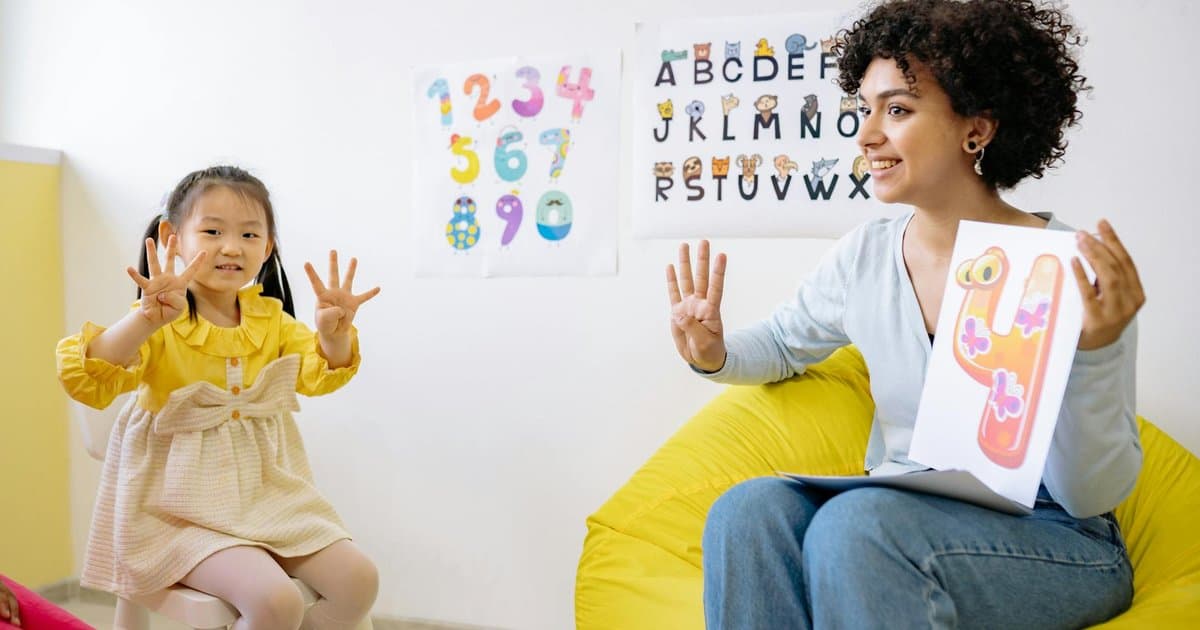
The most effective counting assessment tools in early childhood are the ones you can use every day: informal observation during play, simple counting inventories, and skill-based checklists. These low-stakes approaches reveal far more about a child's mathematical thinking than any formal test, and they take minutes rather than hours. When used consistently, they help educators and parents spot gaps early and respond with targeted support before small struggles become lasting difficulties.
Key Takeaways
- Informal observation during play is the richest counting assessment tool available.
- Children progress through five distinct counting stages, from rote reciting to conservation.
- A five-minute counting inventory, repeated monthly, tracks growth reliably.
- Common errors like skipping or double-counting are diagnostic, not random.
- If a child shows no progress after three months of support, consult a specialist.
Why Counting Assessment Matters in Early Childhood
Counting is the foundation for nearly every math skill that follows, from addition and subtraction to understanding patterns and measurement. According to Clements and Sarama (2014) 1, children who enter kindergarten with weak counting skills are significantly more likely to struggle with mathematics throughout elementary school. Early identification changes outcomes.
Assessment is not about labeling children. It is about understanding where each child sits on a developmental continuum so you can teach responsively. When you know that a four-year-old can recite numbers to 12 but loses one-to-one correspondence at 6, you know exactly what to work on next.
For educators, counting assessment tools in early childhood also support differentiated instruction. You can group children by skill level for small-group activities, select appropriate materials, and communicate concrete progress to families during conferences. The data becomes a teaching compass, not a compliance exercise.
Informal Observation: The Everyday Counting Assessment Tool
Watching children count during play, snack time, and transitions gives you the richest picture of their real-world skills. A child who counts eight crackers at snack is showing you something different from a child who recites "one, two, three" during circle time without connecting those words to objects.
During free play, listen for spontaneous counting. Does the child count blocks as they stack them? Do they count peers at the table? Note which numbers they know, which they skip, and whether they touch each object as they count. According to NAEYC's position on early mathematics, observation during authentic activities is a cornerstone of developmentally appropriate assessment 2.
Document patterns over time, not single incidents. A child who skips "7" once might have been distracted. A child who consistently skips "7" over two weeks has a gap in sequence knowledge. Keep a small notebook or use a phone to jot quick notes after key moments. Three weeks of brief observations will tell you more than one formal test.
The Counting Inventory: Structured Assessment Without Stress
A counting inventory is a short, one-on-one conversation where you present objects and ask a child to count them. It typically takes five to ten minutes and reveals exactly where a child's counting breaks down.
Start with a small set of familiar objects, such as five blocks. Ask the child to count them. Then increase to 10, then 15 or 20. Watch closely for where errors appear. Does the child say numbers in the correct sequence? Do they touch each object exactly once? After counting, ask, "How many are there?" This final question tests cardinality, the understanding that the last number said represents the total.
You can also use a printed number line from 1 to 20. Point to each number and ask the child to say it. Note where they hesitate, skip, or guess. Repeat this inventory monthly. Research by Copley (2010) 3 emphasizes that repeated, low-pressure assessments produce more accurate data than single high-stakes observations, because children's performance varies with mood, energy, and comfort.
Understanding the Five Levels of Counting Development
Children move through counting in a predictable sequence, and knowing these stages helps you interpret what you see during assessment.
Level 1, Rote counting, is simply reciting numbers in order. Many two-year-olds can say "one, two, three" without any understanding of quantity. Level 2, One-to-one correspondence, emerges when a child touches or points to each object while saying one number per object. This usually appears around age 3 to 4.
Level 3, Cardinality, is the understanding that the last number counted tells you "how many." According to Gelman and Gallistel's counting principles framework 4, cardinality is a critical cognitive leap that typically develops between ages 4 and 5. Level 4, Abstraction, means a child can count things that are not physically present, like sounds or events. Level 5, Conservation, means understanding that rearranging objects does not change the quantity. Five blocks in a line is still five blocks in a circle. This often develops closer to age 5 or 6.
When assessing, identify which level a child has mastered and which level they are working toward. That gap is your teaching target.
Checklists and Rating Scales for Quick Tracking
Simple checklists let you capture counting skills in seconds. Create a classroom list with specific, observable skills: "Counts to 10 with one-to-one correspondence," "Identifies the number after a given number (1 to 10)," "Answers 'how many' correctly after counting."
Use a three-point scale for each skill: not yet, emerging, or proficient. This gives you more nuance than a simple yes/no and helps track gradual growth. Update the checklist monthly during regular observations or brief counting inventories.
Checklists also create a paper trail that supports parent communication. Instead of saying, "She's doing fine with numbers," you can say, "In September she counted reliably to 6. Now in November she counts to 12 and understands cardinality to 8." That specificity builds trust. ZERO TO THREE recommends using observation-based tools that capture what children can do, rather than focusing on deficits 5. Frame the checklist around growing competence.
Common Counting Errors and What They Tell You
Errors during counting are not random. They are diagnostic clues that point toward specific teaching strategies.
Skipping numbers usually means weak sequence knowledge. The child has not yet memorized the full counting string. Practice through songs, rhymes, and repeated exposure helps fill these gaps. Double-counting, where a child touches one object but says two numbers, signals that one-to-one correspondence is not yet automatic. Slow the counting down. Use larger objects spaced further apart so each touch feels deliberate.
Losing track mid-count often reflects working memory challenges or attention difficulties. Try smaller sets first and build up gradually. Reversing teen numbers (saying "fifteen, fourteen" or confusing 13 and 31) is extremely common at ages 4 to 5 and typically resolves with exposure. English makes teen numbers particularly confusing because their names do not follow the same pattern as later decades. If you notice persistent confusion with teens, extra practice with a number line and concrete objects helps. Many families find that counting-focused storybooks, like a personalized counting adventure from 1 to 10, reinforce number sequence in a low-pressure, engaging way.
Age-Specific Benchmarks for Counting Skills
Knowing what is typical at each age keeps you from worrying too early or waiting too long.
By age 3, most children can rote count to 10, though they may skip numbers or lose sequence after 5. One-to-one correspondence is just emerging. By age 4, expect reliable one-to-one correspondence with small sets (up to 5 or 6 objects) and improving rote counting to 15 or 20. Cardinality begins to click.
By age 5, according to the National Research Council's early math guidelines, most children should demonstrate cardinality, count on from a given number, and begin to understand conservation 6. Keep in mind that these are averages. Some children develop faster, others slower. Both are normal.
Red flags include: no rote counting to 5 by age 3.5, no one-to-one correspondence by age 4.5, extreme frustration or avoidance around any number activity, and no measurable progress after three or more months of consistent, targeted practice. If you see these patterns, talk to a developmental specialist or pediatrician.
Connecting Assessment to Classroom Practice
Assessment data is only useful if it changes what you do on Monday morning. Group children by counting level for small-group lessons. Children working on rote counting need songs, chants, and repetition. Children working on cardinality need "how many" questions embedded in every activity.
Choose games and books that match a child's current stage. Board games with dice and spaces naturally reinforce one-to-one correspondence and counting on. Dot card games reveal whether a child can subitize (recognize quantity without counting), which supports cardinality. If you are exploring how AI is changing early childhood education, some adaptive apps can adjust difficulty based on a child's responses, creating a kind of ongoing assessment.
Celebrate emerging skills openly. "You counted all nine! Last month you could count to six." This builds confidence without pressure. If a child regresses under stress, revisit earlier levels calmly. Regression is common during transitions, illness, or family disruption. Similarly, just as social stories for teaching kids to make friends use narrative to build social skills, counting stories can normalize number learning for anxious children.
Tools and Resources for Counting Assessment
Formal options include Teaching Strategies GOLD, which tracks math development as part of a comprehensive assessment system, and curriculum-based screeners like those aligned with state early learning standards. These are most useful in program-wide settings where normative comparison matters.
For everyday classroom use, DIY checklists tailored to your specific curriculum goals are often more practical. Create a simple spreadsheet with children's names across the top and specific counting skills down the side. Update it during observation windows.
Free and low-cost resources include counting games that double as assessment, such as dot card matching, dice races, and "how many" questioning during snack. When a child plays a game that requires counting, you are assessing and teaching simultaneously. The key is to watch with intention and write down what you see. Assessment does not require expensive tools. It requires attention.
Involving Parents in Counting Assessment
Share specific observations with parents, not grades or jargon. Instead of "She's at Level 2," say, "She counts objects accurately up to 8 and is starting to understand that the last number she says tells her how many there are."
Offer one strength and one concrete next step at each update. "He's great at counting to 15. A next step would be counting objects, like forks at dinner, to practice matching each number word to one thing." Parents can embed counting into daily routines: stairs, grapes on a plate, shoes by the door.
Invite parents to try a brief counting activity at home and share what they notice. This builds partnership and gives you data from a different context. Some children count confidently at home but freeze in a classroom setting, or vice versa. Both perspectives matter for a complete picture of the child's skills.
Get practical parenting tips delivered weekly
Evidence-based guidance for the moments that matter. No spam, unsubscribe anytime.
Frequently Asked Questions
Keep reading

Supporting Siblings During NICU Stay: What Parents Need to Know
Help siblings cope with NICU stress through honest explanations, routines, and connection activities. Most behavioral changes resolve within weeks of discharge.
10 min read

Teaching Empathy Through Children's Stories: A Practical Guide
Learn how to teach empathy through children's stories with practical techniques. Research shows kids develop stronger peer relationships with regular diverse
10 min read

How to Motivate Students on Classroom Behavior (Strategies That Work)
Master 8 proven strategies to motivate students on classroom behavior. Learn why specific praise and consistency outperform rewards, plus tools that work.
9 min read
Get weekly parenting tips backed by research
Evidence-based guidance for the moments that matter. No spam, unsubscribe anytime.