Social Stories for Teaching Kids to Make Friends
Learn how to write and use social stories to help your child build confidence in social situations and make friends. Evidence-based strategies for parents and teachers.
Erika Wong
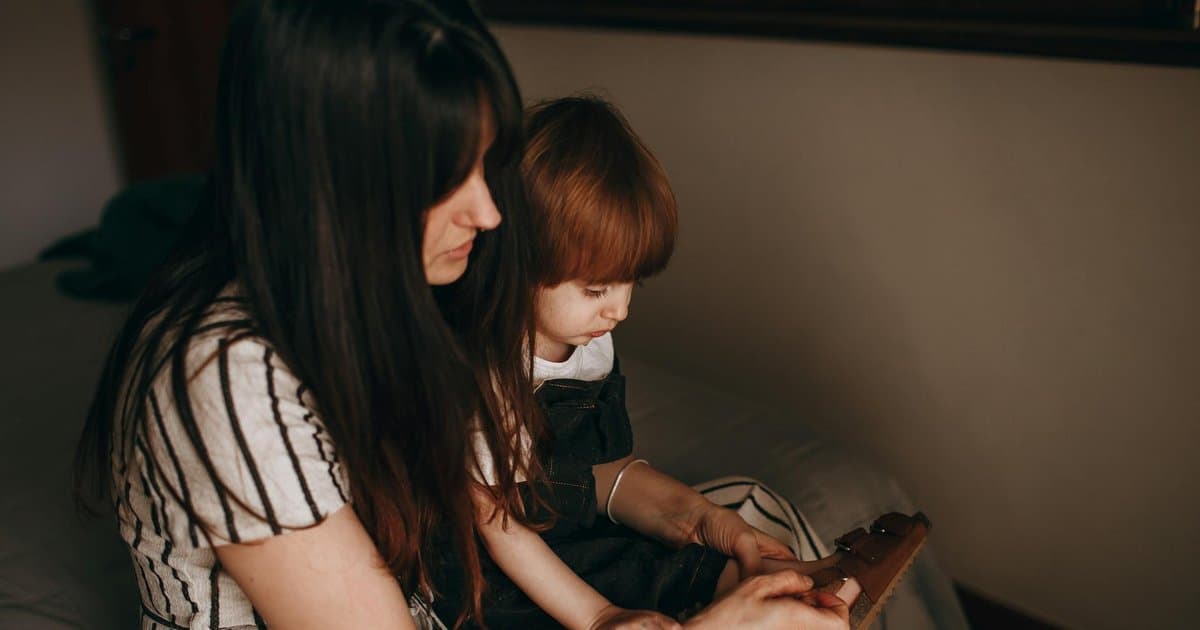
Watching your child stand alone on the edge of the playground while other kids run and laugh together is one of the most painful moments in parenting. You want to help, but you don't want to push. You know something needs to change, but you're not sure where to start.
A making friends social story is one of the most practical, evidence-based tools you can use to help a child who struggles socially. Whether your child is shy, anxious, neurodivergent, or just unsure how friendships work, social stories give them a script for situations that feel overwhelming. They're simple to create, free to make at home, and backed by decades of research in special education and child psychology.
This guide walks you through what social stories are, how to write one, when to use them, and how to know they're working.
What a Making Friends Social Story Is and Why It Works
A social story is a short, personalized narrative, usually five to ten sentences, written from your child's perspective. It walks them through a specific social situation step by step: what will happen, how they might feel, and what they can do.
The format was originally developed by Carol Gray in 1991 for children with autism spectrum disorder. Gray's framework uses a specific ratio of descriptive and coaching sentences to help children understand social expectations without feeling lectured.
Social stories work because they reduce the unpredictability that fuels anxiety. According to a meta-analysis by Kokina and Kern (2010) published in the Journal of Autism and Developmental Disorders, social stories produced positive behavior changes in 73% of cases reviewed. Children respond particularly well when stories are personalized, featuring their name, their school, and their actual peers.
The structure is predictable: situation, feelings, actions, outcome. That predictability is the point.
When Kids Need a Social Story About Making Friends
Not every quiet child needs intervention. Some kids are naturally introverted, and that's perfectly fine. But there's a difference between a child who chooses solitude and one who wants friends but doesn't know how to make them.
Watch for avoidance behaviors rather than just shyness. Does your child hide behind you at birthday parties? Do they hover near group games but never join? Do they complain of stomach aches before school or social events?
According to ZERO TO THREE, most children begin engaging in cooperative play between ages 3 and 4, though the timeline varies widely. If your child consistently avoids peers across multiple settings, home, school, extracurriculars, by age 5 or 6, a social story can be a helpful early support.
Children with autism, ADHD, or sensory processing differences often benefit from social stories earlier and more consistently, because unwritten social rules that other kids absorb intuitively may need to be taught explicitly.
How to Write a Making Friends Social Story
Start with one specific challenge. Not "my child is shy," but "my child doesn't know how to ask to join a game at recess." Narrow focus makes stories useful.
Write in first person: "I can walk up to the game and watch for a minute. When I feel ready, I can say, 'Can I play too?'" Keep sentences short, one idea per sentence. Aim for a second-grade reading level, even for older kids.
Include how your child might feel: "My stomach might feel tight. That's okay. Lots of kids feel nervous." This validation matters enormously. Research by Sansosti, Powell-Smith, and Kincaid (2004) found that social stories were most effective when they included perspective sentences acknowledging the child's emotional experience.
Add photos or drawings of your child's real environment. A story about "the playground" is fine. A story about their playground, with their teacher's name, is significantly more powerful.
Real Examples of Friendship Social Stories That Work
For recess anxiety (ages 4–6):
"Sometimes I want to play with other kids at recess. I can stand near the game and watch. When I feel ready, I can say, 'Can I play?' Sometimes kids say yes. Sometimes they say no. If they say no, I can ask someone else or find something fun to do by myself. That doesn't mean anything is wrong with me."
For the lunch table (ages 6–8):
"Sitting with new friends might feel scary. My body might feel shaky, and that's normal. I can take a slow breath and listen to what they're talking about. I can say something about the same topic. Listening is a good way to start."
For handling rejection (all ages):
"Sometimes kids say no when I ask to play. That happens to everyone. It doesn't mean I'm bad or weird. I can try again later or find another friend."
Notice these stories don't promise everything will go perfectly. According to Gray (2010), effective social stories describe reality honestly, including difficult outcomes, rather than offering false reassurance.
Social Stories in the Classroom: Practical Tips for Teachers
Teachers are often the first to notice when a child struggles socially. Social stories work well in classroom settings because they can be woven into existing routines.
Build a small library of friendship stories that address situations your class actually faces: lining up for specials, choosing partners for group work, navigating the cafeteria. Read them during morning meetings before the situation arises, not after a conflict, when emotions are already high.
Pair social stories with role-play. A study by Scattone and colleagues (2002) published in Focus on Autism and Other Developmental Disabilities found that combining social stories with direct rehearsal produced stronger, more lasting social behavior changes than stories alone.
Track which students benefit most. Some kids internalize stories after three readings; others need weeks. Adjust the language, add visuals, or try acting out the scenario with puppets. Not every child learns the same way, and that's expected.
When This Is Normal Development vs. When to Seek Help
Some social hesitation is completely typical. Your five-year-old who clings at the first soccer practice but is laughing with teammates by week three? That's normal adjustment. A child who prefers one close friend over big groups? Also normal, research by Rubin, Coplan, and Bowker (2009) confirms that preference for small social groups is a common, healthy temperament trait through age 7 and beyond.
Be more concerned if you notice: persistent avoidance across all social settings for more than three to four months, extreme distress (meltdowns, physical symptoms like vomiting or headaches) before social events, complete absence of peer interaction at both home and school, or signs that peers are actively excluding or bullying your child.
Social stories are a helpful tool, not a treatment plan. If your child's struggles are consistent and intense, talk to your pediatrician, a speech-language pathologist, or a child psychologist. Early support makes a real difference.
Combining Social Stories With Other Friendship-Building Strategies
Social stories prepare your child mentally. But real confidence comes from real-world practice.
After reading a story together, create a low-pressure opportunity to try the skill. Invite one classmate over for a structured activity, baking cookies, building LEGOs, drawing together. One-on-one playdates are far less overwhelming than group settings for anxious kids.
Coach in the moment, gently: "Remember what we read? You wanted to ask Maya to play. Want to try?" Then step back. Don't hover.
Celebrate effort, not outcomes. "I noticed you walked over to the swings where the other kids were. That was brave." This kind of specific praise reinforces courage regardless of whether the interaction went smoothly.
For children with autism or significant social delays, pair stories with explicit social skills instruction, turn-taking games, conversation practice, emotion identification, ideally guided by an SLP or behavioral therapist on their team.
Why Some Parents Find Personalized Stories Especially Powerful
Generic social stories help. Personalized ones tend to help more.
When a story features your child's name, their actual classroom, and the real kids they see every day, it shifts from abstract advice to a mental rehearsal. Your child isn't reading about a fictional character being brave — they're reading about themselves being brave.
Some parents write these stories by hand. Others use apps or templates. Some parents find that reading a personalized story about making friends — one where their child is the main character navigating a real social challenge — helps because children see themselves succeeding before they've even tried. This kind of narrative identity-building is especially valuable for kids whose self-concept has become tied to anxiety rather than capability.
Pair the story with a positive ritual. Read it together before every playdate, the same way you might read a bedtime story. Predictable routines reduce anxiety, and the story becomes associated with safety and support.
How to Know When Your Child Is Ready to Move On
The clearest sign a social story has worked is when your child starts quoting it without prompting. "Mom, I did what the story said — I asked if I could play!" That means they've internalized the script and made it their own.
Other signs of progress: they initiate social interactions without adult coaching, they show less physical anxiety before social events (fewer stomach complaints, less clinging), or they willingly attend activities they previously avoided.
According to the National Autistic Society, most children need two to four weeks of repeated reading before a social story becomes internalized, though some children need longer. That's okay.
It's also normal to cycle through stories. Your child might master "asking to play" but need a new story for "what to do when my friend wants to play with someone else." Friendships are complex. One story won't cover everything.
Getting Started: A Simple Framework
Here's your action plan:
Step 1: Observe. What specific moment creates the most anxiety? Joining a game? Starting a conversation? Handling rejection?
Step 2: Write. Five to seven sentences, first person, simple language. Acknowledge feelings, then show a calm action.
Step 3: Read. Two to three times before the social situation. Repeat over several days. Don't rush this.
Step 4: Practice. Create a safe, supported opportunity for your child to try the skill — a playdate, a class activity, a park visit.
Step 5: Celebrate. Focus on courage and effort. "You tried, and I'm proud of you" matters more than "Did you make a friend?"
Many parents find that this simple cycle — story, practice, celebration — builds momentum over weeks. Progress may feel slow, but small moments of bravery add up.
Key Takeaways
- A making friends social story is a short, first-person narrative that walks your child through a specific social challenge step by step.
- They work by reducing unpredictability, validating emotions, and giving kids concrete words and actions to use.
- Personalization matters — use your child's name, school, and real social situations.
- Stories work best when paired with real-world practice and adult coaching.
- Most children need two to eight weeks of repeated reading before internalizing the message.
- Social stories are a tool, not a cure. If anxiety is severe or persistent, seek professional support.
Get practical parenting tips delivered weekly
Evidence-based guidance for the moments that matter. No spam, unsubscribe anytime.
Frequently Asked Questions
Keep reading

Supporting Siblings During NICU Stay: What Parents Need to Know
Help siblings cope with NICU stress through honest explanations, routines, and connection activities. Most behavioral changes resolve within weeks of discharge.
10 min read

Teaching Empathy Through Children's Stories: A Practical Guide
Learn how to teach empathy through children's stories with practical techniques. Research shows kids develop stronger peer relationships with regular diverse
10 min read

How to Motivate Students on Classroom Behavior (Strategies That Work)
Master 8 proven strategies to motivate students on classroom behavior. Learn why specific praise and consistency outperform rewards, plus tools that work.
9 min read
Get weekly parenting tips backed by research
Evidence-based guidance for the moments that matter. No spam, unsubscribe anytime.