Dinosaur Theme Unit Ideas: Activities Teachers and Parents Love
8 hands-on dinosaur activities for ages 3-7 that build math, literacy, and fine motor skills. Classroom-tested ideas requiring minimal materials.
Erika Wong
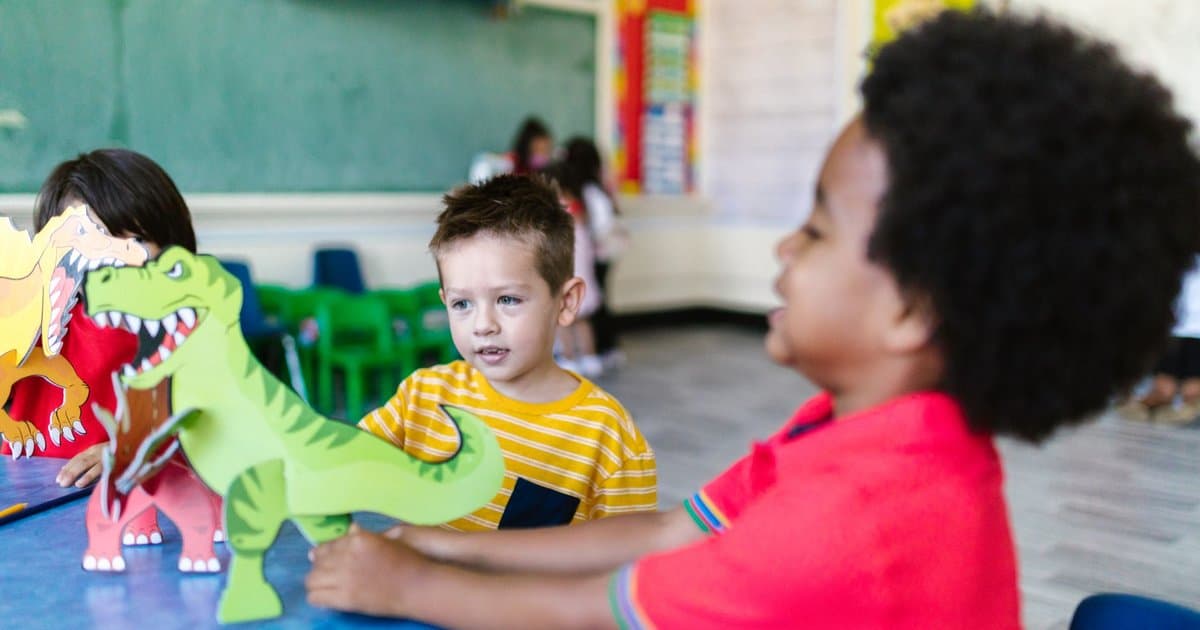
The best dinosaur theme unit ideas combine sensory play, movement, and open-ended exploration rather than worksheets. A well-planned unit with 6 to 8 hands-on activities will hold children's attention for two to three weeks and build skills across math, literacy, science, and art simultaneously. Below are eight classroom-tested activities that work for preschool through grade 2, at home or in a classroom, with minimal materials.
Key Takeaways
- Hands-on dinosaur activities build fine motor, math, and literacy skills together.
- Movement and sensory play produce deeper retention than worksheet-based instruction.
- Most activities need only plastic dinosaurs, sand, paint, clay, and library books.
- A dinosaur unit works best for ages 3 to 7 and runs well for two to three weeks.
- Every activity below can be simplified for younger learners or extended for older ones.
1. Dinosaur Dig Excavation Site (Sensory + Fine Motor)
Bury plastic dinosaur figurines in kinetic sand, a sand table, or even a bin of dried rice. Give children paintbrushes, spoons, and tweezers to excavate their finds. In my classroom, this station consistently holds attention for 30 to 45 minutes, which is remarkable for four-year-olds.
According to Kaplan Early Learning (2024) 4, dinosaur STEAM activities like excavation stations develop fine motor precision while building scientific vocabulary. I label each "fossil" with a name card so children practice matching the figurine to its printed name. Cleanup is simple: pour the sand back in the bin.
What I actually do is rotate the buried objects weekly. Start with dinosaurs, then add shells, leaves, and small rocks so children compare real fossils to toy ones. This keeps the station fresh without buying new materials.
2. Dinosaur Size Comparison Activity (Math + Science)
Roll out butcher paper in the hallway and outline actual dinosaur lengths. A Compsognathus is about 1 meter. A T-rex is roughly 12 meters. Children measure with rulers, yarn, or their own bodies laid end to end, then write the measurement on the paper.
As noted by Tejeda's Tots (2024) 2], pairing size comparison with fact cards helps children connect abstract numbers to something visible and physical. My students remember "the T-rex was as long as our whole hallway" months later. This activity integrates naturally with [number-recognition-activities if your students are still learning to read and write numerals.
Leave the outlines displayed on the wall. They become reference points children return to throughout the unit, and visitors to your classroom will stop and stare.
3. Dinosaur Stomp and Movement Drama
Clear the furniture, play some percussion-heavy music, and call out dinosaur names. Children gallop like a T-rex, stomp like a Triceratops, stretch their arms wide and soar like a Pteranodon, or crouch low like a hiding Velociraptor.
This requires zero props and fits any space. For children who struggle with seated activities, movement-based learning is often where real understanding clicks. I narrate as we move: "Pteranodons had wingspans up to 7 meters, so stretch as wide as you can!" This builds vocabulary while burning energy.
With my own kids, Nora and Ollie, I've done this in our living room on rainy weekends. It transitions naturally into a calm-down period: "The dinosaurs are sleeping now. Lie very still." Five minutes of stomping followed by two minutes of rest resets the whole group.
4. Dinosaur Fact Hunt Reading Stations
Set up four or five stations around the room, each with two to three dinosaur fact cards or easy readers. Children rotate through stations with a clipboard, recording one new fact at each stop. They can draw or write, depending on their level.
According to PreKinders (2024) 5, dinosaur literacy stations work well in mixed-age settings because you can vary text difficulty at each stop. I place simpler picture-based cards at one station and short paragraphs at another. This quiet differentiation means no child feels singled out.
If your students are working on early literacy, pair this activity with teaching-letter-recognition by highlighting target letters in the dinosaur names. "Triceratops" alone contains practice for T, R, I, C, and more.
5. Create and Paint Dinosaur Eggs (Art + Fine Motor)
Use papier-mâché over small balloons, or simply paint plastic Easter eggs in dinosaur-inspired colors and patterns. Children decide which species laid their egg and build a nest from shredded paper, sticks, or fabric scraps.
This open-ended art project runs about 45 minutes and produces something children are genuinely proud to take home. I ask each child, "Tell me about your egg," and write their response on a card to attach. That simple step turns art into storytelling and gives you documentation of language development.
Some parents find that reading a personalized story, like a dinosaur explorer adventure, before this activity sparks even more imaginative detail. Children who see themselves in a dinosaur story tend to bring richer narratives to their egg creations.
6. Dinosaur Sorting and Classification (Math + Science)
Provide printed dinosaur cards or figurines and ask children to sort them. Start with two categories: plant-eaters and meat-eaters. Then add complexity: sort by size, number of legs, time period, or "has horns vs. doesn't have horns."
As highlighted by Prek Printable Fun (2024) 1, sorting activities introduce scientific classification in a concrete, child-led way. What I love about this station is that children invent their own sorting rules. One of my students sorted by "dinosaurs I would want as a pet" versus "dinosaurs that would eat me." Both categories required real knowledge about each species.
This activity takes 20 to 30 minutes, works for whole group or small stations, and connects well to safari-themed-lesson-plans if you later move into animal habitats.
7. Dinosaur Footprint Fossil Making (Art + Science)
Press toy dinosaur feet into air-dry clay, let the impressions harden, then paint them. Children can also press their own handprints alongside for a size comparison. Extend the activity by pressing real leaves, shells, or twigs into clay to show how different fossils form.
According to Oh Hey Let's Play (2024) 3, fossil-making activities help even toddlers begin to understand that real animals left traces behind. I explain: "Paleontologists study clues like these to learn about animals they've never seen alive." This concept, that evidence tells a story, is foundational scientific thinking.
The finished fossils make excellent keepsakes. Parents genuinely appreciate receiving something their child made and can explain.
8. Dinosaur Story Circle and Storytelling Games
Sit in a circle with a basket of dinosaur figurines. One child picks a dinosaur, adds a sentence to an unfolding group story, then passes the figurine. "Once a Stegosaurus went to the river. She found a giant egg. A baby Pteranodon hatched!"
This builds oral language, listening skills, and turn-taking in a low-pressure format. I use it during transitions or at the end of the day when energy is low but connection matters. Children who rarely volunteer answers in structured lessons often shine here because there is no wrong answer.
For younger children (ages 3 to 4), model the first two or three sentences yourself. For older children (grade 1 to 2), challenge them to include a real dinosaur fact in their sentence. This small tweak turns creative play into research application.
Get practical parenting tips delivered weekly
Evidence-based guidance for the moments that matter. No spam, unsubscribe anytime.
Frequently Asked Questions
Keep reading

Supporting Siblings During NICU Stay: What Parents Need to Know
Help siblings cope with NICU stress through honest explanations, routines, and connection activities. Most behavioral changes resolve within weeks of discharge.
10 min read
Teaching Empathy Through Children's Stories: A Practical Guide
Learn how to teach empathy through children's stories with practical techniques. Research shows kids develop stronger peer relationships with regular diverse
10 min read

How to Motivate Students on Classroom Behavior (Strategies That Work)
Master 8 proven strategies to motivate students on classroom behavior. Learn why specific praise and consistency outperform rewards, plus tools that work.
9 min read
Get weekly parenting tips backed by research
Evidence-based guidance for the moments that matter. No spam, unsubscribe anytime.