Fantasy Book Writing for Kids: A Practical Guide
Learn how to help kids write fantasy stories with clear goals, believable worlds, and engaging characters. Expert tips for parents supporting young writers ages 7-12.

Matt Li
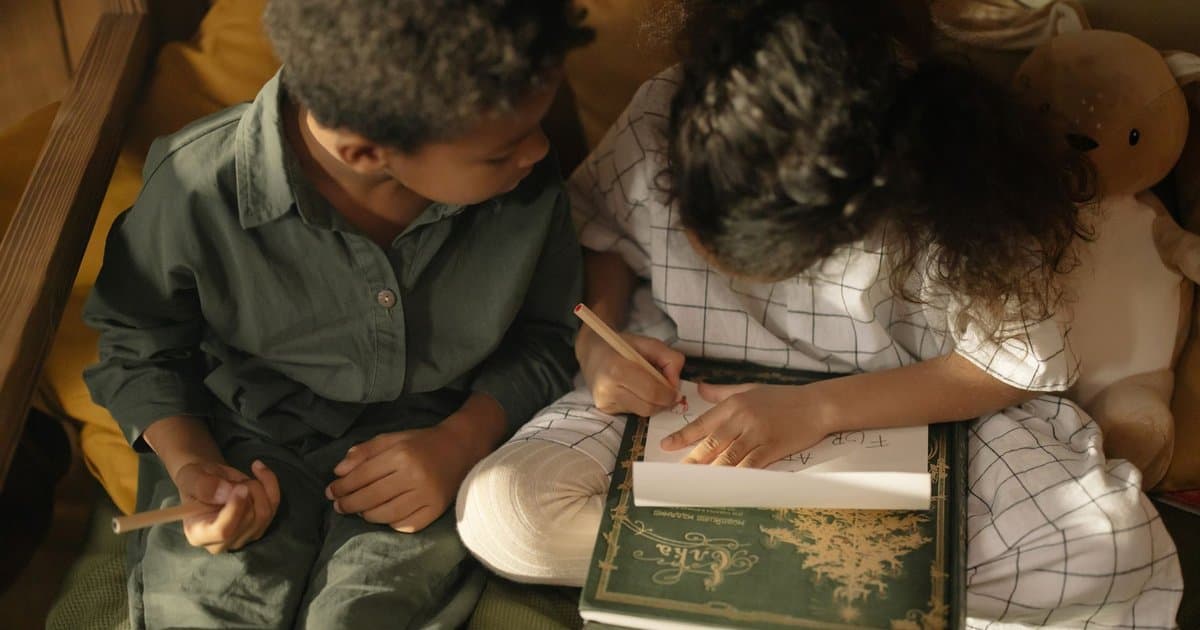
Fantasy book writing for kids starts with one simple question: "What if?" Help your child pick a magical element they love (dragons, hidden portals, enchanted forests), give their character a clear goal, and let them write a messy first draft without worrying about perfection. Children ages 7 to 12 can write compelling fantasy stories when adults provide structure without taking over the creative process.
Key Takeaways
- Fantasy writing helps children process real emotions through imaginary scenarios.
- A believable fantasy world needs just one consistent magic rule to start.
- Characters need a clear goal, a personality flaw, and something they fear.
- Messy first drafts build confidence; editing comes later.
- Reading published fantasy teaches narrative structure better than any worksheet.
Understanding Fantasy Elements Kids Love
Fantasy stories captivate young readers because they blend real emotions with impossible situations. A child worried about fitting in at school can explore that feeling through a character who doesn't belong in a magical kingdom. This isn't escapism. It's emotional rehearsal, and it gives children a safe space to ask big questions about courage, fairness, and identity.
Most kids gravitate toward a handful of core elements: magic systems, chosen heroes, epic quests, mythical creatures, and secret worlds. Pay attention to what your child reads and watches. If they're drawn to dragons, that's their entry point. If they love stories about ordinary kids discovering hidden powers, start there.
Reading widely in the genre is the single best preparation for writing fantasy. According to Hutton (2017) 2, children who are actively engaged during shared reading show increased brain connectivity in regions tied to narrative comprehension. When kids absorb how published authors handle pacing, dialogue, and world-building, they internalize those patterns. No formal instruction required.
Creating a Believable Fantasy World
A fantasy world feels real when it follows its own internal logic. Before your child starts writing, help them answer three questions: What kind of magic exists here? How does it work? What are the limits?
They don't need an elaborate mythology. Even a single sentence, like "magic costs sleep" or "only animals can cast spells," gives the entire story a framework. Start small. One enchanted forest, one cursed village, one kingdom with a peculiar law. Complexity grows naturally as the child writes more stories.
Consistency matters far more than detail. If your child establishes that fire magic can only be used at night, that rule should hold throughout the story. When kids break their own rules, gently point it out: "Wait, I thought fire magic only worked at night. Did something change?" This teaches logical thinking alongside creative writing.
Many parents find that a simple world-building worksheet, with prompts for geography, creatures, and rules, helps kids organize their ideas before drafting. Free templates are widely available online from writing education sites like National Writing Project.
Developing Characters Children Care About
Strong fantasy characters want something specific and struggle to get it. Help your child create a protagonist with three ingredients: a clear goal ("find the stolen crown"), one personality trait that causes problems ("too stubborn to ask for help"), and a vulnerability ("terrified of the dark").
Backstory matters less than what the character is doing right now. Young writers sometimes spend pages explaining where their hero came from before anything happens. Encourage them to start with action and reveal history through small details along the way.
Fantasy protagonists often discover they're special. A child who feels ordinary in real life can write a character who turns out to be the chosen one, and that wish-fulfillment is completely age-appropriate. Don't discourage it. Many beloved fantasy series, from Harry Potter to Percy Jackson, are built on exactly this foundation.
Supporting characters work best when they challenge the protagonist. A loyal sidekick who always agrees is less interesting than a friend who disagrees at a critical moment. Encourage your child to give secondary characters their own goals, even small ones.
Building a Plot That Keeps Pages Turning in Fantasy Book Writing for Kids
The simplest plot structure works beautifully for young writers: ordinary world, magical problem, resolution. Your child doesn't need to memorize three-act structure. Instead, help them answer three questions. What does my character want? What stops them? How do they overcome it?
One of the most common mistakes in early fantasy writing is "and then" plotting, where events happen in sequence without cause and effect. "The knight found a sword AND THEN fought a dragon AND THEN went home." Coach your child to use "because" and "but" instead: "The knight found a sword, BUT it was cursed, so she had to find a way to break the curse BECAUSE only then could she save her village."
Pacing keeps readers engaged. Action scenes should move quickly with short sentences and sharp verbs. Emotional scenes can slow down. Encourage your child to vary the rhythm. A fight scene followed by a quiet conversation gives the reader breathing room.
Stakes should feel personal. Even in an epic battle, readers care most about what the outcome means for the hero. "If I fail, my little brother stays cursed" hits harder than "if I fail, the kingdom falls."
When Fantasy Writing Feels Stuck (And How to Unstick It)
Writer's block in fantasy tends to strike at two predictable moments. The first is the very beginning, when the world feels too vast and complicated to start. The second is the middle, when the plot loses momentum and the child doesn't know what happens next.
If starting feels overwhelming, skip the world-building and begin with a single scene. Your child can write a character waking up in a strange place or discovering something unexpected. The world reveals itself through the writing. Permission to write a terrible first chapter is often all a child needs.
If the middle stalls, the problem is usually low stakes. Ask your child: "What's the worst thing that could happen to your character right now?" Then encourage them to write that. A surprise betrayal, a new obstacle, or a ticking clock often reignites momentum.
Writing sprints help enormously. Set a timer for 15 to 20 minutes and challenge your child to write without stopping. No editing, no rereading, no erasing. Many parents notice that their child's best ideas emerge during these focused bursts when the inner critic is temporarily silenced. For seasonal motivation, try pairing fantasy prompts with Christmas creative writing activities during the holidays.
Sharing Their Story Without Crushing Confidence
Young fantasy writers need feedback that's specific and encouraging. "I liked it" doesn't help a child grow. "I loved how your magic system required a sacrifice, because it made every spell feel dangerous" tells them exactly what worked and why.
Start every feedback session by naming what's strong. Then offer one concrete suggestion, not five. Too much critique at once overwhelms young writers and erodes motivation. According to Nan (2025) 1, shared reading interactions that are responsive and emotionally supportive foster deeper engagement, and the same principle applies to shared writing feedback.
Peer readers can be more motivating than adult praise. If your child has a friend who also writes, encourage them to swap stories. Kids often revise more willingly when a classmate says, "I didn't understand how the portal worked" than when a parent says the same thing.
Reading their own work aloud is one of the most effective self-editing tools. Children catch awkward phrasing, missing words, and pacing problems when they hear the story spoken. This also builds confidence in their own narrative voice.
Tools and Resources That Support Fantasy Book Writing for Kids
A few simple tools make the process smoother. A dedicated notebook (or digital document) for brainstorming keeps ideas from getting lost. Character sheets with prompts for goals, fears, and personality traits help kids think through their protagonists before drafting. Plot-outline worksheets, available free from organizations like ReadWriteThink, provide just enough structure without being rigid.
Reading alongside writing is essential. Children absorb narrative structure, dialogue conventions, and pacing from the fantasy books they love. Encourage your child to notice craft moves in their favorite stories: "How did the author make you feel scared in that chapter? What did they do?"
Some families celebrate a finished story by printing or binding it. Younger siblings who aren't ready for independent writing can explore storytelling through DIY alphabet books. For children excited about seeing themselves in a fantasy adventure, a magical unicorn quest can spark ideas for their own original stories. Some parents find that personalized story books validate a child's identity as a "real writer," which often motivates deeper revision and longer projects.
When to Be Concerned
Most children between 7 and 12 develop writing skills at very different rates, and a wide range is normal. However, certain signs suggest it may be worth talking to a teacher or pediatrician.
If your child consistently avoids writing across all contexts (not just fantasy), struggles to form letters or words despite practice, or becomes extremely distressed during any writing task, there may be an underlying issue like dysgraphia or a learning difference. A child who loves telling stories verbally but can't transfer ideas to paper may benefit from assistive tools like speech-to-text software.
Reluctance to write fantasy specifically is not a concern. Some kids prefer realistic fiction, poetry, or nonfiction. Follow their interests rather than pushing a genre they don't enjoy. Creative confidence matters more than any particular format.
Get practical parenting tips delivered weekly
Evidence-based guidance for the moments that matter. No spam, unsubscribe anytime.
Frequently Asked Questions
Keep reading

Diwali and the Ramayana: Understanding the Festival's Sacred Story
Learn how the Ramayana shapes Diwali celebrations across India. Explore Rama's 14-year journey, Ravana's complexity, and age-appropriate ways to teach children
10 min read

How to Prepare Your Child for a New Sibling (And What to Expect)
Learn how to prepare your child for a new sibling with age-appropriate strategies. Expect adjustment within 6-8 weeks with this practical guide.
8 min read

Cyberbullying: How to Help Your Child Respond and Recover
Help your child deal with cyberbullying in 4-6 weeks with consistent support. Learn documentation, reporting, and emotional recovery strategies.
10 min read
Get weekly parenting tips backed by research
Evidence-based guidance for the moments that matter. No spam, unsubscribe anytime.