Train Journey Story Writing for Kids: A Parent's Guide
Help your child write engaging train stories with sensory details and 3-part structure. Tips for ages 6-10, story prompts, and common writing fixes.

Matt Li
Train Journey Story Writing for Kids: A Parent's Guide
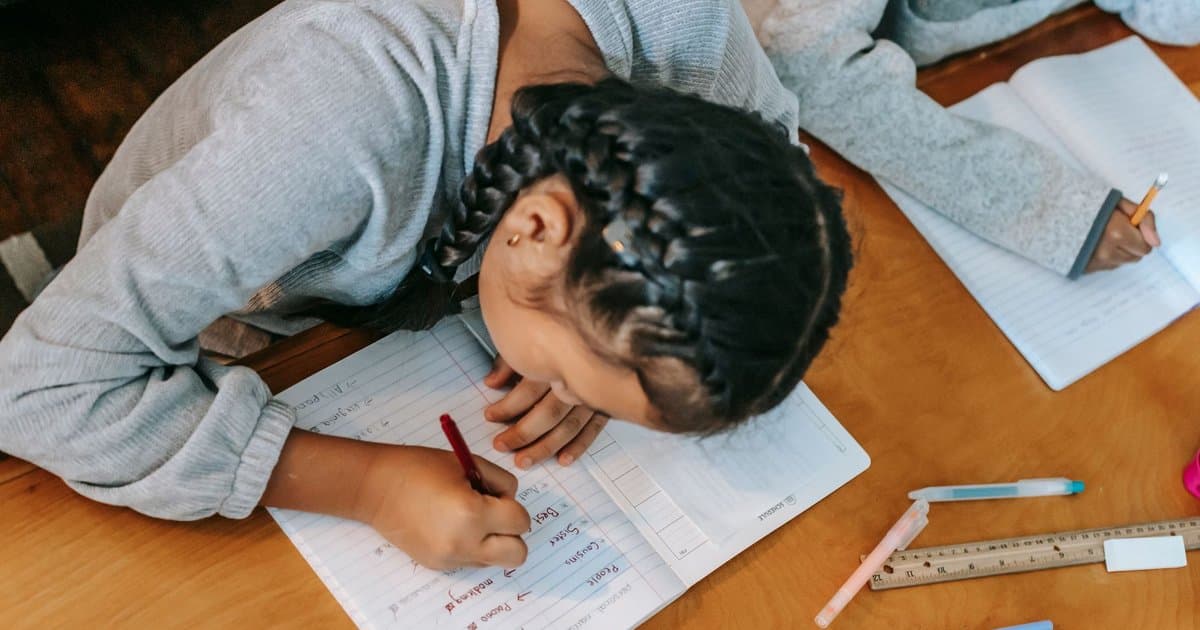
Train journey story writing for kids works best when you give children a simple three-part structure: who boards the train and why, what happens during the ride, and how things look when the train pulls in. Start with a specific prompt, encourage sensory details, and resist the urge to correct spelling until after the first draft is finished.
Key Takeaways
- Train stories give children a natural beginning, middle, and end to follow.
- Sensory details (sounds, smells, textures) matter more than plot complexity.
- Children ages 6–8 benefit from prompts; ages 9–10 can often generate ideas independently.
- Revision works best when children read their stories aloud first.
- One vivid paragraph beats a full page of rushed writing.
How to Write About a Train Journey
Start by picking a character, placing them on a train, and giving them a reason to travel. Describe what they see, hear, and feel during the ride. End the story by showing what changes when the train arrives. Those three moves, repeated and refined, form the backbone of every good train journey narrative.
According to FirstCry (2024) 4, writing about a train journey helps children practise sequencing events in order, a foundational skill for all narrative writing. If your child has ridden a train, even once, they already have material to work with. If not, picture books and short videos can fill the gap quickly.
Why Train Stories Captivate Young Writers
Trains give stories a built-in container. Characters can't wander off in every direction. They sit in a carriage, look out a window, and interact with whoever else is on board. That constraint actually helps young writers, because it narrows the decisions they need to make.
According to Giggle Academy 2, train stories teach children about journeys and discovery by showing how characters grow between departure and arrival. The movement itself creates momentum. A train leaves the station, passes through countryside, slows for stops, and finally arrives. Each phase is a natural scene break a child can use.
Children who have taken real trains often light up when they write about them. The rhythmic clatter of wheels, the announcements crackling overhead, the blur of passing landscape: these memories convert into vivid writing with very little prompting.
Building the Core Story Structure
A train journey story needs three clear sections.
Setup (boarding): Introduce the main character and explain why they're travelling. Are they visiting a grandparent? Moving to a new city? Going on a school trip? One sentence can handle this.
Journey (the ride): This is where the story lives. New characters appear. Something surprising happens. Your child might write about a mysterious package in the luggage rack or a conversation with a stranger. According to Learning and Creativity 1, first-person train journey accounts often focus on encounters with other passengers, which naturally build tension and curiosity.
Arrival (the ending): Show how the character feels or what they've learned. Endings don't need dramatic twists. "When I stepped onto the platform, everything looked different" is enough.
Sensory Details That Bring Train Rides to Life
Young writers tend to describe what characters do but skip what they experience. Asking simple questions fixes this.
Sense | Prompt Question | Example Detail |
|---|---|---|
Sound | "What do you hear on the train?" | Wheels clicking on the tracks, a baby crying two rows back |
Sight | "What's outside the window?" | Green fields rushing past, a tunnel swallowing the light |
Touch | "What does the seat feel like?" | Scratchy fabric, vibrations humming through the armrest |
Smell | "What does the station smell like?" | Diesel fumes, fresh bread from a platform café |
Taste | "Are they eating anything?" | A warm cheese sandwich from a packed lunch |
Twinkl's Train Ride Writing Activity 3 uses caption-based prompts to help younger children practise exactly this kind of detail-first writing. Even one sensory detail per paragraph transforms flat sentences into something a reader can feel.
Developing Believable Characters
Train characters work best when each one has a single defining trait. A grumpy ticket inspector. A nervous first-time traveller. A child clutching a mysterious parcel. Young writers don't need complex backstories. They need one clear characteristic they can show through action and dialogue.
Encourage your child to show personality rather than state it. Instead of "The man was grumpy," try: "The man looked at my ticket, sighed, and said nothing." This kind of writing comes naturally when you ask children, "What would this person actually say?"
Include at least one interaction between characters. A conversation, a shared look, an argument over a window seat. Conflict, even small conflict, keeps readers turning pages.
Story Prompts to Get Started
Prompts should include a who, a where, and a small problem. Here are five that work well for train journey story writing for kids:
- The overnight express: Your character boards a night train and hears a strange noise from the next compartment.
- The missed stop: A passenger falls asleep and wakes up in a place they've never seen.
- The mysterious package: Someone boards with a box that rattles. Your character can't stop wondering what's inside.
- The family detour: The train is rerouted. Your character's family ends up somewhere unexpected.
- The solo trip: Your character is travelling alone for the first time. What scares them? What thrills them?
If your child enjoys seeing themselves in stories before writing their own, a personalized train adventure can model the kind of structure and detail they're aiming for.
When to Help and When to Step Back
Children ages 6 to 7 usually need you to talk through the story before pencil hits paper. Ask questions: "Who's on your train? Where are they going? What goes wrong?" Then let them write, even if the spelling is rough.
By ages 8 to 10, most children can pick a prompt and draft independently. Your role shifts to asking follow-up questions after they've written: "I love the bit about the tunnel. What did it sound like inside?" This builds revision thinking without taking ownership of the story.
Watch for frustration, not difficulty. If your child is struggling with ideas but still engaged, that's productive. If they're shutting down, step in with a specific suggestion. For related creative writing activities across topics, you might explore Christmas creative writing activities or DIY alphabet book ideas for younger children.
Common Writing Challenges and Quick Fixes
"And then" chains: Many children connect every sentence with "and then." Offer alternatives: suddenly, meanwhile, before long, after a while. Write these on a sticky note and place it next to their notebook.
Rushing through the journey: If the story jumps from boarding straight to arrival, ask: "What's the most interesting part of the trip? Let's spend more words there."
Flat endings: Remind your child the ending only needs to show one thing: what changed. "I was nervous when I got on. I wasn't nervous anymore" is a perfectly complete ending for a seven-year-old.
Skipping feelings: Ask, "How did your character feel right here?" Children often know the emotion but forget to write it down.
Extending the Story Beyond the First Draft
Revision doesn't need to feel like punishment. Read the story aloud together. Children catch awkward phrasing and missing details by ear far more easily than by rereading silently.
Ask one question: "If you could add two more sentences anywhere, where would you put them?" This small exercise teaches revision as expansion rather than correction. Many parents find that illustrating scenes also sparks new writing. A child who draws the train compartment often notices details they forgot to include.
Sharing the story with someone, a grandparent on a video call, a friend, a teacher, gives revision real purpose. Children revise more willingly when they know someone will actually read the result. Reading personalized story books alongside their own writing can also help children notice how published stories use pacing and description.
Frequently Asked Questions
How long should my child's train journey story be?
For ages 6–7, aim for 200–400 words. Ages 8–10 can write 400–800 words comfortably. A short, vivid story always beats a long, rushed one.
What if my child wants to include magical or imaginary elements?
Encourage it fully. A magical train or a secret compartment develops the same writing skills as realistic fiction: sequencing, description, and character.
Should I correct spelling and grammar during the first draft?
No. Stopping to correct mid-draft interrupts flow and damages confidence. Save gentle feedback for after the story is complete.
How can I tell if my child is ready to write a full story?
If they can hold a simple idea and say it back to you ("My character is scared of tunnels"), they're ready. Perfect spelling and grammar are not prerequisites.
Can reading stories help my child write better ones?
Yes. When children read well-structured narratives, they absorb pacing, dialogue, and description almost unconsciously. Reading before writing is one of the most effective preparation strategies.
Sources
- Learning and Creativity. My Experience Of A Train Journey. https://learningandcreativity.com/experience-train-journey/
- Giggle Academy. What Can a Children's Train Story Teach Young Readers About Journeys and Discovery. https://www.giggleacademy.com/blog/what-can-a-childrens-train-story-teach-young-readers-about-journeys-and-discovery
- Twinkl. The Train Ride Caption Writing Activity. https://www.twinkl.com/resource/the-train-ride-caption-writing-activity-t-e-1650376308
- FirstCry (2024). Essay On Train Journey for Students and Children. https://www.firstcry.com/intelli/articles/essay-on-train-journey-10-lines-short-and-long-essay-for-children/(https://www.firstcry.com/intelli/articles/essay-on-train-journey-10
Get practical parenting tips delivered weekly
Evidence-based guidance for the moments that matter. No spam, unsubscribe anytime.
Frequently Asked Questions
Keep reading

Customised Story Books: Why Personalisation Matters for Children
Discover why personalised story books increase reading engagement. A systematic review found parent engagement predicts sustained shared reading success.
10 min read
How to Create a Dog Memorial Book (With Printable Templates)
Create a dog memorial book with photos, stories, and mementos. Learn 5 organizational tips and design ideas for honoring your pet's memory.
8 min read

How to Write a Wedding Speech for Your Aunt and Uncle (With Examples)
Write a heartfelt 3-5 minute wedding speech for your aunt and uncle. Follow this proven structure with character-focused stories and authentic delivery tips.
7 min read
Get weekly parenting tips backed by research
Evidence-based guidance for the moments that matter. No spam, unsubscribe anytime.