Free Potty Training Social Stories: Where to Find & How to Use Them
Discover where to find free potty training social stories and learn how to use them to help your anxious child overcome toileting fears and resistance.
Erika Wong
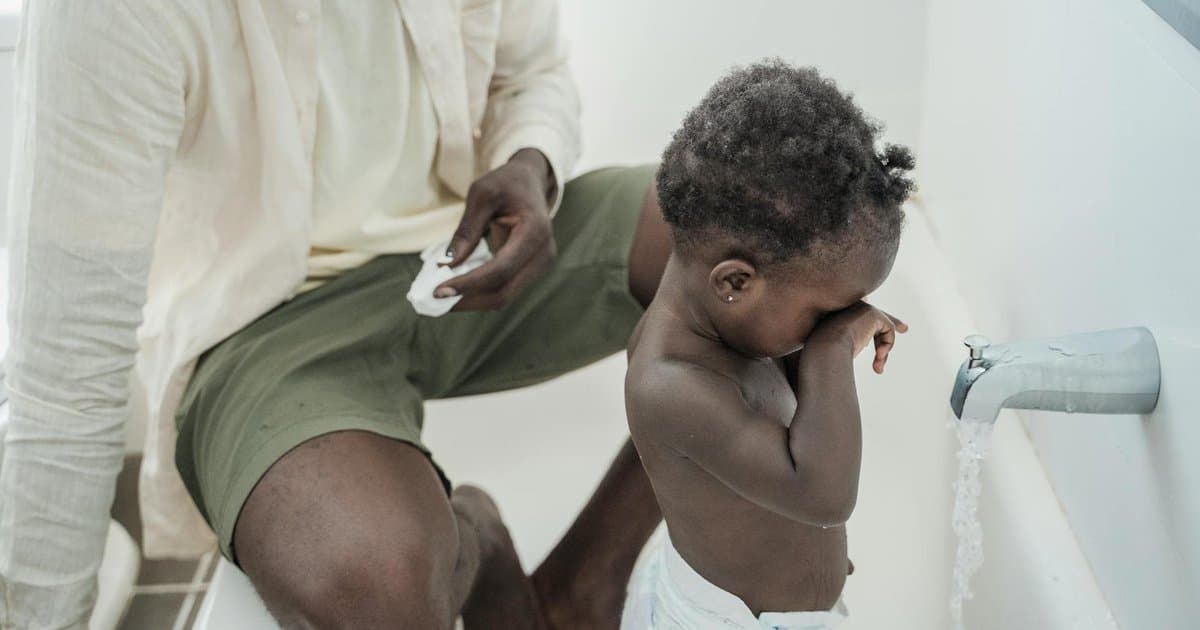
Potty training can feel like one of the most stressful milestones of early parenthood. If your child freezes near the bathroom, melts down at the sound of a flush, or simply refuses to sit on the toilet, you're not alone, and you're not doing anything wrong.
A free potty training social story might be the tool that shifts things for your family. Social stories are short, visual narratives originally developed for children on the autism spectrum, but research and clinical practice show they help all young children manage anxiety around new experiences. They work by giving kids a mental roadmap, a preview of what will happen, what it will feel like, and why it's safe.
This guide walks you through what social stories are, where to find good ones for free, and how to use them effectively with your 2- to 4-year-old.
What a Potty Training Social Story Is, and Why It Actually Works
A potty training social story is a short, child-centered narrative that walks through the toileting process in concrete, non-threatening language. Think five to ten simple pages describing each step: walking to the bathroom, pulling down pants, sitting on the toilet, wiping, flushing, and washing hands.
The concept was developed by Carol Gray in 1991 for children with autism spectrum disorder. Gray's framework emphasizes descriptive sentences (what happens), perspective sentences (how it feels), and directive sentences (what the child can do). According to Gray and Garand (1993), social stories improve children's understanding of social situations by providing explicit information that most adults assume kids already know.
The reason they work for potty training specifically? Predictability calms young children's nervous systems. When a child knows exactly what to expect, including the sounds, sensations, and sequence, their anxiety drops. The toilet stops being an unknown threat and becomes a familiar routine.
How Potty Training Social Stories Differ from Regular Potty Books
You might already own a stack of potty-themed picture books. Those are great, but they serve a different purpose. Books like Everybody Poops or The Potty Book normalize toileting and make it fun. Social stories do something more targeted.
A social story answers the specific questions anxious kids are actually asking: What does it feel like to sit there? What's that loud sound? Is it safe? What happens to the water?
Speech-language pathologists note that effective social stories include sensory details, the cold toilet seat, the whoosh of the flush, the smell of soap. According to research by Kokina and Kern (2010), social stories are most effective when they're specific to the child's situation and written in first or second person. They're therapeutic tools, typically two to five minutes long, designed to reassure rather than entertain. Regular potty books celebrate; social stories prepare.
Where to Find Free Potty Training Social Stories
Finding a quality free potty training social story is easier than most parents expect. Here are reliable places to start:
Speech-language pathology and special education sites. Many SLPs share free printable social stories on their professional blogs. Look for resources from organizations like the Autism Society or university-affiliated therapy programs. Carol Gray's official site (carolgraysocialstories.com) provides guidelines and examples.
Your local library. Many library systems offer digital access to parenting resource databases that include printable social stories. Ask your children's librarian, they field this question regularly.
Early childhood nonprofits. Organizations like ZERO TO THREE publish free toileting guides that include social story elements. The National Autistic Society also offers free downloadable social stories adaptable for all children.
Therapist-shared templates on educator platforms. Sites like Teachers Pay Teachers have free social story PDFs uploaded by speech therapists and special educators. Always check usage rights before printing for classroom use.
What a Good Potty Training Social Story Should Include
Not all social stories are created equal. A well-designed one includes several key elements that align with how young children process new information.
First-person or second-person language. Sentences like "I walk to the bathroom" or "You sit on the toilet" help children place themselves in the narrative. According to the American Speech-Language-Hearing Association (ASHA), young children comprehend instructions better when language mirrors their own perspective.
Sensory details. What does the flush sound like? What does toilet paper feel like? What does soap smell like? These details answer unspoken fears.
Acknowledgment of feelings. "Some kids feel nervous about the loud sound. That's okay." This validation matters more than cheerfulness.
Visual support on every page. Photos or simple illustrations paired with text. Research by Justice and Kaderavek (2004) confirms that visuals significantly support comprehension in pre-literate children.
A calm, matter-of-fact ending. Skip the confetti. "I washed my hands. Now I can go play" feels more honest to an anxious child than "Hooray! You're amazing!"
How to Introduce a Potty Training Social Story to Your Child
Timing and tone matter more than the story itself. Here's how to set it up for success.
Choose a calm moment. Never introduce the story during a power struggle, after an accident, or when your child is already upset. Bedtime, snack time, or a quiet afternoon works well.
Read it like any other book. Don't announce, "This is going to help you use the potty!" Just read it. Keep your tone relaxed and conversational.
Invite questions without pushing. After reading, try: "What part were you curious about?" or "Did anything surprise you?" If your child says nothing, that's fine.
Repeat, repeat, repeat. According to developmental psychologist Patricia Kuhl's research on early learning, repetition is how young brains build familiarity and reduce fear responses. Plan to read the story three to five times over a week before expecting any behavioral shift. Many speech therapists recommend continuing to read it throughout active potty training.
Pair with low-pressure exploration. After a few readings, visit the bathroom together. Let your child flush toilet paper, sit on a step stool, or just watch the water run.
When Potty Training Social Stories Work Best, and When They Don't
Social stories aren't magic, and they don't work equally well in every situation.
Best for children ages 2.5 to 5 who show readiness signs, staying dry for two-plus hours, communicating bathroom needs, showing interest in others' routines, but feel anxious or resistant. They're particularly effective for sensitive children, kids on the autism spectrum, and children who learn best through visual and narrative processing.
According to the American Academy of Pediatrics (AAP), most children are physiologically ready for toilet training between 18 and 24 months, but emotional and cognitive readiness often comes later. A free potty training social story bridges that gap between physical readiness and emotional comfort.
Less effective as a standalone tool if your child shows no readiness signs at all. A story won't create readiness, it supports a child who's already partway there. If your child shows zero interest after several weeks of gentle exposure, they may simply need more time.
When This Is Normal vs. When to Talk to Your Pediatrician
Potty training rarely follows a straight line. Knowing what's typical can save you weeks of unnecessary worry.
Normal: Asking the same questions about the toilet repeatedly. Wanting to wear a diaper "just in case." Having daytime accidents for months. Temporary regression after a move, new sibling, or stressful event. Using the toilet for pee but refusing for poop (or vice versa) for weeks or months.
Worth discussing with your pediatrician: Extreme panic, screaming, crying that won't stop — that doesn't improve after two-plus months of gentle, consistent exposure. Painful bowel movements, chronic constipation, or stool withholding that accompanies toilet refusal. According to Blum, Taubman, and Nemeth (2003), stool withholding and toileting refusal are among the most common reasons for pediatric gastroenterology referrals in preschoolers.
A pediatrician or child psychologist can rule out pain, anxiety disorders, or developmental factors. Seeking help is not a failure — it's good parenting.
Free Printable Potty Training Social Story Templates You Can Customize
Generic stories are a great starting point, but personalization makes them more effective. Look for templates that let you adapt key details.
What to look for: Blank lines where you can insert your child's name, pronouns, and bathroom-specific details ("Our bathroom has a blue step stool"). Some templates include a "feelings page" where children draw or point to how they feel about the toilet.
Age-appropriate versions exist. Toddler versions (ages 2–3) typically run eight to ten pages with one sentence per page and large images. Preschool versions (ages 3–5) may include twelve to fifteen pages with more detail about sensory experiences and feelings.
Usage rights matter. Most free templates are licensed for personal, single-family use. If you're a teacher wanting to print copies for a classroom, check the creator's terms or contact them directly. Many therapists grant permission for educational use when asked.
Look for templates on SLP resource blogs, special education nonprofit sites, and early childhood educator platforms.
How to Tell If a Social Story Is Actually Helping
Don't measure success by whether accidents stop. That's not the social story's job — that's neurological and muscular development.
Early signs of progress (weeks 1–2): Your child asks to reread the story. They mention details from it during the day. They show less resistance to entering the bathroom or talking about the toilet.
Mid-stage progress (weeks 2–5): Willingness to sit on the toilet, clothed or not. Decreased panic around flushing. More questions about the process — curiosity replacing fear.
Realistic timeline: Most children need three to eight weeks of consistent story exposure plus bathroom practice before meaningful behavioral progress appears. According to Schum et al. (2002), the average duration of toilet training is about six months, so patience is essential.
If nothing shifts after three weeks of regular reading and your child shows no increased curiosity or decreased anxiety, consider whether another barrier exists — pain, constipation, a developmental factor, or simply not being ready yet.
Beyond the Social Story: Other Tools That Work Alongside Narratives
Social stories work best as part of a broader, low-pressure approach. Here's what to pair them with.
Hands-on bathroom exploration. Let your child flush toilet paper, adjust the seat, turn on the faucet, and sit on the step stool. Familiarity reduces fear.
Normalize the process openly. Mention your own bathroom habits casually: "I need to use the toilet before we leave." Children learn by watching trusted adults.
Celebrate effort, not just results. "You were brave to sit on the toilet today" matters more than "You didn't have an accident!" Effort-based encouragement builds intrinsic motivation.
Avoid pressure and shaming. Research by Blum, Taubman, and Nemeth (2003) found that pressured toilet training is associated with increased refusal and stool withholding. Stay calm during accidents. Your reaction shapes their emotional association with toileting.
Some parents find that reading a personalized story — one featuring their own child as the main character — increases engagement because the child sees themselves successfully navigating each step. Whether you use a personalized book, a free printable, or a story you write yourself, the principle is the same: children feel braver when they can picture themselves doing the thing that scares them.
Key Takeaways
- A free potty training social story gives your child a predictable mental map of the toileting process, reducing anxiety through familiarity.
- Look for stories with first-person language, sensory details, emotional validation, and visual support.
- Introduce the story during calm moments, read it repeatedly over several weeks, and pair it with low-pressure bathroom exploration.
- Measure progress by curiosity and decreased fear — not by accident-free days.
- If extreme anxiety, pain, or refusal persists after two-plus months, talk to your pediatrician.
Get practical parenting tips delivered weekly
Evidence-based guidance for the moments that matter. No spam, unsubscribe anytime.
Frequently Asked Questions
Keep reading
Supporting Siblings During NICU Stay: What Parents Need to Know
Help siblings cope with NICU stress through honest explanations, routines, and connection activities. Most behavioral changes resolve within weeks of discharge.
10 min read
Teaching Empathy Through Children's Stories: A Practical Guide
Learn how to teach empathy through children's stories with practical techniques. Research shows kids develop stronger peer relationships with regular diverse
10 min read

How to Motivate Students on Classroom Behavior (Strategies That Work)
Master 8 proven strategies to motivate students on classroom behavior. Learn why specific praise and consistency outperform rewards, plus tools that work.
9 min read
Get weekly parenting tips backed by research
Evidence-based guidance for the moments that matter. No spam, unsubscribe anytime.