Celebrating Hanukkah in Diverse Families: Practical Ideas for Every Household
Celebrate Hanukkah in interfaith, blended, and multicultural families with 5 key takeaways and practical activities that honor all traditions equally.

Matt Li
Celebrating Hanukkah in Diverse Families: Practical Ideas for Every Household
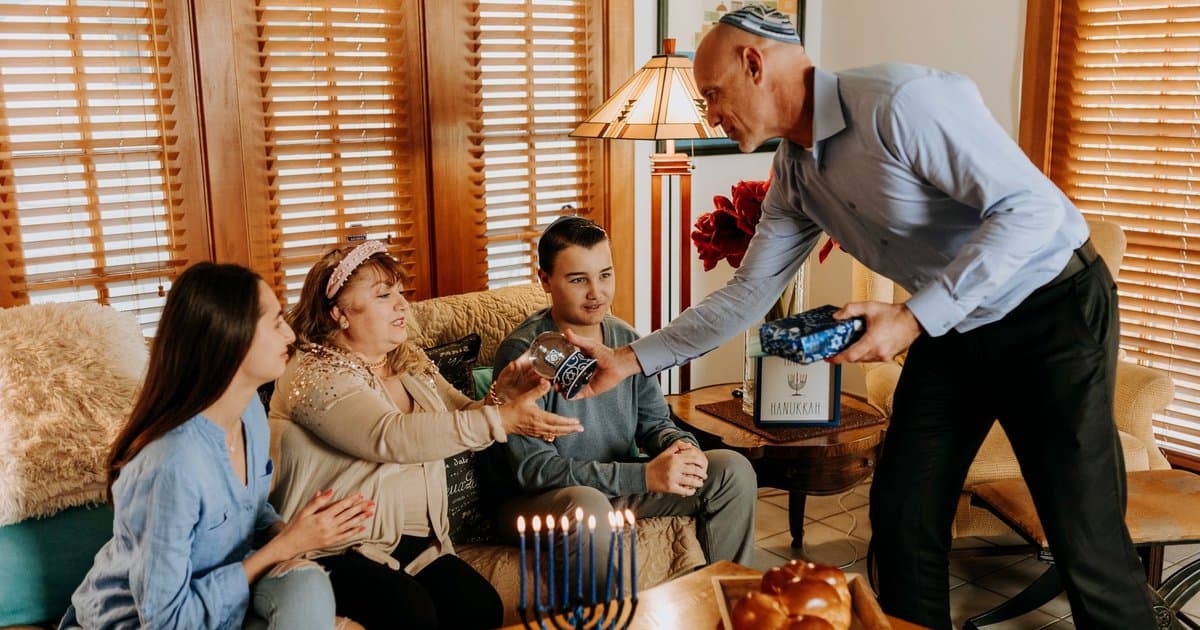
Hanukkah in diverse families works best when you stop trying to replicate someone else's celebration and start building one that reflects who you actually are. Whether your household is interfaith, blended, multicultural, or simply doesn't fit a neat category, the Festival of Lights is flexible enough to hold everyone. Light the menorah, tell the story your way, and let your children see that their unique family is reason enough to celebrate.
Key Takeaways
- There is no single correct way to celebrate Hanukkah in diverse families.
- Children thrive when adults present all family traditions with equal respect.
- Interfaith and blended families often build richer celebrations by being intentional.
- Start small with one or two rituals and add more each year.
- Naming tensions openly, rather than avoiding them, protects family relationships.
Understanding Hanukkah Across Different Family Structures
Family structures shape how holidays feel long before anyone lights a candle. Interfaith couples may blend Jewish and non-Jewish traditions under one roof. Blended families might juggle two households with different holiday calendars. Multicultural families weave Hanukkah alongside Diwali, Kwanzaa, or Lunar New Year. Single parents, LGBTQ+ families, and adoptive families create rituals that fit their own realities.
According to Kveller 1, interfaith families benefit from approaching holiday planning as a collaborative project rather than a competition between traditions. The goal isn't to pick a winner. It's to build something that belongs to your household specifically.
No matter your structure, one principle holds: children need to feel that the celebration is genuinely theirs, not a borrowed tradition they're merely allowed to attend.
Interfaith Families: Creating Shared Hanukkah Meaning Without Diluting Identity
In interfaith homes, the challenge isn't choosing between religions. It's making room for both without anyone feeling erased. Many families light the menorah together while the non-Jewish parent shares their own faith's winter practices on other evenings. New traditions that belong to no single religion, like a special Hanukkah meal everyone helps design, become anchors for the whole family.
Frame Hanukkah as "part of our family story" rather than "your mom's religion." Kveller 1 emphasizes that children in interfaith homes benefit from knowing both heritages explicitly. Hiding or minimizing one side creates confusion, not harmony.
One practical step: before the holiday season starts, sit down with your co-parent and agree on which rituals matter most to each of you. Write them down. This prevents the annual scramble of figuring out what you're doing on the first night.
The non-Jewish parent doesn't need to "convert" their participation. Holding the shamash, singing along, or reading the story aloud are all genuine ways to be present.
Blended Families: Honoring Multiple Holiday Calendars
Blended families often face logistical pressure that other families don't. Custody schedules, different childhood memories, and competing traditions from other households can make Hanukkah feel more like a coordination problem than a celebration.
According to Offit Kurman 2, balancing parenting time during Hanukkah requires flexibility and advance planning, especially when the holiday spans eight nights across two homes. Some families split the nights. Others designate one "big night" at each household.
Let each child keep meaningful traditions from their other home without guilt. If a stepchild lights the menorah differently at their other parent's house, that's fine. Avoid framing one approach as more correct.
Start with one new ritual per year that belongs exclusively to your blended unit. Maybe it's a special latke recipe, a family dreidel tournament, or a charitable giving night. Over time, these become the traditions your children associate with this family, not a compromise between two others.
Multicultural Families: Weaving Hanukkah Into Your Cultural Calendar
Families with Jewish heritage alongside other cultural or national identities navigate layered celebrations that can feel rich or overwhelming, depending on the year. Rather than treating Hanukkah as competing with other holidays, many families highlight shared themes: light, resilience, food, and gathering together.
Language Kids 4 notes that Hanukkah offers opportunities to teach children about Jewish culture, diaspora history, and tradition alongside other cultural observances. When you explain the significance of each celebration without ranking them, children develop a more grounded sense of their own identity.
Find overlaps that make multiple traditions feel connected. Hanukkah's oil and light pair naturally with Diwali's lamps. The emphasis on family meals echoes across nearly every winter celebration worldwide. Pointing out these connections isn't diluting anything. It's giving your child a wider vocabulary for understanding belonging.
Present both (or all) traditions with equal enthusiasm. Children notice when adults treat one celebration as obligatory and another as joyful.
Practical Hanukkah Activities for Diverse Families
The core Hanukkah activities, lighting the menorah, cooking, playing dreidel, and gift-giving, are flexible enough for any family's comfort level. You can emphasize history, spirituality, cultural connection, or simply the joy of being together.
Menorah lighting can be framed as a faith practice, a historical remembrance, or a family ritual. All are valid. According to My Jewish Learning 3, even a simple explanation of the Hanukkah story makes candle-lighting more meaningful for children.
Cooking together bridges cultures naturally. Latkes and sufganiyot connect food to tradition for all ages. Let kids help grate potatoes or roll dough. The mess is part of the memory.
Dreidel games work whether you teach the Hebrew letters' meanings or just spin for chocolate coins. For younger children (ages 2 to 4), the spinning itself is the fun.
Gift-giving varies widely. Some families do one gift per night, others one gift total, and some skip gifts entirely in favor of experiences or charitable donations. Just as you might explore how to celebrate Mother's Day with young children in a way that suits your family, Hanukkah gift-giving is yours to customize.
Navigating Cultural Tensions During Hanukkah
Disagreements about how "Jewish" or "religious" Hanukkah should be are common in diverse families. Extended family members may criticize your celebration as too secular or too watered-down. A co-parent may want more ritual than you're comfortable with.
Name the tension instead of avoiding it. Ask each adult in the household: "What does this holiday mean to you, and what do you need from it?" Many conflicts shrink once both people feel heard.
Prepare responses for relatives in advance. Something simple works: "We're raising our kids to know their Jewish identity through lighting the menorah and telling the Hanukkah story. It looks different from how you do it, and that's okay." Kveller 1 suggests that steady, calm repetition of your family's approach reduces criticism over time.
If value differences between partners run deep, couples therapy or family counseling can help. This isn't a failure. It's an investment in your family's long-term peace during every holiday season, not just this one.
Storytelling and Identity: Helping Children Understand Their Heritage
Children in diverse families benefit enormously from knowing the "why" behind traditions. A menorah on the windowsill means more when a child understands the Maccabees' story and how it connects to their own family's history.
Use age-appropriate language. For children under five, "A long time ago, a small group of people stood up for what they believed in, and something wonderful happened with the oil" is enough. Older kids can handle more complexity about religious freedom and perseverance.
Share how Hanukkah connects to your family's specific story. This is especially powerful for interfaith, adoptive, and multicultural families. "Grandma Sarah's family came from Poland, and they lit the menorah every year even when it was hard" gives a child a personal thread to hold.
Reading stories about diverse families celebrating Hanukkah normalizes your child's experience. A personalized Hanukkah celebration story that reflects your family's actual makeup can help younger children see themselves in the tradition. Similarly, personalized story books on other topics give children mirrors for their own lives.
Let children ask questions without judgment. "Why don't we have a Christmas tree too?" deserves a thoughtful answer, not a deflection.
Building Community When Your Family Feels Like the Only One
Practicing Hanukkah in a community where it's unfamiliar can feel isolating. Diverse families in predominantly Christian or culturally homogeneous areas sometimes struggle to find belonging during the holiday season.
Seek out synagogue communities, JCCs, or cultural organizations that host inclusive Hanukkah events. Many welcome interfaith and multicultural families specifically. My Jewish Learning 3 highlights that communal celebrations help children feel part of something larger than their household.
Online communities connect families with similar structures. Facebook groups, forums, and organizations focused on interfaith or LGBTQ+ Jewish families offer practical advice and emotional support from people who understand your specific situation.
Teach children to explain their traditions to peers. A child who can say, "We celebrate Hanukkah because my mom is Jewish, and we light candles for eight nights" builds confidence and pride. Just as you might approach teaching children about endangered species with curiosity and age-appropriate facts, holiday education works best when children feel knowledgeable rather than defensive.
Some families create their own "Hanukkah pod," gathering friends for a latke night regardless of religious background. Community doesn't have to come from an institution.
Finding Your Family's Right Level of Celebration
You don't have to do Hanukkah the way your parents did, the way your partner's family does, or how it looks on social media. Your family's version is valid even if it's one night of candles and takeout.
Celebration Style | What It Looks Like | Best For |
|---|---|---|
Minimal | Light menorah one or two nights, tell the story simply | Families new to the holiday or very young children |
Moderate | Menorah nightly, one cooking night, a few gifts | Most interfaith and blended families |
Full eight nights | Nightly rituals, cooking, gatherings, gifts each night | Families with strong Jewish practice as a priority |
Secular-cultural | Cultural elements without religious framing | Families focused on heritage rather than faith |
According to Language Kids 4, introducing children to Hanukkah traditions at any level helps them build cultural awareness and connection.
Permission to design your own celebration is liberating. The "right" version is whatever brings your family together without resentment or exhaustion. You can always add more next year.
Frequently Asked Questions
What do I tell my child if one parent isn't Jewish?
Be direct: "Mom is Jewish and Dad is Christian, and both are important parts of our family." Children handle honest explanations about difference far better than vague avoidance.
How do I handle relatives who say our celebration isn't Jewish enough?
Calmly state what you're doing and why: "We're raising our kids to know their Jewish identity through these specific practices." You don't need anyone's permission to define your family's traditions.
Should we celebrate Hanukkah if only one parent is Jewish?
Yes, if that parent wants to and the other parent respects the tradition. Many interfaith families build especially intentional celebrations precisely because they've thought carefully about why they're doing it.
How do I explain Hanukkah to my child's school?
Contact the teacher ahead of time with a simple explanation and offer to share latkes or a short presentation with the class. Most schools appreciate parent involvement and it normalizes your child's tradition for peers.
What if my blended family's kids celebrate Hanukkah differently in each home?
Each household can have its own style, and that's normal. Create one special ritual unique to your family unit so children have something that belongs specifically to this home.
Sources
- Kveller. Tips for Interfaith Families Celebrating Hanukkah & Christmas. https://www.kveller.com/article/tips-for-interfaith-families-celebrating-hanukkah-christmas/
- Offit Kurman. Hanukkah and Parenting Time: Balancing Tradition and Family Dynamics. https://www.offitkurman.com/offit-kurman-blogs/hanukkah-and-parenting-time-balancing-tradition-and-family-dynamics
- My Jewish Learning. Making Hanukkah With Children Meaningful. https://www.myjewishlearning.com/article/hanukkah-for-families/
- Language Kids. Hanukkah: Helping Children Discover Tradition, Culture, and Language. https://languagekids.com/hanukkah/
Get practical parenting tips delivered weekly
Evidence-based guidance for the moments that matter. No spam, unsubscribe anytime.
Frequently Asked Questions
Keep reading
How to Create a Dog Memorial Book (With Printable Templates)
Create a dog memorial book with photos, stories, and mementos. Learn 5 organizational tips and design ideas for honoring your pet's memory.
8 min read
How to Write a Wedding Speech for Your Aunt and Uncle (With Examples)
Write a heartfelt 3-5 minute wedding speech for your aunt and uncle. Follow this proven structure with character-focused stories and authentic delivery tips.
7 min read
Cat Memorial Book Ideas: Creating a Lasting Tribute
Create a cat memorial book with photos, memories, and keepsakes. Learn 6 meaningful ways to honor your pet and process grief with this personalized tribute.
7 min read
Get weekly parenting tips backed by research
Evidence-based guidance for the moments that matter. No spam, unsubscribe anytime.