Custom Bedtime Stories: Why They Matter for Sleep
Custom bedtime stories reduce sleep resistance in children. Learn why repetition matters more than novelty, with templates and age guidance for 2-6 year olds.

Matt Li
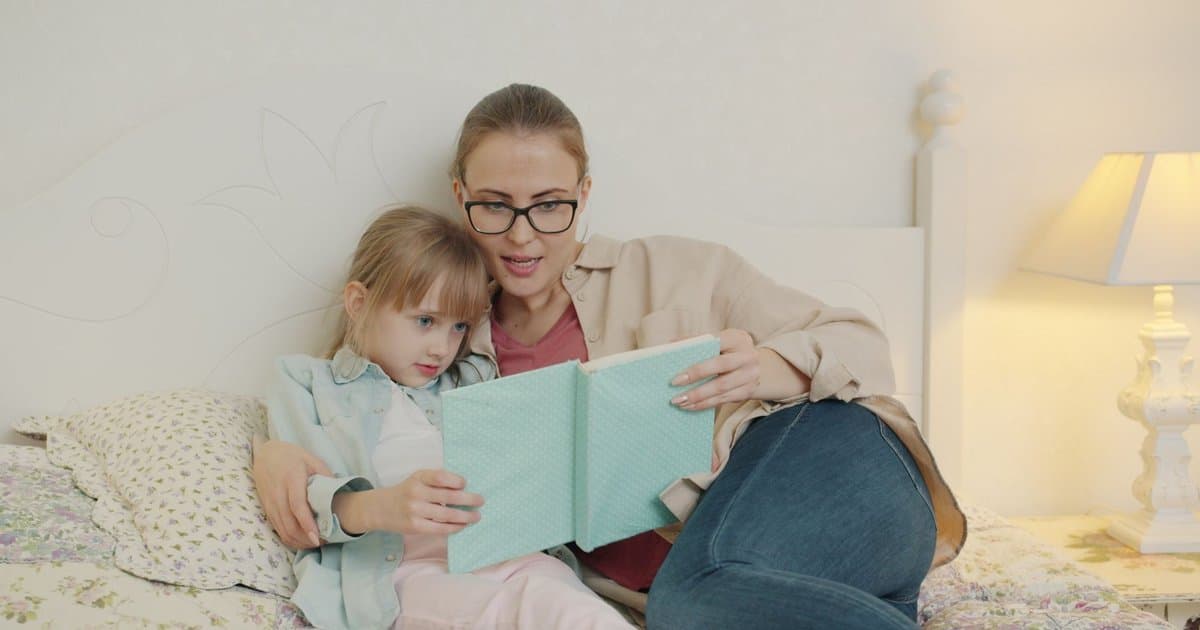
Custom bedtime stories work because they combine three things a tired child needs at once: hearing their own name, hearing the same words in the same order night after night, and hearing a version of themselves handling the thing they're worried about. The effect comes from the personalisation and the repetition, not from how polished the book is. A story you scribble on the back of an envelope, read the same way for two weeks, will usually outperform a beautiful book you read once.
Key Takeaways
- Repetition matters more than novelty: children remember and are soothed by text they already know by heart.
- Preschoolers recall rhyming text better than adults do, according to Király (2017), which is why refrains settle children so well.
- The story should end with the child falling asleep, modelling the exact transition you want next.
- Keep bedtime stories to roughly 3 to 7 minutes and avoid cliffhangers, chases, or unresolved problems.
- If bedtime resistance continues after two to three weeks of a consistent routine, the issue is probably not the story.
Why Personalized Stories Settle a Child Faster Than Generic Ones
A child who hears their own name in a story stops scanning and starts listening. That shift is the whole mechanism. Generic picture books ask a two-year-old to care about a rabbit they have never met; a custom bedtime story hands them a character whose bedroom, blanket, and little brother they already know.
Recognition also does something useful for anxiety. When the character in the story has the same fear your child has, and gets through it in four sentences, the child has rehearsed a successful ending before they have to live it. This is the same logic behind social stories used by occupational therapists for transitions.
There's a memory piece too. Király and colleagues (2017) found in a study in *Developmental Science* 1 that preschoolers held onto rhyming text in long-term memory better than adults did. Children are built to absorb patterned language. A personalised story with a repeated refrain gets stored fast, and a story they can half-recite is a story that lowers arousal instead of raising it.
How Custom Bedtime Stories Reduce Resistance and Anxiety
Most bedtime resistance in two to six year olds is not about sleep. It's about stopping. The day is interesting, the parents are still awake, and going to bed means losing access to both. A custom bedtime story gives the child something they only get at bedtime, which quietly moves the incentive in your favour.
Predictability does the rest. Sleep researchers including Jodi Mindell have shown across multiple trials that a consistent nightly routine shortens the time it takes children to fall asleep and reduces night wakings, independent of what the routine actually contains. The story is the anchor, not the magic.
For a specific fear, name it in the story and resolve it gently. Dark room, the sound the air conditioner makes, a parent leaving for a work trip. Children who are already showing broader worry patterns may need more than a story; the strategies in managing anxiety in elementary students apply earlier than most parents expect.
Elements of a Custom Bedtime Story That Works
The structure that works is almost boring, which is the point. A character the child recognises, a familiar setting, a small problem, a calm resolution, and then sleep. Four beats. No twist.
Pacing is the part parents get wrong first. Read slower than feels natural, leave gaps, and let your voice drop at the end of each sentence. Many parents find their own reading speed drifts upward when they are tired and keen to get out of the room, and the child reacts to the tempo more than the plot.
Build in sensory detail that points toward rest: the weight of the blanket, the hallway light, the hum of the fan. Add a refrain the child can say with you. Repeating language gives them something to do with their mouth and nothing to do with their imagination.
End with the character asleep. A story that finishes with the child wide awake and heading off on an adventure asks the brain to wake back up at exactly the wrong moment. Templates like Goodnight Little One are built around this closing beat for that reason.
Age Guidance for Custom Bedtime Stories
Ages 2 to 3. Keep it to 3 to 5 minutes. Short sentences, a strong refrain, and the child's name every few lines. Toddlers this age often cannot follow a plot but respond to rhythm and recognition. Expect them to interrupt constantly. That's engagement, not failure.
Ages 3 to 5. This is the window where custom bedtime stories do their most useful work. Children can now follow a simple arc and map it onto their own lives, so a story about the first day at kindergarten or a new baby in the flat lands properly. Five to seven minutes is plenty.
Ages 5 to 6. Children start co-authoring. Let them choose the setting or pick which stuffed animal appears. Keep the ending fixed even when they want to change it, because the predictable close is the part doing the sleep work.
Match complexity to attention span rather than birthday. The American Academy of Pediatrics and the American Academy of Sleep Medicine recommend 11 to 14 hours of sleep per 24 hours for 1 to 2 year olds and 10 to 13 hours for 3 to 5 year olds, including naps. If you are well short of that, the routine is worth more attention than the plot.
Writing Your Own Versus Commissioning One
Both work. The difference is effort, durability, and how much you trust yourself to improvise at 7:45pm with nothing left in the tank.
A DIY story needs one sheet of paper and this template: [Name] was [doing a familiar thing]. Then [small problem]. [Name] tried [one thing]. It worked. [Name] got into bed, and the room went quiet. Write it once, read it the same way for a fortnight.
Homemade story | Commissioned or personalised book | |
|---|---|---|
Cost | Free | Typically USD 20 to 50 per book |
Time to first read | 10 minutes | Days to weeks |
Easy to adapt | Yes, instantly | No, fixed once printed |
Survives repeat reads | Depends on your memory | Yes, identical every night |
Illustrations | Usually none | Yes, which helps under-4s |
Best for | Fast-changing worries | Big transitions: new sibling, new school |
AI tools have made the middle ground cheap. Generators such as lovetoread.ai 2] produce a personalised draft in seconds, and video versions like [this personalised story for a child named Roman 3 show how far the format has stretched. Screens at bedtime are a separate problem, so print or read aloud rather than hand over a device.
Telling Bedtime Protest Apart From Real Distress
This distinction changed what I did at bedtime more than any story did. Nora went through several nights of crying before bed, saying over and over that she did not want to sleep. What made it readable was what happened after the door closed: she cried for a couple more minutes in the crib and then settled, every single time, without fail.
That gap told me it was protest about the day ending, not distress about being left alone. Those two things need completely different responses. Protest wants a predictable routine and a parent who does not negotiate. Distress wants presence. Around the same time she started sucking her thumb to fall asleep, and I decided to leave that alone for now.
If a story is going to help, it helps with the first category. A custom bedtime story is a better closing ritual than a fourth glass of water, because it gives the child something to look forward to as the day ends rather than something to bargain over.
When Stories Won't Fix the Problem
Custom bedtime stories are a routine tool. They do not treat sleep disorders, and they will not compensate for a bedtime that is biologically wrong for the child.
Watch for signals that point elsewhere: snoring most nights, mouth breathing, pauses in breathing, waking screaming and inconsolable, persistent leg discomfort, or a child who falls asleep fine but wakes every 90 minutes. Those belong with your pediatrician, not with a better plot. Habitual snoring in preschoolers is a recognised reason to screen for obstructive sleep apnea.
Some children also just prefer audio or music to storytelling, and some find a parent's voice stimulating rather than soothing. Try two weeks, then change the variable.
When our son Ollie needed sleep training, we had been logging his feeds, naps, and diaper changes anyway, so we fed that log to AI and followed its day-by-day suggestions instead of rebooking the trainer we had used for Nora. On the eve of my wife's return to work, he slept through the night, and he has stayed consistent since. Your own data about your own child is usually the most useful input available.
When to Talk to Your Pediatrician
Book a visit if bedtime resistance or night waking persists after two to three consistent weeks, if your child is sleeping more than two hours below the AAP and AASM ranges for their age, if there is snoring or breathing difficulty, or if the bedtime fear is spilling into daytime function. Also raise it if your child's language is not developing at a pace that lets them follow a short story by age three, since that is worth checking independently of sleep.
Stories sit alongside the other quiet rituals families build at the end of the day, like intergenerational storytelling activities with grandparents or a short round of teaching gratitude to children before lights out.
Get practical parenting tips delivered weekly
Evidence-based guidance for the moments that matter. No spam, unsubscribe anytime.
Frequently Asked Questions
Keep reading
How to Create a Dog Memorial Book (With Printable Templates)
Create a dog memorial book with photos, stories, and mementos. Learn 5 organizational tips and design ideas for honoring your pet's memory.
8 min read

How to Write a Wedding Speech for Your Aunt and Uncle (With Examples)
Write a heartfelt 3-5 minute wedding speech for your aunt and uncle. Follow this proven structure with character-focused stories and authentic delivery tips.
7 min read

Cat Memorial Book Ideas: Creating a Lasting Tribute
Create a cat memorial book with photos, memories, and keepsakes. Learn 6 meaningful ways to honor your pet and process grief with this personalized tribute.
7 min read
Get weekly parenting tips backed by research
Evidence-based guidance for the moments that matter. No spam, unsubscribe anytime.