How to Help Anxious Children Be Brave: Practical Strategies That Work
Learn evidence-based strategies to help anxious children build courage. From validation techniques to graduated exposure, discover how to support brave behavior.

Matt Li
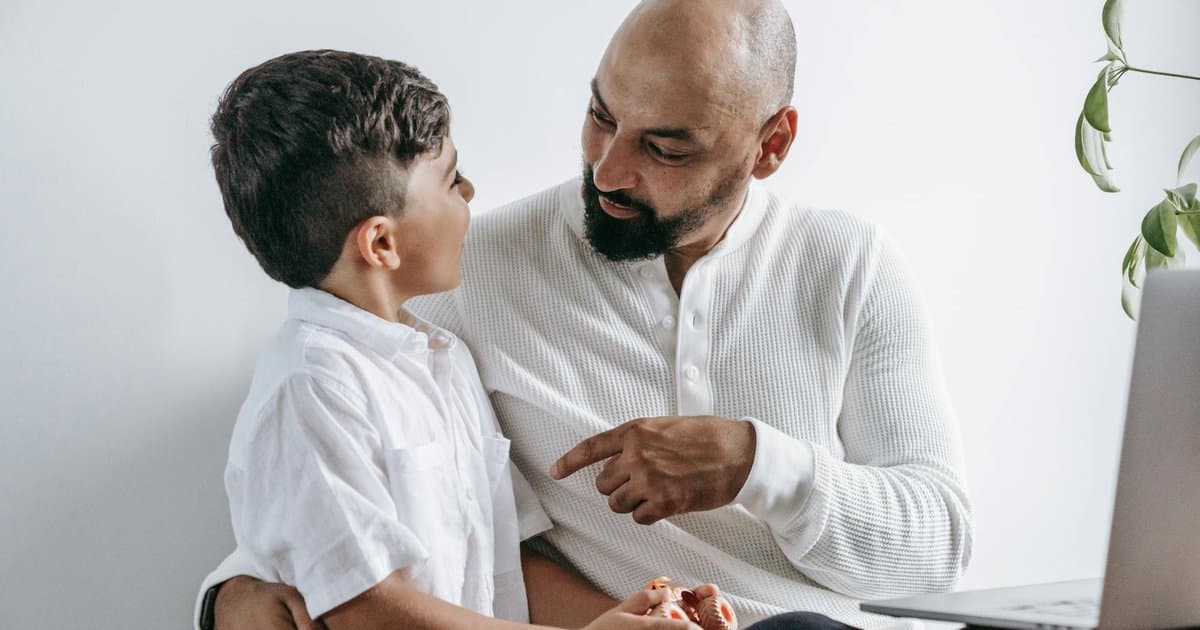
Helping anxious children be brave starts with three things: validating their fear, breaking scary situations into small steps, and teaching concrete coping tools they can use in the moment. Bravery isn't the absence of fear. It's acting despite fear, and that's a skill children can learn with consistent, patient support from the adults around them.
Key Takeaways
- Bravery is a learnable skill, not a personality trait children either have or lack.
- Validating a child's fear before encouraging action reduces shame and builds trust.
- Graduated exposure through small, child-paced steps builds lasting confidence.
- Reframing anxiety sensations as "readiness signals" changes how children interpret fear.
- Professional help is appropriate when anxiety prevents daily functioning for more than a few weeks.
Understanding Childhood Anxiety and Bravery
About 7% of children aged 3 to 17 have a diagnosed anxiety disorder, according to the CDC's data on children's mental health 1. Many more experience situational anxiety that never reaches a clinical threshold but still makes daily life harder. These children aren't weak or overly sensitive. Their brains are wired for heightened threat detection, which means the alarm system fires louder and faster than it does for their peers.
The important reframe for parents and teachers: fear and courage coexist. A child standing at the edge of a swimming pool with a pounding heart who jumps in anyway is being braver than a child who jumps in without a second thought. Research in cognitive behavioral therapy (CBT) for children consistently shows that bravery improves with practice, not lectures. According to Kendall and Hedtke (2006) 2, structured exposure paired with coping skills is the most effective approach for building brave behavior in anxious youth.
Your child doesn't need to stop feeling afraid. They need to learn they can handle the fear.
Start with Validation, Not Dismissal
The instinct to reassure with "there's nothing to be scared of" is understandable, but it backfires. When a child hears that their very real physical sensations are "nothing," they learn that something is wrong with them for feeling afraid. This increases shame, and shame fuels avoidance.
Instead, try naming what you see. "I can tell this feels really scary right now" communicates that you take their experience seriously. According to research by Lebowitz et al. (2013) 3, parental accommodation of anxiety (avoiding triggers entirely) increases symptoms, while parental validation combined with gentle encouragement reduces them. The distinction matters: you're not agreeing that the situation is dangerous. You're acknowledging that your child's body is telling them it is.
Phrases that help: "Your worry is loud right now. I'm right here." "It makes sense you feel nervous. This is new." Phrases that don't help: "Stop worrying." "You're fine." "Other kids aren't scared."
Graduated Exposure Through Small Steps
How to help anxious children be brave often comes down to pacing. Flooding a child with the full feared situation rarely works. Graduated exposure does. This means breaking a scary scenario into a series of tiny, achievable steps, sometimes called a "bravery ladder."
For a child afraid of dogs, the ladder might look like this: look at pictures of dogs, watch dog videos, observe a dog from across a park, stand 10 feet from a calm dog, then eventually pet one. Each step is practiced until the child feels comfortable before moving to the next.
A key principle from ZERO TO THREE's guidance on early anxiety 4 is that the child should participate in choosing their steps. When children feel ownership over the pace, their sense of control reduces the anxiety itself. Celebrate effort at every rung. "You looked at that dog from across the street. That took guts." The outcome matters less than the attempt.
Teaching Specific Coping Tools Before the Scary Moment
Children can't reach into an empty toolbox. If you want them to manage anxiety in the moment, you need to teach and practice strategies during calm times. Three evidence-supported tools work well for ages 4 to 10:
Box breathing: Inhale for 4 counts, hold for 4, exhale for 4, hold for 4. Practice this at bedtime or during car rides until it becomes automatic.
5-4-3-2-1 grounding: Name 5 things you can see, 4 you can hear, 3 you can touch, 2 you can smell, 1 you can taste. This pulls attention away from anxious thoughts and into the present moment.
Brave self-talk: Help your child create a short phrase they repeat when scared. "I can do hard things" or "This feeling will pass" are simple and effective. According to Kendall's Coping Cat program 2, children who rehearse coping statements before entering feared situations show significantly greater improvement than those who don't.
Anchor each tool to a specific situation. "When you get butterflies before soccer practice, let's try box breathing in the car."
Modeling Bravery and Vulnerability
Children learn courage by watching you handle discomfort, not by hearing you say you've never been scared. When you share age-appropriate examples of your own nervousness, you normalize the experience. "I was really nervous about that meeting today. My stomach felt tight. But I took three deep breaths and went anyway."
This kind of modeling accomplishes two things. First, it shows your child that adults feel fear too, which reduces the isolation anxious children often feel. Second, it demonstrates a specific strategy in action rather than just describing one.
Avoid the temptation to project invincibility. Saying "I'm never scared" doesn't inspire an anxious child. It makes them feel broken. A more powerful message: "I get scared sometimes, and I've learned that I can handle it. You're learning that too."
Teachers can model this in classrooms by narrating their own moments of uncertainty. "I wasn't sure this experiment would work, but I decided to try anyway. Let's see what happens." This creates a culture where risk-taking, not perfection, is celebrated.
Reframing Anxiety Sensations as Readiness
Butterflies in the stomach, a racing heart, sweaty palms. These sensations feel like danger to an anxious child. But physiologically, they're identical to excitement. The body is preparing for action, not signaling catastrophe.
Teaching children to reinterpret these signals is a core technique in CBT for pediatric anxiety. Research by Brooks (2014) 5 found that reappraising anxiety as excitement improved performance in both children and adults across multiple tasks. The shift is subtle but powerful: instead of "something is wrong with me," the child learns "my body is getting ready to do something brave."
Try language like: "Feel those butterflies? That's your brave engine warming up." For younger children (ages 4 to 6), externalizing the anxiety can help. Some families name the worry, calling it "the Worry Monster" or giving it a silly name. This separates the child from the feeling, making it easier to respond to rather than be controlled by. Using social stories that depict characters noticing and reframing their body's signals can reinforce this concept through narrative.
Creating and Reinforcing a Bravery Identity
Children internalize the identities adults reflect back to them. If a child hears "you're so shy" often enough, shyness becomes who they are, not what they sometimes feel. The same principle works in reverse. When you consistently notice and name brave moments, bravery becomes part of how the child sees themselves.
Be specific with your language. "You raised your hand even though you weren't sure of the answer. That's brave" lands better than "good job." Specificity tells the child exactly which behavior counted and why. It also makes the praise feel genuine rather than automatic.
Let your child overhear you telling another adult about their brave moments. "She was really nervous about the sleepover, and she went anyway. I was so proud of her." Overheard praise carries extra weight because it doesn't feel performative.
Some parents find that reading a personalized story about being brave helps because children see themselves, by name, navigating a scary situation successfully. Seeing their own character act with courage can reinforce the identity you're building together. Other reinforcement tools include a bravery journal where the child draws or writes about one brave thing they did each day, or a simple sticker chart tracking attempts rather than outcomes.
When Anxiety Blocks Progress: Recognizing the Line
Some level of anxiety in children is developmentally normal. Fear of the dark, separation anxiety at drop-off, nervousness before a test: these are part of growing up. But anxiety that persists despite consistent support and limits daily functioning is worth professional attention.
Warning signs include: refusing school for more than a few days, persistent stomachaches or headaches without medical cause, sleep disruption lasting more than two weeks, complete avoidance of age-appropriate activities, and constant reassurance-seeking that isn't relieved by reassurance.
The American Academy of Pediatrics recommends screening for anxiety during routine well-child visits starting at age 8 6. If your child's anxiety is interfering with friendships, school attendance, or family life, a child therapist trained in CBT can make a significant difference. Early intervention is effective. According to the AAP 6, most children with anxiety disorders respond well to evidence-based therapy, especially when started before patterns become deeply entrenched.
Seeking help isn't failure. It's a sign that you're paying attention.
Practical Classroom and Home Implementation
For teachers: Seat anxious students near supportive, calm peers. Offer choices in participation, such as presenting to a small group instead of the whole class, or answering in writing instead of aloud. Build predictability through visual schedules and advance warnings before transitions. When an anxious student takes a social risk, acknowledge it privately. "I noticed you joined the group at recess today. That was brave."
For parents: Build extra transition time into your routine. Rushing an anxious child increases panic. Avoid bribing courage ("I'll buy you a toy if you go to the party") because it communicates that the situation truly is terrible and requires compensation. Instead, validate the difficulty and express confidence. "This is hard, and I believe you can handle it."
For both: Consistency across environments matters enormously. When the same language, tools, and expectations appear at school and home, children internalize them faster. Share strategies with each other. A quick email between parent and teacher about what's working can accelerate progress significantly.
Get practical parenting tips delivered weekly
Evidence-based guidance for the moments that matter. No spam, unsubscribe anytime.
Frequently Asked Questions
Keep reading
How to Create a Dog Memorial Book (With Printable Templates)
Create a dog memorial book with photos, stories, and mementos. Learn 5 organizational tips and design ideas for honoring your pet's memory.
8 min read

How to Write a Wedding Speech for Your Aunt and Uncle (With Examples)
Write a heartfelt 3-5 minute wedding speech for your aunt and uncle. Follow this proven structure with character-focused stories and authentic delivery tips.
7 min read

Cat Memorial Book Ideas: Creating a Lasting Tribute
Create a cat memorial book with photos, memories, and keepsakes. Learn 6 meaningful ways to honor your pet and process grief with this personalized tribute.
7 min read
Get weekly parenting tips backed by research
Evidence-based guidance for the moments that matter. No spam, unsubscribe anytime.