Personalized Alphabet Books: How They Boost Classroom Learning
Discover how personalized alphabet books boost letter recognition, engagement, and motivation in early readers. Evidence-based strategies for classroom implementation.
Erika Wong
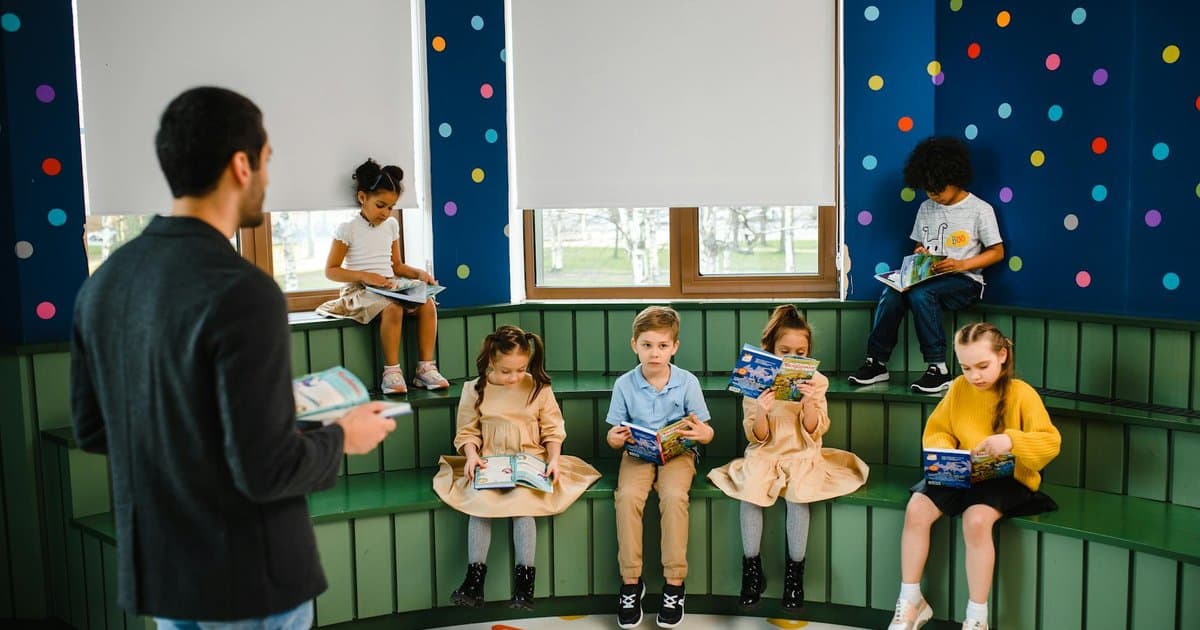
Personalized alphabet books increase classroom engagement by embedding a child's name, interests, and identity directly into letter-learning materials. When young readers encounter their own name on the page, they form stronger emotional connections to letter-sound relationships, which accelerates recognition and recall. Research on self-referential processing in cognition confirms that people, including young children, pay more attention to and remember information tied to themselves 1.
Key Takeaways
- Personalized alphabet books for classroom engagement work best for children ages 3 to 6.
- Self-referential content increases attention, memory, and motivation in early readers.
- Personalized books complement but never replace systematic phonics instruction.
- Struggling readers benefit most because personalization reduces literacy anxiety.
- Multisensory activities paired with personalized books deepen letter recognition.
How Personalized Alphabet Books Strengthen Letter Recognition
The brain processes self-relevant information differently than generic content. According to Sui and Humphreys (2015), self-referential stimuli receive prioritized cognitive processing, meaning children encode and retrieve information faster when it relates to them personally 1. In a classroom context, a child named Maya who sees "M is for Maya" on the page connects the abstract letter M to something deeply meaningful. That emotional anchor helps the letter stick.
This principle applies beyond just names. When a child's favorite animal, food, or hobby appears alongside a target letter, the association strengthens through personal relevance. The National Association for the Education of Young Children (NAEYC) emphasizes that developmentally appropriate practice should connect new learning to children's existing knowledge and interests 2. Personalized alphabet books do exactly this.
Repeated exposure matters, too. Children who feel ownership over a book tend to revisit it voluntarily. That self-driven repetition reinforces letter-sound relationships without the need for adult prompting, building both recognition speed and confidence over time.
Why Generic Alphabet Books Miss the Mark for Struggling Readers
Standard alphabet readers assume all children respond to the same characters, contexts, and pacing. For a confident learner, a generic book works fine. But for a child who already feels anxious about letters, a book full of unfamiliar characters offers no emotional foothold.
Struggling readers often avoid practice. They sense they're behind, and generic materials reinforce that feeling because nothing in the book says, "This was made for you." According to ZERO TO THREE, early literacy development depends heavily on positive emotional associations with books and reading 3. When those associations are negative, avoidance increases.
Personalized books help break this cycle. A child who sees their name throughout a story feels recognized and capable. Some literacy specialists observe that reluctant readers will ask to re-read a personalized book during free choice time, something they rarely do with classroom readers. That voluntary engagement signals intrinsic motivation, which is far more powerful than compliance.
Practical Classroom Implementation Strategies
Start with small-group instruction. Introduce personalized alphabet books for classroom engagement during guided reading rotations, where you can observe each child's response and adjust your support. Use the book as an anchor text: read a page together, then practice forming the featured letter on whiteboards or in sand trays.
Build a classroom library rotation. If budget allows one personalized book per student, create a system where children swap books weekly. Reading a classmate's personalized book builds community and exposes children to different names and letter associations. Teachers report that this peer-sharing approach often sparks conversations like, "Your name starts with J, just like jump!"
Connect to multisensory activities for deeper learning. After reading a page featuring the letter S, have children trace S in shaving cream, build it with playdough, or find S on a sandpaper letter card. The NAEYC recommends multisensory approaches for early literacy because they activate multiple neural pathways simultaneously 2]. A template like [My ABC Adventure can serve as a starting point, giving each child a story that pairs their name with hands-on letter work.
Pair personalized books with name recognition tasks. Have children highlight every instance of their name's first letter throughout the book, then practice writing it independently.
Differentiation and Accessibility Considerations
Not every child in your classroom has the same needs, background, or learning profile. Effective use of personalized alphabet books requires intentional differentiation.
For English Language Learners, look for books available in multiple languages or with bilingual text options. A child who sees their home language alongside English gains a bridge between familiar and new, which supports transfer of phonemic awareness skills. According to the American Academy of Pediatrics, bilingual exposure in early childhood strengthens cognitive flexibility 4.
Representation matters in illustrations. Choose providers whose characters reflect varied skin tones, family structures, abilities, and cultural contexts. If a child doesn't see themselves in the illustrations, the "personalization" is only surface-level. This also opens the door for broader classroom discussions about representation in children's literature, connecting to social stories for teaching empathy and inclusion.
For children with visual processing needs, consider large-print or digital versions. Some platforms offer audio narration, which lets children follow along at their own pace while hearing correct letter-sound pronunciations.
When Personalized Books Accelerate Learning (And When They Don't)
Personalized alphabet books deliver the strongest results during the pre-K through first grade window, roughly ages 3 to 6. This is when most children are developing letter recognition and beginning phonemic awareness, according to the National Reading Panel 5. During this stage, motivation is a major factor, and personalization directly targets it.
For older struggling readers (ages 6 to 7), personalized books can re-engage children who have started to shut down during literacy instruction. Frame the book as something special rather than remedial. A common approach that works for some teachers is presenting it as a "VIP reading buddy" that belongs just to that child.
However, personalized alphabet books will not replace systematic phonics instruction. Research from Ehri (2005) confirms that explicit, sequential phonics teaching is essential for decoding development 6. Think of personalized books as the motivational layer on top of structured instruction, not a substitute. They're most effective in combination with phonics lessons, interactive writing, and guided reading.
Children who have already achieved fluency won't gain much from alphabet-level personalized books. For fluent readers, consider personalized books for newborns and early readers as gifts for younger siblings, or explore custom storybooks with more complex narratives.
Measuring Engagement and Learning Gains
Tracking the impact of personalized alphabet books doesn't require elaborate assessments. Start with simple observational data during your literacy block.
Voluntary re-reading frequency. Does the child choose to read their personalized book during free choice or independent reading time? Repeated, self-initiated reading is one of the clearest signals of intrinsic motivation. ZERO TO THREE identifies this kind of voluntary engagement as a predictor of long-term reading success 3.
Letter recognition speed. Use a standard letter identification assessment (like the PALS or DIBELS letter naming fluency screener) at the start and end of a six-week personalized book intervention. Many teachers observe that children recognize the letters from their own name first, then generalize outward.
Independent writing attempts. Watch for children spontaneously writing their name or featured letters without being asked. This shift from passive recognition to active production signals deeper encoding.
Classroom participation. Note whether children who previously avoided literacy stations begin participating more willingly. Some teachers track this with a simple tally chart. Even small increases in participation compound over a semester.
Confidence and affect. Listen for changes in how children talk about reading. A child who says, "I want to read my book to Mom" has shifted from avoidance to ownership. That emotional shift often precedes measurable academic gains.
Building a Personalized Literacy Environment Beyond Books
Personalized alphabet books work best as one element in a broader literacy-rich environment. Extend the personalization principle to other areas of your classroom.
Create name walls where each child's name appears alongside their photo and the letters broken apart. Use personalized word cards at writing stations, featuring vocabulary from each child's book. Incorporate name-based sorting activities where children group classmates' names by beginning sound or letter count.
Some parents find that reading a personalized story at home about letter learning helps reinforce classroom work, because children see themselves navigating the learning process successfully. This home-school connection is especially valuable for children who need extra repetition in a low-pressure environment.
The goal across all of these strategies is the same: make literacy feel personal, relevant, and safe. When children believe that reading is something they can do and something that belongs to them, engagement follows naturally.
Get practical parenting tips delivered weekly
Evidence-based guidance for the moments that matter. No spam, unsubscribe anytime.
Frequently Asked Questions
Keep reading

Supporting Siblings During NICU Stay: What Parents Need to Know
Help siblings cope with NICU stress through honest explanations, routines, and connection activities. Most behavioral changes resolve within weeks of discharge.
10 min read

Teaching Empathy Through Children's Stories: A Practical Guide
Learn how to teach empathy through children's stories with practical techniques. Research shows kids develop stronger peer relationships with regular diverse
10 min read

How to Motivate Students on Classroom Behavior (Strategies That Work)
Master 8 proven strategies to motivate students on classroom behavior. Learn why specific praise and consistency outperform rewards, plus tools that work.
9 min read
Get weekly parenting tips backed by research
Evidence-based guidance for the moments that matter. No spam, unsubscribe anytime.