Personalized Kindergarten Graduation Gifts: Why They Matter More Than You Think
Discover why personalized kindergarten graduation gifts create lasting memories. Explore meaningful keepsake ideas that children treasure for years.
Erika Wong
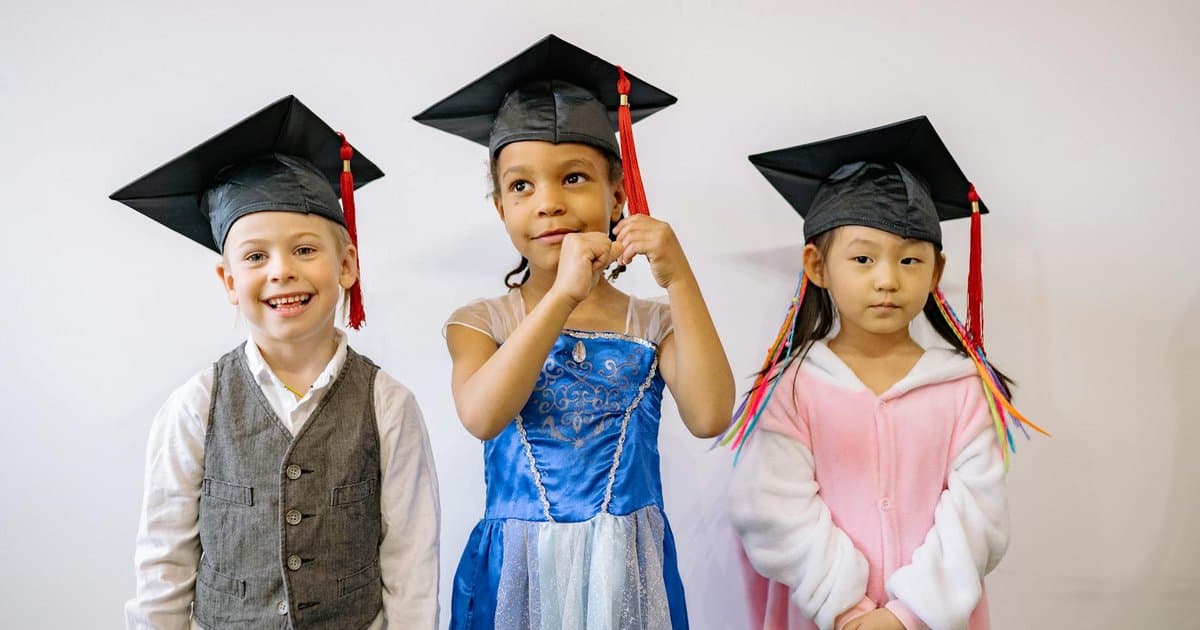
Personalized kindergarten graduation gifts create stronger emotional connections than generic presents because they tap into a child's developing sense of identity. When a five-year-old sees their own name, face, or story woven into a gift, the object shifts from "nice thing I received" to "something made specifically for me." Research on self-referential processing in children suggests that personalized items trigger deeper memory encoding and greater emotional attachment to milestone moments 1.
Key Takeaways
- Children ages 5-6 form stronger attachments to gifts featuring their name or likeness.
- Personalized kindergarten graduation gifts are more likely to become long-term keepsakes.
- Timing and presentation matter as much as the gift itself.
- Combining a personalized gift with a shared experience amplifies its emotional impact.
- Teachers consistently observe that personalized items outlast generic ones in keepsake boxes.
Why Personalization Transforms a Graduation Gift Into a Keepsake
Between ages four and six, children undergo rapid development in self-concept and identity formation. According to research by Rochat (2003), this period marks when children begin recognizing themselves as unique individuals with a personal narrative 2. A gift with their name engraved, their photo printed, or their story told activates what psychologists call the "self-reference effect," where information linked to the self is remembered more vividly than unrelated information.
This matters for kindergarten graduation because the milestone itself is abstract. A five-year-old can't fully grasp what "finishing kindergarten" means in the arc of their life. A personalized gift makes the moment concrete and tangible. Teachers often notice the difference: the generic stuffed animal ends up in the donation pile within a year, while the engraved ornament or custom storybooks stay in bedroom displays for years.
One kindergarten teacher put it simply in a parent survey: personalized items disproportionately end up in keepsake boxes rather than toy bins.
Custom Storybooks Celebrating Your Child's Kindergarten Journey
A personalized storybook featuring your child as the main character creates a narrative connection that off-the-shelf books can't replicate. When children see themselves graduating, saying goodbye to friends, and walking confidently into first grade within the pages of a story, it reinforces their sense of capability during a time of genuine transition.
Repeated readings also help children emotionally process change. According to the National Association for the Education of Young Children (NAEYC), reading the same book multiple times helps young children internalize new concepts and build comprehension 3. A personalized graduation book gets reread because the child is drawn back to seeing themselves in the story.
These books often become favorites well into elementary school. Parents report that children request them at bedtime months after the ceremony. A personalized kindergarten graduation book can capture details like your child's teacher's name, school, and friends, making it feel like a real record of their year rather than a generic narrative. If you've explored personalized books for newborns before, the kindergarten versions build on that same principle with age-appropriate storytelling.
Engraved Keepsake Boxes and Memory Containers
A small wooden or metal box engraved with your child's name and graduation year serves a dual purpose. It's both a gift and a system for preserving memories. Inside, your kindergartener can store drawings, their class photo, a friendship bracelet, or the last piece of art they brought home.
What makes this gift powerful is its longevity. The box itself becomes a time capsule. A study published in Memory & Cognition found that physical objects associated with personal experiences strengthen autobiographical memory retrieval 4. Ten years from now, opening that box and finding a crayon drawing of their kindergarten classroom will trigger memories that a digital photo album simply can't match.
Pair the box with a few starter items: a printed photo from graduation day, a note from their teacher, or their favorite classroom artwork. This gives the child a model for what "collecting memories" looks like and encourages them to add to it over time.
Custom Puzzle With Your Child's Photo or Artwork
A jigsaw puzzle featuring your kindergartener's graduation photo or a piece of their own artwork combines active play with meaningful personalization. Children enjoy the challenge of assembling the puzzle, and once completed, it serves as a visual snapshot of exactly who they were at age five or six.
Photo-based puzzles are particularly effective because children at this age are fascinated by images of themselves. According to developmental research summarized by ZERO TO THREE, children's self-recognition and self-awareness become increasingly sophisticated between ages three and six 5. Seeing their own face in puzzle form reinforces positive self-image during a transitional moment.
Once finished, many families frame the completed puzzle as room decor. It's a conversation starter when friends visit and a lasting reminder of this specific stage. Some parents scan their child's kindergarten artwork and have it turned into a puzzle, which doubles as a celebration of their creative growth.
Personalized Graduation Certificate or Achievement Print
A custom certificate or illustrated print that names your child, their school, their graduation date, and perhaps their teacher gives the milestone a sense of officialdom that children genuinely respond to. At five and six, kids are beginning to understand achievement. Seeing their accomplishment validated in print, framed and hung on the wall, makes them feel proud in a way that verbal praise alone may not.
Consider adding a personal detail that only your family would understand. Maybe it's their favorite saying from the school year, their classroom nickname, or the subject they loved most. These small touches transform a decorative item into something deeply personal.
Wall decor that features a child's name tends to stay displayed longer than generic posters. When a child sees their name every day on their bedroom wall, it reinforces belonging and self-worth. If you're also looking for ideas for slightly younger children, pre-K graduation gifts follow similar principles but are scaled for a younger developmental stage.
Custom Handprint or Footprint Art From This Moment
A handprint or footprint impression, personalized with your child's name, age, and graduation date, captures something no photograph can: their actual physical size at this exact moment. Clay, ceramic, and ink-based versions all work well, and each creates a different aesthetic for display.
Parents consistently describe this type of gift as one that grows more meaningful with time. In the moment, your kindergartener may not fully appreciate it. But three years later, when they hold their hand against the impression and see how much they've grown, the emotional impact lands. Five-year-olds' hands are still remarkably small, and that smallness becomes precious in hindsight.
Felt-based or clay kits allow you to make the impression at home on graduation day itself, adding context to the memory. Some families make a new impression each school year and display them in a row, creating a visual timeline of growth that becomes a meaningful family tradition.
When to Choose Personalization Over Experience-Based Gifts
Not every child responds to physical gifts the same way. Some kindergarteners would rather celebrate with a special outing, like a trip to the zoo or a dinner at their favorite restaurant. Both approaches honor the milestone, and they aren't mutually exclusive.
Personalized gifts tend to work best when you want something that lasts and can be revisited. According to research by Van Boven and Gilovich (2003), experiential purchases often produce greater immediate happiness, while material gifts with personal significance gain value over time through memory association 6. For a milestone like kindergarten graduation, combining both can be ideal: a personalized storybook plus a special family dinner, for example.
Consider your child's personality. A collector or a child who loves displaying things in their room will likely treasure a personalized keepsake. A child who is more active and social might appreciate the experience first and grow into appreciating the keepsake later. Neither response is wrong.
Making a Personalized Kindergarten Graduation Gift Even More Special
The context surrounding a gift shapes how a child remembers it. Handing over a personalized book in the car on the way home from school creates a different memory than reading it together that evening with candles lit and a special dessert on the table.
Timing matters. Present the gift during a naturally reflective moment: the evening of graduation day, the last morning of school, or during a quiet weekend when the transition is sinking in. Avoid competing with the chaos of the ceremony itself.
Involvement amplifies connection, too. Let your child choose which artwork goes into their keepsake box first, or ask them to sign their name inside their personalized book. When children contribute to the personalization, their sense of ownership deepens. Finally, take a photo of your child holding or using their gift on graduation day. That photo becomes part of the memory system itself, linking the gift, the moment, and the feeling together in a way they'll carry forward.
Get practical parenting tips delivered weekly
Evidence-based guidance for the moments that matter. No spam, unsubscribe anytime.
Frequently Asked Questions
Keep reading
Supporting Siblings During NICU Stay: What Parents Need to Know
Help siblings cope with NICU stress through honest explanations, routines, and connection activities. Most behavioral changes resolve within weeks of discharge.
10 min read
Teaching Empathy Through Children's Stories: A Practical Guide
Learn how to teach empathy through children's stories with practical techniques. Research shows kids develop stronger peer relationships with regular diverse
10 min read
How to Motivate Students on Classroom Behavior (Strategies That Work)
Master 8 proven strategies to motivate students on classroom behavior. Learn why specific praise and consistency outperform rewards, plus tools that work.
9 min read
Get weekly parenting tips backed by research
Evidence-based guidance for the moments that matter. No spam, unsubscribe anytime.