Student-Centered Teaching Methods: A Practical Guide for Real Classrooms
Learn 6 student-centered teaching strategies with real classroom tips. Use 60% student-centered + 40% direct instruction for better outcomes.
Erika Wong
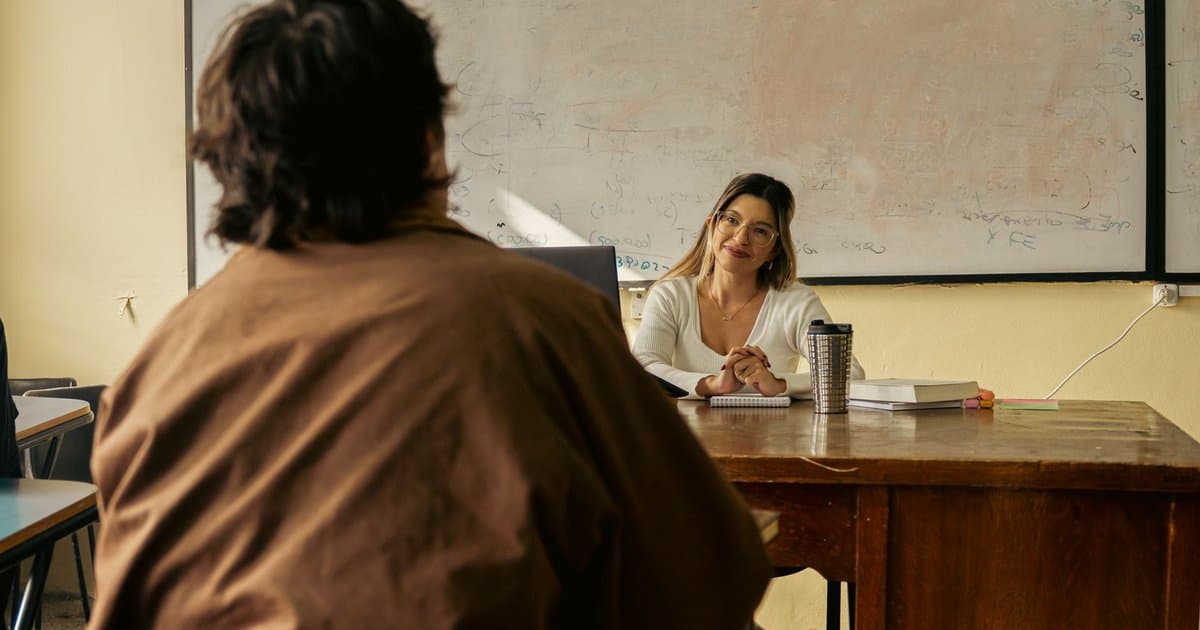
Student-centered teaching methods shift the primary work of learning from the teacher to the students through inquiry, collaboration, choice, and active problem-solving. When done well, these approaches improve retention, build critical thinking, and re-engage students who have tuned out of lecture-based classrooms. The catch is that student-centered learning requires more structure and planning than traditional instruction, not less.
Key Takeaways
- Student-centered teaching means students actively construct knowledge, not passively receive it.
- Start with one strategy per term, not a full classroom overhaul.
- Explicit norms and learning behaviours must be taught before students can self-direct.
- A blend of roughly 60% student-centered and 40% direct instruction works for most classrooms.
- Productive noise and movement are signs of learning, not loss of control.
What Student-Centered Teaching Actually Means in Practice
Student-centered teaching repositions the teacher from sole information source to learning architect. Students ask their own questions, make decisions about how they demonstrate understanding, and engage with content through discovery and collaboration rather than passive note-taking. According to Morse (2015) 1, placing students at the center of their learning experience connects academic outcomes to the whole child, including their social, emotional, and physical development.
This isn't about stepping back and hoping kids figure it out. It's about designing experiences where students do the cognitive heavy lifting while you guide, observe, and intervene strategically. According to Dubinsky (2024) 4, active learning approaches activate neural pathways associated with deeper encoding and long-term memory formation, which helps explain why students retain more when they wrestle with ideas rather than just hear them explained.
The shift matters because metacognition, the ability to monitor and direct your own learning, doesn't develop from listening. It develops from practice.
Six Core Student-Centered Teaching Strategies You Can Start With
You don't need to reinvent your classroom. These six methods integrate into existing curriculum without an overhaul.
Inquiry-based learning starts with a question students genuinely want to answer. In my Year 4 classroom, I stopped opening science units with vocabulary lists and started with a messy question like "Why does bread go mouldy faster in some places?" Students generated hypotheses, tested them, and learned the vocabulary because they needed it.
Collaborative group work builds both academic and social-emotional skills, but only when you teach collaboration as a skill first (more on that below).
Problem-based learning uses real-world challenges as the entry point. Trullàs (2022) 3 found in a scoping review that problem-based learning improved clinical reasoning and knowledge application across undergraduate programs.
Station rotations keep every learner active without whole-class pacing pressure. Peer teaching deepens understanding for both the explainer and the listener. Choice boards let students pursue the same learning goal through different pathways, whether that's writing, drawing, building, or presenting.
Strategy | Best For | Prep Time | Scaffolding Needed |
|---|---|---|---|
Inquiry-based learning | Concept exploration, science, social studies | Medium | High for younger students |
Collaborative group work | Any subject, discussion-heavy content | Low | High (teach norms first) |
Problem-based learning | Application, critical thinking | High | Medium |
Station rotations | Mixed-ability classes, literacy blocks | Medium | Medium |
Peer teaching | Review, consolidation | Low | Low-Medium |
Choice boards | Assessment, project work | Medium | Low once routines set |
How to Transition Your Classroom Without Chaos
Most teachers who try to flip everything at once burn out by October. Start with one strategy in one subject. I introduced choice boards in writing first, then expanded to maths the following term. That single change gave me enough data to know what worked before I invested more planning time.
Before any group work or student-directed activity, teach the behaviours you need explicitly. In my classroom, I use STAR sitting (Sit up, Track the speaker, Ask and answer questions, Respect those around you) for primary students. These aren't optional extras. Focus is not a personality trait kids either have or don't. It rests on learning behaviours you name, model, practise, and reinforce over weeks. When I skip this step, I spend my time managing fidgets instead of teaching. When I invest the first two weeks of term in these routines, student-centered activities run smoothly because students know what "ready to learn" looks and feels like.
Set clear success criteria for every activity. Students should be able to answer "What am I learning?" and "How will I know I've done it well?" without asking you.
Managing the Classroom When Students Are Driving
Student-centered classrooms need more structure, not less. The structure just looks different. Instead of controlling every minute from the front, you design the container and let students move within it.
Define what "productive talk" sounds like. I teach my students the difference between a Level 1 voice (partner work) and a Level 3 voice (whole-class share). We practise. We revisit. According to Kim (2017) 5, teachers who effectively use student-centered methods tend to be strong facilitators who actively circulate and coach rather than monitor from a desk.
Use visible timers so students manage their own pacing. Establish a hand signal or attention cue that brings the room back in under five seconds. I use a call-and-response clap pattern. It took three weeks of daily practice before it was automatic.
Circulating is your most powerful tool. When you move through the room, you gather formative data, redirect quietly, and coach in real time. You also spot misconceptions before they harden. Quiet doesn't equal learning. A room where students are talking about their work, debating ideas, and asking each other questions is a room where learning is happening.
When Student-Centered Teaching Methods Work Best (and When to Blend)
Not every learning goal suits student-centered delivery. Foundational skills like phonics, number facts, and procedural knowledge often need direct instruction first. For teachers working with younger children, resources like teaching letter recognition to young children require explicit modelling before students can explore independently.
The research supports a blended approach. Dubinsky (2024) 4 notes that direct instruction and active learning activate different but complementary neural processes, suggesting classrooms benefit from both. Many experienced teachers settle around 60% student-centered activities (guided discovery, collaboration, application) and 30-40% direct instruction (mini-lessons, modelling, skill practice).
Match the method to the goal. A mini-lesson on how to structure a paragraph is direct instruction. Students then choosing which topic to write about, drafting with a partner, and peer-editing is student-centered. The two work together, not in opposition.
Real Challenges You'll Face and Practical Solutions
Choice paralysis. Some students freeze when given open-ended options. Start with two or three curated choices, not unlimited freedom. "Would you like to show your learning through a poster, a short video, or a written explanation?" is manageable. "Do whatever you want" is not.
Skeptical parents. Parents worry when homework disappears or assessments look unfamiliar. Communicate your approach early in the year. Share student work samples, not just grades. A student-led conference where a child walks their parent through a portfolio of work is more convincing than any newsletter. Some families find that personalized books featuring their child as the star student help bridge school and home, because children see themselves succeeding in a learning context.
Time pressure. The first term is slower. By term two, embedded routines reduce overhead significantly and lessons often move faster because students aren't waiting for you to spoon-feed every step.
Admin expectations. If your principal walks in and sees a noisy room, have your data ready. Document engagement rates, assessment results, and the specific skills students are practising. Outcomes speak louder than optics.
How Student-Centered Teaching Builds Lasting Skills
Employers and universities consistently rank problem-solving, collaboration, and communication above content recall. Student-centered classrooms practise these capacities daily, not as add-ons or Friday enrichment, but as the core mode of learning.
Growth mindset doesn't develop from motivational posters. It develops when a student tries an approach, gets feedback, revises, and sees improvement. That cycle, built into every student-centered activity, builds genuine resilience. Neira (1984) 2 documented how nursing students taught through student-centered methods reported greater confidence in applying knowledge independently, a finding that holds across disciplines decades later.
Self-direction is habit-built. Students who spend years being told exactly what to do, when to do it, and how to format it arrive at university unable to manage their own learning. Classrooms where students routinely make decisions and manage their time are building that muscle early. For younger learners, tools like personalized alphabet books for classroom engagement can introduce choice and ownership in age-appropriate ways, while teachers exploring differentiation might find value in understanding how AI tools are helping teachers support students with learning differences.
Signs Student-Centered Learning Is Working (and When to Adjust)
You'll know your student-centered teaching methods are landing when students ask questions you didn't anticipate, when off-task behaviour drops rather than spikes, and when students can articulate what they're learning and why it matters.
Watch for these indicators: students initiate peer collaboration without being assigned groups, engagement holds even when the work is challenging, and assessment shows deep understanding rather than surface recall.
If students seem lost, compliance-focused, or your assessment data shows widening gaps, adjust the scaffold level. Add a mini-lesson. Narrow the choices. Re-teach a collaboration norm. With my daughter Nora, I've seen this principle at home too. When she's overwhelmed by too many options for a weekend project, I narrow it to two. She picks one and runs with it. Less choice, more action.
Trust your professional observation. No framework should override what you see in front of you every day.
Get practical parenting tips delivered weekly
Evidence-based guidance for the moments that matter. No spam, unsubscribe anytime.
Frequently Asked Questions
Keep reading

Supporting Siblings During NICU Stay: What Parents Need to Know
Help siblings cope with NICU stress through honest explanations, routines, and connection activities. Most behavioral changes resolve within weeks of discharge.
10 min read

Teaching Empathy Through Children's Stories: A Practical Guide
Learn how to teach empathy through children's stories with practical techniques. Research shows kids develop stronger peer relationships with regular diverse
10 min read

How to Motivate Students on Classroom Behavior (Strategies That Work)
Master 8 proven strategies to motivate students on classroom behavior. Learn why specific praise and consistency outperform rewards, plus tools that work.
9 min read
Get weekly parenting tips backed by research
Evidence-based guidance for the moments that matter. No spam, unsubscribe anytime.