Ramadan Family Stories: Creating Meaningful Traditions for Children
Discover how to use Ramadan family stories to build your child's spiritual identity. Learn storytelling techniques, age-appropriate narratives, and rituals that create lasting traditions.

Matt Li
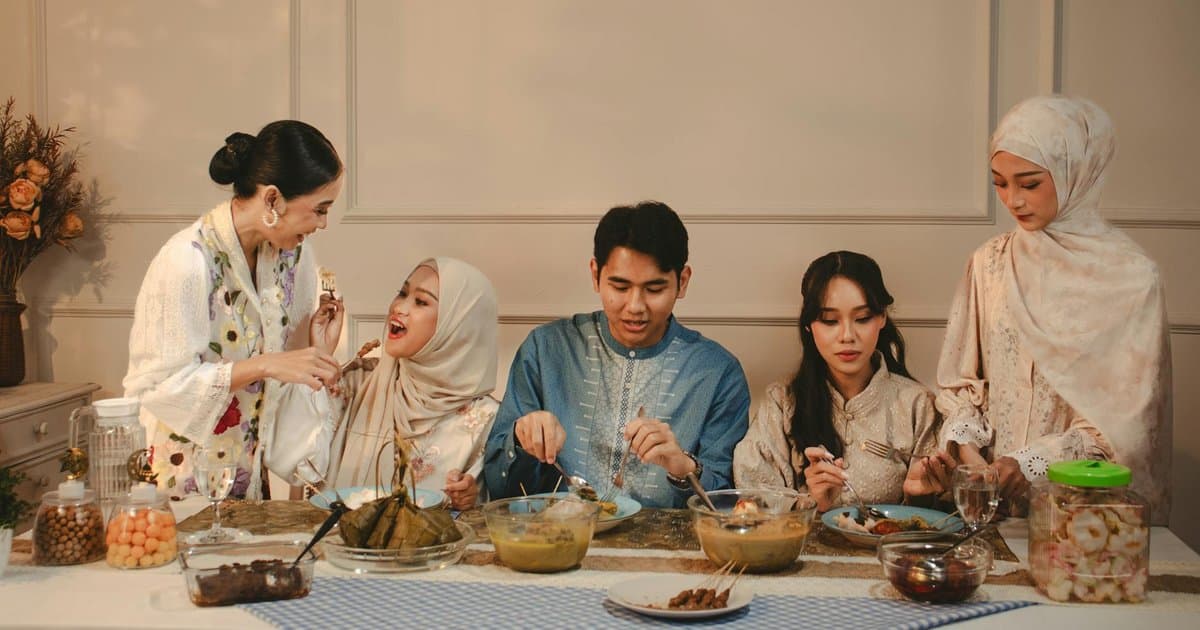
Sharing Ramadan family stories with your children transforms the month from a set of rules into a living, breathing experience they carry for life. Stories make abstract spiritual concepts like gratitude, patience, and intention concrete enough for a three-year-old to grasp and complex enough for a teenager to wrestle with. When you tell your child how their grandmother broke fast under a mango tree or how the Prophet showed kindness during hardship, you give them emotional anchors that shape their relationship with Islam far more powerfully than instruction alone.
Key Takeaways
- Ramadan family stories Islam traditions build children's spiritual identity through emotional connection, not just rules.
- Children remember narrative lessons up to 22 times better than facts presented without story context.
- Mixing personal family histories, classical Islamic narratives, and Quranic retellings keeps storytelling engaging across ages.
- A consistent daily ritual, even just ten minutes after iftar, signals that storytelling is sacred family time.
- Resistance and tough questions during stories are signs of healthy engagement, not failure.
Why Ramadan Family Stories Matter for Children's Faith Development
Children don't form spiritual identities through memorization. They form them through stories that make them feel something. According to Fivush and Duke (2008) 1, children who know their family stories show higher self-esteem, a stronger sense of belonging, and greater resilience. This finding applies directly to faith formation during Ramadan.
When a child hears how their father felt nervous during his first fast, or how their great-aunt prepared special dishes for the neighborhood, they aren't just learning about Ramadan. They're locating themselves within a living tradition. Research from ZERO TO THREE confirms that children under five build their understanding of the world primarily through relationships and repeated experiences, not abstract concepts 2.
Stories also reframe Ramadan from restriction to connection. A child who hears, "We fast because we want to feel closer to Allah and to people who are hungry," processes that differently than, "You can't eat until sunset." One invites. The other constrains.
The Types of Ramadan Stories That Resonate With Children
Three categories of stories work best when building Ramadan family stories Islam traditions, and rotating between them keeps children engaged throughout the month.
Personal family stories are the most powerful starting point. Ask grandparents how they celebrated Ramadan as children, what foods they ate at iftar, and what Ramadan felt like in their home country. These stories create continuity and pride. Even simple memories ("Your uncle once accidentally ate lunch on the first day of Ramadan, and the whole family laughed") become beloved family lore.
Classical Islamic stories provide spiritual role models. The generosity of the Prophet Muhammad during Ramadan, the perseverance of Bilal, and stories of the Companions offer children heroes they can admire and emulate. Look for age-appropriate retellings in children's Islamic book collections.
Quranic narratives build scriptural familiarity. Stories of Maryam, Yusuf, and Ibrahim can be adapted for young listeners with simplified language and vivid sensory details. The goal is familiarity and wonder, not theological precision at age four.
How to Adapt Ramadan Family Stories for Different Ages
Preschoolers (ages 3 to 5) need stories under five minutes with repetition, concrete actions, and sensory detail. "Your grandmother used to wake up when the sky was still dark, dark, dark. She could hear the birds just starting to sing. She drank cool water and ate sweet dates." Repetition of key phrases helps them remember and request the story again.
Children ages 6 to 9 follow longer narratives with clear heroes and cause-and-effect structure. They love stories where a character faces a challenge and overcomes it through a specific virtue. "Aisha was so hungry during her first fast, but she remembered what her mother told her..."
Older children and teens benefit from stories that explore internal struggle, doubt, and personal growth. According to McAdams (2001) 3, adolescents begin constructing their own "narrative identity," weaving life experiences into a coherent personal story. Inviting teens to share their own Ramadan reflections, rather than only listening, honors this developmental process. Ask them: "What's been the hardest part of Ramadan for you this year?"
Creating a Daily Ramadan Storytelling Ritual
Consistency matters more than perfection. Choose a time that works for your family, whether after iftar when everyone is relaxed and fed, or before bed as a calming transition. The National Association for the Education of Young Children (NAEYC) emphasizes that predictable routines help children feel safe and more receptive to learning 4.
Build simple sensory cues into your ritual. Some families light a specific candle, sit on the same cushions, or serve the same herbal tea. These small signals tell children, "This is our special time." Over the thirty nights of Ramadan, these cues become deeply associated with warmth and belonging.
Keep screens out of storytelling time. When you tell a story from memory or from a book while making eye contact, children feel fully seen. This matters more than getting every detail right. A stumbling, heartfelt retelling from a parent who is present beats a polished recording every time.
When Ramadan Stories Deepen Faith and When They Fall Flat
Stories land when they connect to something a child is already feeling. If your child struggled with hunger today, a story about someone else's first fast feels relevant and comforting. If your child gave away a toy recently, a story about generosity during Ramadan reinforces what they already experienced. This technique, called "bridging," links narrative to lived experience and significantly improves retention.
Stories fall flat when they feel like lectures disguised as narratives. Children detect preachiness quickly. If the moral is announced ("And that's why we should always be grateful"), the story loses its power. Let the story breathe. Ask, "What did you notice about that story?" instead of explaining its lesson.
Watch for engagement cues. Sustained eye contact, follow-up questions, and requests to hear it again all signal resonance. Fidgeting and distraction suggest you need to shorten the story, add more sensory detail, or shift to a different type of narrative. According to Bruner (1990) 5, children are natural meaning-makers. Trust them to find the lesson without having it spelled out.
Handling Difficult Questions During Ramadan Storytelling
Hard questions from children are gifts. "Why do some people not fast?" "Why did that person in the story suffer?" "Is it okay to be mad at Allah?" These questions show deep engagement. Shutting them down teaches children that faith doesn't have room for honest thinking.
Pause before answering. Acknowledge the question's weight: "That's a really important question." Then offer an honest, age-appropriate response. For younger children, simplicity works: "Some people show their love for Allah in different ways." For older children, complexity is appropriate: "Many Muslims have wrestled with that same question. Let's think about it together."
Admitting "I don't know" is powerful. It models that faith includes searching, not just certainty. You might say, "I'm not sure about that. Let's look into it tomorrow." This builds trust and shows your child that questioning is part of a faithful life, not a threat to it.
Building a Family Ramadan Story Collection Over Years
Start a simple tradition of tracking which stories you tell each Ramadan. A notebook, a notes app, or a shared family document all work. Over the years, patterns emerge. You'll notice which stories your children request again and again, revealing what matters most to them at each stage.
Some families record brief video versions of grandparents telling stories. These become irreplaceable keepsakes, especially when grandparents live far away or when children want to revisit a story between Ramadans. Even a two-minute phone recording of a grandmother's voice telling her childhood Ramadan memory holds enormous emotional value.
Written collections, whether handmade booklets or printed compilations, become family heirlooms. Some parents find that personalized story books featuring their child's name and family details in a Ramadan narrative deepen engagement because the child sees themselves inside the story. This works well alongside traditional oral storytelling and classical texts.
Just as families build traditions around personal Christmas story ideas or children's books about being brave, creating a Ramadan story library gives children something to anticipate and return to year after year.
Resistance and Disengagement Are Normal
Fasting is physically demanding, and some children simply have less energy for storytelling on certain nights. A six-year-old who is cranky after a long day of partial fasting may not be receptive to even a short story. That's fine. Offer the story gently: "Would you like a story tonight, or should we save it for tomorrow?" Choice increases buy-in.
Teenagers may roll their eyes or claim they're too old. This is developmentally appropriate. Research on adolescent identity formation shows that teens often push back against family practices before eventually integrating them into their own adult identity, according to Erikson's framework as applied by Kroger (2007) 6. Many Muslim adults report that Ramadan stories from childhood resurfaced as meaningful during their twenties and thirties.
If a child resists listening, try reversing roles. Ask them to tell you a story, or share something they learned at school or from friends about Ramadan. Shifting from passive listener to active storyteller can re-engage even the most reluctant participant.
Bringing Ramadan Stories Into Classrooms and Community Spaces
Teachers in diverse classrooms can invite Muslim families to share their Ramadan stories through classroom visits, written contributions, or recorded messages. This honors family expertise and prevents the flattening of Ramadan into a single, simplified narrative. NAEYC's position statement on developmentally appropriate practice 4 encourages incorporating children's home cultures into classroom learning.
Story circles, where children take turns sharing family traditions, give every child practice in oral storytelling while hearing peers' experiences. Muslim children feel seen, and non-Muslim children gain genuine understanding that goes far beyond stereotypes about fasting.
Community iftars that include a storytelling segment, where elders share their memories, create intergenerational bonds. Some mosques organize "Ramadan story nights" specifically for families, with different community members contributing each evening. These communal experiences reinforce for children that their family's stories exist within a larger, living tradition.
Get practical parenting tips delivered weekly
Evidence-based guidance for the moments that matter. No spam, unsubscribe anytime.
Frequently Asked Questions
Keep reading
How to Create a Dog Memorial Book (With Printable Templates)
Create a dog memorial book with photos, stories, and mementos. Learn 5 organizational tips and design ideas for honoring your pet's memory.
8 min read

How to Write a Wedding Speech for Your Aunt and Uncle (With Examples)
Write a heartfelt 3-5 minute wedding speech for your aunt and uncle. Follow this proven structure with character-focused stories and authentic delivery tips.
7 min read

Cat Memorial Book Ideas: Creating a Lasting Tribute
Create a cat memorial book with photos, memories, and keepsakes. Learn 6 meaningful ways to honor your pet and process grief with this personalized tribute.
7 min read
Get weekly parenting tips backed by research
Evidence-based guidance for the moments that matter. No spam, unsubscribe anytime.